Have you thought about dabbling in biohacking or even functional medcine but heard that the supplement protocols and lab testing were incredibly expensive? Perhaps you’ve tried different doctor’s or health professional’s protocols for certain conditions and were left thinking, what’s next? I’ve always thought that everyone has the potential to become their own best health guru. In this episode, part 1 in a 2 part series of The Health Fix podcast I, Dr. Jannine Krause, go through what it takes to set the foundation to create your own protocol to optimize your health.
Dr. Krause’s Protocols
Instructions Included
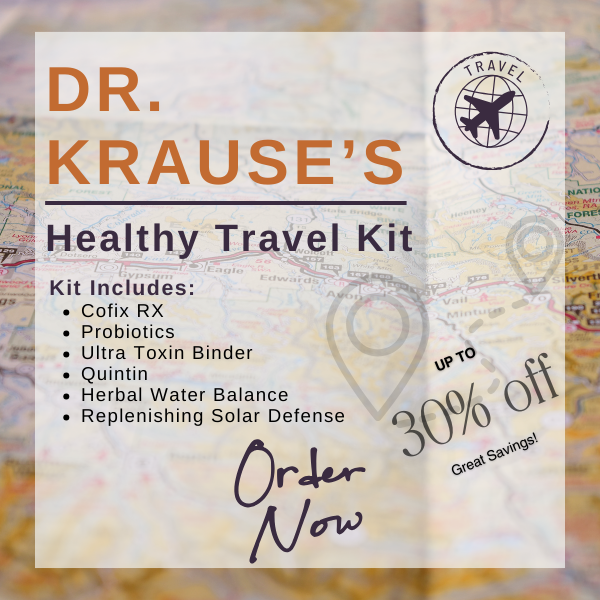
Traveling soon? Looking to detox or reset your gut? Try one of Dr. Krause’s Fullscript plans.

What You’ll Learn In This Episode:
- The importance of setting health and adventure goals
- What health metrics to track and when
- Functional medicine testing and how to know what’s right for you
- The power using health tech sparingly to get the most data
Resources From The Show:
- Dr. J’s PDF guide: “Steps to Become The Master of Your Health”
- Open to working with Dr. J as your guide? Bonus for podcast listeners – complimentary calls to see if & how Dr. J can guide you – click HERE
Our Partners

Podcast Transcript
JANNINE: Welcome to the Health Fix Podcast where health junkies get their weekly fix of tips, tools and techniques to have limitless energy, sharp minds and fit physics or life. Hey health junkies on this episode of the HealthFix Podcast, you get me, Dr. Jannine Krause. I’m going to be doing a two part series where I’m going to talk through what I’m seeing as the most beneficial way to optimize your health, but also not only that, improve your longevity, improve your physical performance at any age, even if your hormones, your energy levels, your aches and pains are getting in the way. So today I’m going to be going into a step-by-step philosophy of sorts as to how I’m working with folks and getting the best results. With the premise being that I don’t want anyone to follow someone else’s protocol or gurus, this works for me so it must work for you kind of concept. If you get annoyed by those things, you’re in the right place. If you’re a rebel and you’re like, “Wait, what about me? I’m unique. You’re in the right place.” What I intend to do in this podcast is to go through in two parts what I’ve been working with with folks and getting the best results and something that really is solid, it’s sustainable, it’s not just a, “Hey, here’s how we’re going to bounce your hormones and then what?” Or here, let’s work on your PCOS or here, let’s work on your fatigue. But then what? What about the rest of you? What about optimizing longevity? How long do you want to live? Do you want to live? Well, I hope so. You’re probably listening to this because you do. But also, what are your health goals in your adventure goals? Like what do you want to do when you’re 80, 90? What does 120 look like? Yes. I am absolutely putting it out there. So the idea that I want you to be thinking about throughout this podcast is what do I see for myself as I get older? Do you want to be doing really cool stuff to the day you die? I hope so. What kind of things do you want to do? Who do you want to be doing them with? And what do we need to do to make sure we keep your brain and your body healthy? For life. That’s what I want you to start thinking about. So let’s get into the podcast.
Hey, health junkies. So let’s dive into this one. I want you to be thinking like I mentioned before about your adventure goals. You’re like bucket list. If you could do anything, what would it be? And write all those things down. And of course, if you’re walking, working out, whatever it is right now, just keep a mental list of them. You know what they are. You always kind of had that in the back of a mind of like, “I would be really cool if” or wouldn’t that be really amazing if? So let’s dive into this a little bit more. Because to be able to have goals and health adventure goals and adventure goals and fitness goals and whatever it may be, maybe it’s travel. Maybe it’s adventure travel. Maybe you want to hike like Mount Kilimanjaro. Maybe you’re one of those people that sees all those folks on Mount Everest and you’re like, “That looks like fun.” Hey, whatever floats your boat, I’m here to help. Now here’s the thing. Most of us have been conditioned to give our power over when it comes to our health to someone else, to a doctor, to a guru. We follow protocols. And if you’re like me you might try to follow them to the tee. And you know, if you were an overachiever in school, then by golly, you’re going to overachieve on protocols. And then things don’t necessarily work out. They can be really freaking disappointing. So how do we make sure that what we’re doing gives us clarity and confidence that we are doing the best thing for our health? Well we need a trajectory. We need a direction. And the best place to go with that is to start with where do you want to go? A lot of people talk about reverse engineering your goals. Health is the same way. So are your adventures, your bucket lists, everything. What do you want to be doing at 120, 130, 150 years of age? I know. I’m saying things crazy, but here’s the thing. We have potential. We have a lot of potential. And part of what the problem is is we’ve got our head in the way and we’ll talk about that a little bit later. But right now, we’ve got to have a goal. We’ve got to know where we’re going. And one of the biggest things that gets in the way of anyone’s health journey is they will go into a doc and have a complaint, a symptom. And they’ll be like, “Doc, I really want to get rid of this hip pain. I really want to get rid of my gut issues. I really want to get rid of these headaches.” But that’s all is said. We don’t talk about like why do you want to get rid of these headaches? What are they interfering with? Like yes, they interfere with life, yes, they get in the way. But if you could have these headaches gone. If you could have that pain gone. If you could have the fatigue gone. If you could get the hot flushes, the night sweats, the hormones, the mood swings under control, the insomnia unchecked. What could you achieve? What do you want to achieve? What does getting older look like for you? What will you be doing? What could you be doing? All of these questions are things you really want to spend time on. You want to categorize them. You want to put down like what are your fitness goals? Please don’t put down weight loss for the love of God. No one at their deathbed is ever like I really wish that I lost those extra 20 pounds. It’s about the experience. So let’s look at like what do we want to be fit for? What do we want a spelt body for? What do we want to be strong for? What do we want to be mentally capable for? We want to be thinking about these. And we want to be th
So let’s talk about targeting in what to really track because I think for a lot of people, it is confusing. We don’t know like what should we be tracking, what should we be looking at. This is where folks like myself come in as great guides to help you narrow it down but of course within this podcast, I want to give you some ideas. Now hydration electrolytes, huge, minerals, huge. These are key things that we tend to blow through but also we don’t get enough of within our diets. When I talk about minerals, I’m talking about magnesium, I’m talking about selenium, copper, zinc, those kind of things. What is the best way to get minerals in? Honestly, a liquid type of mineral. There’s a company called upgraded formulas. I like their liquid minerals. They’re nice, easy to drop style, put under tongue. Well, actually got to put in water then put under tongue and then you’re done. Boom. Definitely want to have some food in your stomach though if you’re going to do minerals. Just tidbit if you ever had zinc or even magnesium on an empty stomach and sometimes cause some stomach upset. The reason being is you need stomach acid to be able to break them down and get them into your bloodstream. Something to think about, if you ever had any issues with minerals. Now the other cool thing is there’s a lot of companies out there who are creating electrolyte drinks with minerals. How cool is that? There’s one called Goodonyaorganic.com. I really like them. They’ve got some cool creative products. I get no money from them whatsoever. I just like their product. So that being said, we’ve covered hydration electrolytes and a lot of people might be rolling their eyes right now and being like, “Yeah, duh.” Okay, great. Let’s move on to things that are a little bit more not so duh. Sleep. Definitely. Good to track. Good to know what jacks with your sleep. The sleep is the ultimate recovery tool. You can take copious amounts of melatonin and you can take althenein and you can take holy basil ashwagandha. I could go on for days about certain things you could take, progesterone. But if you’re not solidly sleeping and you don’t have a good wind down routine, you’re going to have trouble sleeping and recovering fully. Food makes a huge impact on how you sleep, different types of food, carbs versus proteins, all to have a factor. So making notes of sleep is an issue for you, making notes around what’s happening in those three to four hours before bed. How do you shut down your day from work? Do you have a hard stop on work or do you just keep going and going and you’re on that email until it’s time to go to bed? If you don’t recommend it. You’ve all heard about the blue light blocking glasses and all those things, but the reality here is it’s incredibly important to set a wind down routine. So that’s a metric. Did you do your wind down routine? Now if we’re looking at another really important factor, it’s breath, it’s relax, it’s sleep, and the other big one is movement. And so when I talk about movement and relaxing, you might be thinking like, what the heck is she talking about? Here’s the thing, we need brain breaks during the day. We do. Sleep is like our ultimate brain break, but we need little timeouts. So this is another metric, especially if you live a fast-paced life, you tend to become stressed pretty easy if you’re having anxiety, insomnia, of course, and if you’re struggling with hormones, stress can be a huge factor. Every single person that works in the US at least is entitled to 15 minute breaks for every four hours of work. Funny how only the smokers take those breaks. I’m going to encourage folks, even if it’s two minutes to get a brain break. And in that brain break time, maybe you’re working on some breath work, maybe you explore breath work a little bit more, maybe looking to Wim Hof stuff, maybe you look into oxygen advantage stuff. I’m happy to answer questions on that with anyone. I love the breath work, but I also love movement. And in my brain breaks during the day, I will take walks. I will do hula hoop. I will get out in the garden when it’s appropriate in that season, or I will get out and play with my dog. The point being, is that’s another metric that you could be looking at, especially if you’re stressed. And the other side of that is looking at what provokes your stress. What gets you fired up? What gets you agitated? Do certain foods make you aggro? Do certain situations, people, beliefs? What is it? Start journaling on this. These are important things to understand because nobody I know of in their 90s is like, I really want to be stressed by the time I’m well into my 90s. No, you want to be chill, you want to be able to be like that. Chill guru. Just be like, yeah, I got this. And your great grandkids or whoever that comes by, they want to hang out with you because you’re not grumpy. So that’s one thing. The other metrics are more fitness kind of movement related in terms of mobility, in terms of your cardiovascular capabilities, in terms of your strength capabilities. Since I was about 15, I have been kind of tracking my strength, bench press squad, lunges, how much weight can I do with lunges? All the things, biceps, triceps, you name it. I didn’t ever have a goal though. You know what? I was just tracking it because I wanted to make sure I was improving. But now as I get older, I want to make sure I’m improving and not declining. And I want to make sure that I’m improving without pain, without injury, and my mobility is not compromised. I think mobility metrics are huge knowing how well your ankles move, your toes move, your knees move, your hips move, your back, like your whole spine, arm shoulders, fingers, toes, you name it. Neck, jaw. All these things are important because the better you move your joints, the better you’re going to be with whatever adventure. Say you want to hike, say you want to bike. What needs to be strong to do that? Balance, agility. Say you want to climb 14ers in Colorado and you know that there are rocks on the top, like scree, and there’s also things you got to scramble over. And you want to do that in your 80s. Okay. Time to do some crawling work. So using these goals of what you need to do and practicing it, I intend to keep crawling and doing bear crawls and things of that nature as long as I freaking can. And here’s the thing, I intend to do it today. I die. Now that might sound absolutely bizarre, but we’ve all been freaking brainwashed about getting older. And oftentimes I hear it coming out of my friends, my family’s mouths, and even my own, they go, “Oh, I don’t know if I’m going to be able to do that when I’m older.” Oh, I haven’t done that for a while. I don’t know if I can do that. Like, what? If you say these things, what do you think is going to happen? Now I know a lot of people listening to this right now are going to be like, “She is batty. There’s no way that into your 80s, 90s, 100s you can keep doing stuff.” Well, have you seen a lot of the people on social media or blue zones or any of those? Yeah. There’s some people who are older doing incredible things and we need to share more of that. Because I unfortunately feel like the more of what we see is folks declining, folks hobbling around, folks using walkers, folks using canes, folks using wheelchairs. For the love of God my uncle heard us back, he’s 70 years old and he crawled up my dad’s stairs to get to our house. And I’m looking at him going, “Oh my God.” One, he was coming to see me for acupuncture. Don’t worry, he didn’t crawl on the way out, but I don’t want to be crawling like that. I want it to be like a fitness thing, not a, I am in pain and I have to crawl upstairs. This is stuff that we see every day with our family members, relatives and it does mar our vision of what we have in terms of potential for the future. But I want you all to imagine the concept of delusional optimism right now. And why do you might think I’m delusional? That’s cool. The idea here is if you know where you’re going and you know what you want to be doing, maybe you want to be playing pickleball, maybe you want to be playing tennis golfing in some amazing areas. A lot of times you’ll see folks sitting on those golf carts and when they get out of the golf cart they are barely able to walk. I don’t want to be that person. I get mad when I go to golf courses and they’re like you have to have a cart. I’m like what the heck are you talking about? What if I want to walk? They’re like well mam, you need a cart. I don’t want to go to this place. I want to walk. And here’s the reason. Because I want to be able to do that plus I like walking with my golf clubs. I don’t know. But here’s the thing. We all have our visions for what we want our future to be like. Unfortunately we’ve seen a lot of things of what the worst case scenario is. You can look at your grandma, your grandparents. I mean just look at TV for that matter. All the fallen I can’t get up commercials. I mean my god if you watch TV in the middle of the day or you watch grit because if you’ve ever seen Grit my dad loves to watch all those old westerns but all the commercials are Medicare commercials and depressing and the fallen I can’t get up business and the this and the that. Now. So this is my plea to all of you. Get your goal set up. Know what you want to do in the future. Write down all the adventures and what does it take to get there. So I’ve talked about metrics in terms of strength. So noting what your push up amount is. How long can you hold a plank? How far can you walk without getting tired? How far can you run? In 11 minutes. These are actual tests that you can perform on yourself every four weeks. So let me recap that. How far can you walk or run in 11 minutes? How many push ups can you do after you get done with your walk or run? How many push ups can you do consistently without stopping? Then how long can you hold a plank? A front plank? A side plank and another side plank. Write those down every four weeks. That is a great metric to let you know where you’re at. That’s a great place to start. And if you’re working with a coach, as a conditioning coach, like myself or anyone else out there, you can mix it up as to what kind of different activities you can do. But first and foremost, you got to track things and you got to know where you’re starting and where you’re headed. So that’s one thing. Another thing is looking at your blood pressure. Looking at your heart rate. These are two great, fascinating and really helpful metrics to know what’s happening cardiovascular-wise. In particular, your heart rate. Having a good handle on your resting heart rate, so that’s your heart rate before you get out of bed every single morning, take it for five to seven days in a row and get your average. Then watch it. If it goes up, that means you didn’t recover from the day before. Whether it was mental stress, whether it was physical stress, something got you. Maybe food stress too. Sometimes we eat things in the body, doesn’t get along with it. Alcohol can do it too. But you want to watch that. Because that kind of stuff can be fascinating to give you some really good insight into how to tweak your workouts, how to tweak what’s going on with food, how to tweak what’s going on with stress too. It can call you out faster than anything else. Now the next advanced level from that is heart rate variability, HRV. You can track that with apple watches. You can track it with Whoop. You can track it with Garmin. You don’t want to track it every single day. You want to track the trajectory. So the month trajectory. If you’re moving upwards, you’re doing good. Day to day, you’ll get thrown off and it’ll mess with you. But your heart rate, you can look at that day to day and see what’s going on. So those are some metrics for cardiovascular capability that are huge. Other metrics like I mentioned were the mobility metrics. These are incredibly important knowing how while your shoulders move, knowing how while your wrist moves, your elbow moves, your fingers move, your toes. Every joint you have, if there’s a hang up, it’s time to learn what you can do like gau sha, which is a little scraping technique. Capping, you can do cupping at home. You can do massage, self massage. There are a lot of things you can do. You can go to acupuncture, you can go to massage. There are lots of mobility kind of like ball kind of things where you can release the areas. There are things called yoga balls, [inaudible]. So many options nowadays. It’s incredible. But working on mobility and finding out if your mobility has some weakness to the joint stability, anything going on there, I highly recommend for everyone to go to a functional movement specialist or even a physical therapist that focuses in functional movement head to toe. Not just the PT that’s going to look at your elbow or your ankle because you heard it. You want the PT that’s going to do head to toe kind of stuff, specialized PT’s. Knowing how well you move, investing a couple hundred bucks and having someone look at you is priceless. Because if you’ve got hang ups now, you better believe if you don’t do anything, those hang ups are going to get worse. And the number one thing that hangs up people, as they get older, mobility and then nerves start to have issues. So now this is where we come into balance and metrics with balance. Now I’m spitting off a whole bunch of different metrics and you might be thinking, oh my gosh, how could I even keep up with all these things? I got you. I don’t do this every day. It’s more like a monthly check in thing to know where you’re at. How is your balance balance and coordination are huge. That’s what keeps you from having to have a cane, a walker, getting in a wheelchair, that kind of stuff. Balance is incredibly huge. So thinking about how to incorporate all of these in, like I said, monthly kind of check-ins would be things like balance, things like checking in on your mobility. Once a year doing a head-to-toe check on mobility, maybe even twice a year, depending on how adventurous you feel, I mean some people I know do it quarterly. That’s up to you. If you’re training actively to run an Iron Man or do a triathlon or something like that, but I don’t mean to just probably do it more frequently. So these are important to look through. Now have I covered every single thing you could possibly look through? No. Temperatures another one. Temperature is something that I have folks who are of peri-menopausal or pre-menopausal age, meaning you still get your period. If you’re still getting your period, looking at your temperature can give you a lot of insight into what’s going on in your cycle. I use the temp drop app for that and the temp drop device. It measures your temperature at night. Now food, that’s another metric that a lot of people, I think, spend way too much time. In fact, I probably could have a PhD in macros for how much time I spent on that. If you’re really struggling with metabolism, it’s worth getting to know how your body responds to food. Doing a continuous glucose monitor and having a program like levels, it’s a membership program with the continuous glucose monitors, or doing something like Lumen, which is the carbon dioxide sensing breath device. I’ll have links for all of these in my podcast notes so you guys can get discounts if you want to do any of these. But the point being is with Lumen, I have used that and I do use it right now. I’ve used it in my group programs too. In that, it helps quite a bit for you to understand how certain foods, certain food combos affect you and what happens with your fa
[Outro] Hey fellow health junkie, thanks for listening to the HealthFix podcast. If you enjoyed tuning in, please help support me to get the word out about the podcast. Subscribe, rate, and review, and just get that word out. Thanks again for listening. (upbeat music)