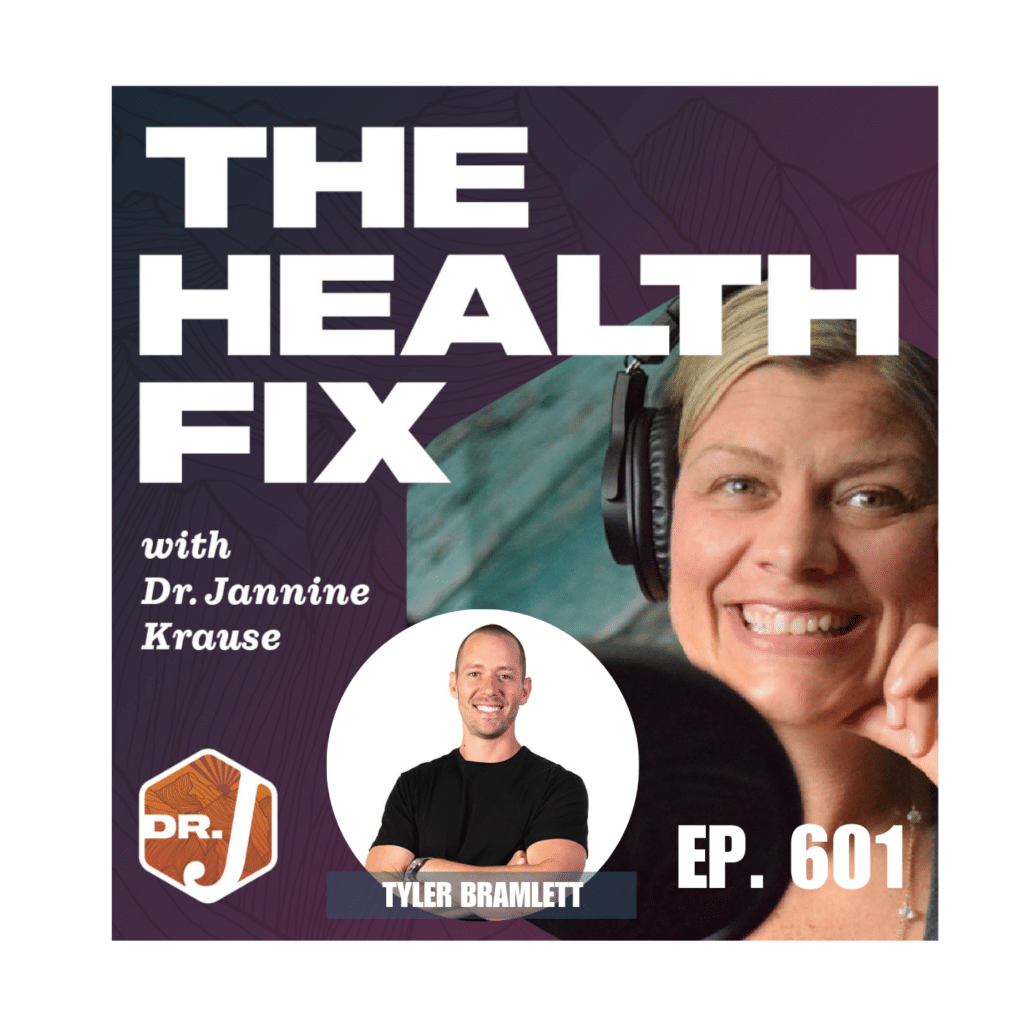
In this episode of the HealthFix Podcast, Coach Tyler Bramlett shares how fitness can become the foundation for a lifetime of adventure, not punishment.
If your goal is to stay active until the day you die, hike mountains in your 60s, ski in your 70s, and carry grandkids or hike with your furbabies in your 80s this episode is for you.
Tyler dives into the innovative WeShape program and how AI-driven personalization is changing the future of fitness. Instead of generic workouts or chasing aesthetics, WeShape focuses on:
- Movement quality over brute strength
- Longevity over short-term results
- Self-care over self-criticism
- Consistency over intensity
Tyler shares his personal journey from injury to rebuilding his body the smart way by learning to listen to his body instead of pushing through pain. He explains why so many people get stuck in cycles of overtraining, burnout, and frustration as well as how shifting your mindset can completely transform your results.
Dr. Krause’s Protocols
Instructions Included
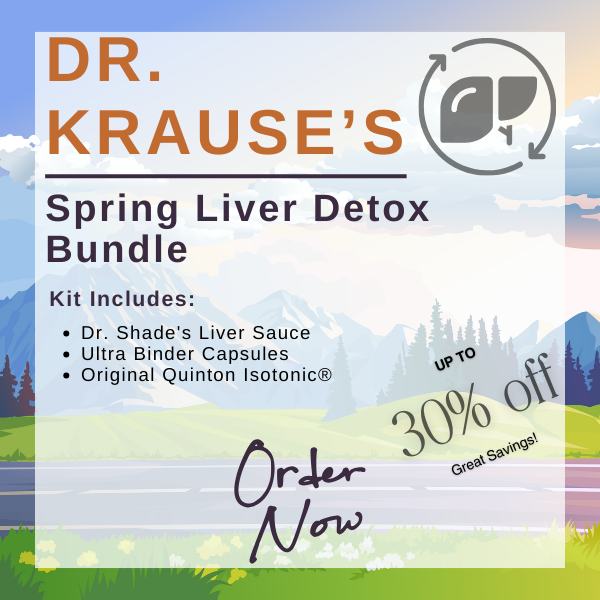
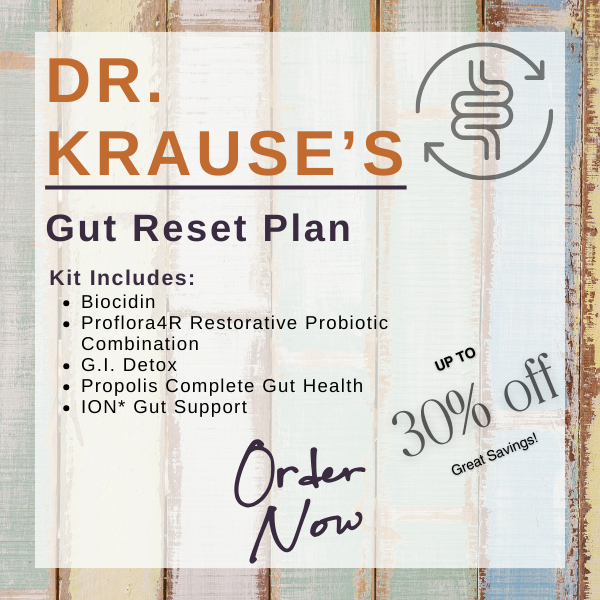
Traveling soon? Looking to detox or reset your gut? Try one of Dr. Krause’s Fullscript plans.


What You’ll Learn in This Episode:
- Why movement quality matters more than lifting heavier
- How “movement snacks” can keep you fit even on busy days
- Why consistency beats intensity every time
- How AI can help your fitness coach with personalizing workouts to your unique body
- The truth about unrealistic fitness standards
- How to build a positive relationship with exercise
- Why mindset around fitness, health and longevity determines long-term success
If you want to be adventure-ready at any age and not just look fit, but move well… this conversation will change how you approach your health.
This episode is for men and women who refuse to age passively. For those who want strength, freedom, and the ability to say yes to epic experiences at any stage of life.
Because fitness isn’t about punishment.
It’s about possibility.
Resources From The Show:
- Tyler’s WeShape Website
- Tyler’s Podcast – Feeling Lighter Podcast
- Dr. J’s March 18th, 2026 Workshop: 5:30p PST/7:30p CST (register to get the replay if you can’t make it live) – The Art of Staying Your Sport or Hobby and Being Adventure Ready at Any Age
Our Partners




Podcast Transcript
Chapters
00:00 Introduction to AI in Mobility and Fitness
03:04 Coach Tyler’s Journey and Philosophy
06:02 Bridging the Gap: From Physical Therapy to Fitness
09:07 Mindset Shift: From Punishment to Self-Care
12:05 The Importance of Movement and Longevity
14:54 Overcoming the Fitness Industry’s Negative Narratives
18:07 Grace in Progress: Navigating Setbacks
20:51 Movement Snacks: Integrating Fitness into Daily Life
24:01 Creating a Supportive Environment for Movement
26:23 Understanding Movement and Strength Training
32:17 The Importance of Personalized Fitness Routines
38:24 Exploring Fun and Functional Movements
41:45 The Role of Technology in Personalized Training
47:45 Building a Supportive Fitness Community
Jannine Krause (00:01.089)
Coach Tyler Bramler, welcome to the HealthFix Podcast.
Coach Tyler (00:04.94)
Thanks, Dr. J. Thanks for having me on.
Jannine Krause (00:07.413)
Yeah, you know when I was pitched to bring you on to talk about an AI tool for folks to help them with stretching and mobility, I’m like, this is nice, this is good, because a lot of people are gonna sit there and they’re gonna be like, I need to move better, I sound like Saran Wrap, I can’t sneak up on someone anymore, what do I do? What do I do? And for folks like me, as a doc, it’s easy because I can be like, hey,
Coach Tyler (00:28.899)
Yeah.
Jannine Krause (00:35.143)
why don’t you go over to Coach Tyler’s site there and see what we can do. So of course I’m sure there’s a story behind this in terms of why you were like, I really need to create an AI tool to help people with this. So let’s dive into that first and then we’re gonna geek out a little bit on coaching and all those.
Coach Tyler (00:52.119)
Yeah.
Yeah, you bet. Well, you know, had an early experience that really set me on a different path in the fitness industry. And then seems like life just wants me to have more of those experiences to continue just trying to challenge the status quo. But, you know, I was like a lot of people who didn’t have good examples early on. You know, my parents thought diet soda was a health food. Nobody was a good example of fitness or nutrition or anything like that for me. So, you know, I ended up in a pretty unhealthy place by time I was in my even my mid to late teens. And as luck would have it,
I thought to myself, you know what? I’m gonna go to the gym like most people do. I’m gonna look in the mirror, I’m shame myself and use that as motivation to go to the gym. And then, like I said, as luck would have it, I got hit by a car. And I broke my femur. I ended up in a wheelchair for three months and then I had to learn how to walk again when I came back. And what was interesting was is when I started going to the gym again, everything hurt.
You know, tip, typical things that somebody tells you to do, doesn’t feel good on my body. So immediately I think I had a connection with people who are a little bit older, who’ve had eggs, pains and injuries who have arthritis and things like that. And I had that connection with them at a very young age. And, so I spent years stopping, focusing on how I looked and started focusing on how I felt.
and learned all the different ways to move, learned how to use my body weight more effectively, became a personal trainer, started taking people, quickly became known as the guy where a lot of hard cases would go to because they needed someone who could actually help them out. And I feel like I really understood them. And along the way, I noticed a pattern. Okay, I started working at a local gym, and all the personal trainers were like, ex athletes, most of them didn’t have any injuries, they don’t understand how somebody should feel when they’re in their 40s, 50s, 60s, they don’t understand what movement restrictions are. And most of time,
Coach Tyler (02:34.275)
They’re just giving you like a generic routine on the treadmill for warm-up doing, know some machines maybe some free weights maybe some moves that you should definitely not be doing if you have aches pains and injuries and then getting you back on the cardio again at the end, know, and most the time they’re just looking down at their phone texting their friends and counting your reps and acting like a therapist more than a personal trainer, right and it was in that moment I was like, that’s not right, you know I I know better and these people just got a weekend certification and I don’t think it’s fair to their clients who think they’re coming and
an expert $100 an hour to do personal training sessions with him and think about that’s like that’s like $1,200 a month if you want to do three days a week and I’m gonna tell you straight up nine out of ten of these people maybe even more probably shouldn’t be a personal trainer they should not be telling you what to do with your body so
At that point, I really wanted to do something different. And eventually many, many, many years later, when I finally had the, the knowledge and the resources do so, we started we shape with the goal of giving everybody the experience of having a really qualified personal trainer, but without that hefty cost and that you could do from your phone or from the comfort of your own home too. So, that’s the goal. How do we make sure that we’re not giving you a cookie cutter routine that’s generic, that we’re giving you something that’s specific to your body. And then we’re teaching you how to move better so that you feel better, so that you feel safe along the way.
Jannine Krause (03:51.807)
I can unpack a lot of different things that you mentioned there, especially with a person holding their cell phone, texting their friends, doing their selfies. And then sometimes this will happen too. Like if they do have an older client that can do some things cool, then they’re on their Instagram doing things cool with terrible form. I’ve also seen that happen. And it’s like, whoo. Cause while I am not officially in the industry of fitness, I have a lot of friends who are and kind of
Coach Tyler (03:54.763)
Let’s do it.
Jannine Krause (04:21.045)
worked out of a gym even for a while. And it’s a very interesting space because one of the things that you also mentioned is we’ve got someone who maybe was a former pro athlete or maybe was played baseball in high school and really liked hanging out at the gym. So now we have it becoming their gig. And I’m gonna speak a little from experience, not necessarily myself, but my husband, was also hit.
not by a car, but by a truck while on his bike. And hubby was a mountain bike racer, did all those things beforehand, but then had the great lesson of like, yeah, I don’t know what to do here. And when he went back to the gym, he had the physical therapist that could help. But once you get released from physical therapy, then what? And this is also what I’m hearing, you know, and kind of thinking through here because a lot of times the transition from physical therapy into a gym isn’t seamless.
Coach Tyler (05:20.011)
Yeah, absolutely. Yeah. I could definitely speak to that because I wish my story ended with getting hit by a car. By the way, it was an SUV, so not to compete or anything, but I did get hit by a big car too.
About a decade later, I had been focusing on performance, you know, for, that whole decade. So it’s almost like my ego shifted from, want to look good naked to I want to perform. And that’s what it’s all about. And I learned a really valuable lesson because as luck would have it again, as I was doing this adult gymnastics class and my body was telling me this, this hurts your knees right now. This move you’re doing hurts your knees. And I listened to my body. was like, that’s interesting. And my coach said to me, punch harder on these big spring floors. Right. And I remember telling my intuition, you shut up intuition.
I’m not going to listen to you body. I’m going to punch so hard. This coach has never seen a punch as hard in his life. And when I did, I came down and my knee collapsed sideways, my other knee this time. So I tore my ACL, MCL, LCL quad meniscus all in one shot. it was a much worse injury than the first one. I’ve had four surgeries on that knee now, one on the other. So five of them. So why I share this is it pivoted my focus away from even performance.
towards longevity, right? I ignored what my body told me to do. I didn’t listen and I got hurt because of it. And I think even if you can shift away from vanity based fitness towards performance based fitness, there’s another trap behind that wall, which is like pushing too hard, too fast and not listening to yourself. And my goal at this point is how do I stay active and mobile and free in my movement for as long as possible so I can enjoy my body as long as possible. And sometimes that means not doing so much. So, you know,
Why I’m saying all this, as you said, bridging the gap between physical therapy and fitness. I’ve spent almost a year of my life in a bed trying to recover from knee injuries and knee surgeries. And while I was in that bed and while I was designing the program, I wanted someone to be able to use that program while they were lying in a bed, if that’s all they could do. And so if you look at the way we do the we shape program, you know, we have levels on all the different movements. We’re very much into calisthenics and progressive movement because I really believe it’s the best way to train because not only does it require more strength and flexibility,
Coach Tyler (07:30.232)
as you scale the difficulty of movements up, but it also requires more balance and coordination, which is something I don’t think very many fitness programs are talking about, right?
But in any case everything that we do starts in bed. You can do anything in bed We do basic isometrics basic mobility movements because that’s where a lot of people are they start there And so the goal is how can I have you leave the physical therapy office and start these really basic movements and as you start to develop mastery in those movements you scale them up and then we give you a movement that’s a little bit harder and then we give you a movement and we just keep down that process and what we found is you know, shapes been around now for four years people have been with us for several years. It is absolutely
Jannine Krause (07:47.637)
Thank you.
Coach Tyler (08:07.936)
incredible the results we’ve seen in them and how their body moves differently and how their body feels differently and the strength they have things like going on long walks or hikes. had one member recently I was on a call and she said she had this goal of being able to do this. It was a was a three mile staircase in Europe that she was going to and this is a person who couldn’t walk up one flight of stairs without pain a year before that and one year later did three miles up and three miles down this giant hiking on the staircase and was just blown away by it. So
And yeah, think people really need that. They need to…
not just go from physical therapy or a complete sanitary lifestyle to like lifting weights and jumping and running. it’s a recipe for disaster. And most of the people who come into WeShape were like, let’s take 10 steps backwards and let’s build a strong foundation so we can take 20 steps forward. And what most people do is the opposite. They take one step forward, push too hard, too fast, get burned out or hurt. And then they take one step backward. And at WeShape we call that the one step forward, one step backward game. What happens when we get stuck in that game? You go nowhere.
Jannine Krause (09:09.665)
Are we good?
Coach Tyler (09:10.762)
Yeah, you go nowhere. Sometimes you take more steps backwards than you do forwards, right? So people really need to slow down. They need to focus on making movement a practice, not a workout routine where you’re trying to kick your butt because you hate yourself anymore. Right. And we do a lot of mindset stuff too, as you can kind of tell I’m peppering underneath this and, and to really show up and learn how to care for your body. That’s what’s important. So
Jannine Krause (09:32.449)
It makes sense. mean, I think, I think a lot of folks who are, let’s say 30 plus living on this earth right now have either been inundated with the whole performance thing, like push hard, do this. mean, CrossFit, how many people are CrossFit injuries? mean, let’s, let’s go there. Then you take the mental side of the ego and
more CrossFit injuries because I mean, I’ll full out call myself out. I’m like trying to compete with 20 year olds when I was 40.
Coach Tyler (10:03.988)
It’s just a bad idea.
Jannine Krause (10:05.993)
Bad idea. And if you’re competitive at all and you are, you know, you were an athlete or, or you are an athlete or however you identify, mean, the bottom line is, is there is that mental thing of like, well, I need to be kicking, you know, button taking names here. Like I’m not doing what I need to do. I mean, I even find myself in this. think a lot of people probably can resonate. Like we’re kind of brainwashed to think that we have to all be internal bad asses. And like I’ll even be doing.
some Tai Chi or even some of the Kung Fu, like, classes and I’m like, I’m going too slow. I’m not strong enough, you know, like, I’m not doing this strong enough. And it’s like, I’m not doing this hard enough. There’s not, you know, I didn’t break eight plates today, you know, with my mind. It’s like…
Coach Tyler (10:50.4)
Yeah.
Jannine Krause (10:50.571)
How did this happen? How do we get so brainwashed into thinking like we have to push so hard versus like I’m stoking like, this is awesome, bed exercises. Like I know a lot of people are like, but I’m so much more advanced than that, but maybe you’re not. anybody could do bed exercises is what I’m imagining.
Coach Tyler (11:09.74)
Well, here’s what I’ll say about this, okay? When it comes to the mindset side, most of the people who are really influential out there at the pinnacle of fitness, if you really get to know these people, they’ve got an inner critic and a demon inside of them that’s pushing them forward. And guess what? They’re never happy. Look at Michael Jordan, like talk about like the goat of basketball. And if you look at that guy, you watch his documentary, never satisfied, never happy. And I want to ask people who are on this, like a question, what’s your goal?
Jannine Krause (11:34.977)
Mm-mm.
Coach Tyler (11:39.648)
Do you want to be the pinnacle of fitness and hate yourself and never be happy? Does that sound like the life you actually want for yourself? Or have you been told that if you get that, then you will be happy? That’s what the industry says to us, right? You should hate yourself unless you look like this or unless you can move like this and you should buy my program so that you can do this so that you can finally like yourself again. And what I tell people is, listen, I’ve been in the fitness industry for 20 years. I’ve watched hundreds, maybe thousands of people lose over a hundred pounds, get to their goal weight. And you know what?
happens when we got there based on self-criticism. All they do is look in the mirror after a hundred pounds. They don’t go, yay, I’m at my goal. I feel so good about myself. I like me. They say, gross, this part of my arm needs more work. They continue criticizing themselves because that’s all they’ve rehearsed.
And so what we try to do at WeShape is something different. We say, okay, first of all, let’s quit exercise. Exercise has so much negative association with it. It’s all the, ate this donut, so I need to go exercise. Let’s start practicing movement, right? Let’s start practicing movement. So that changes it from, need to disconnect from my body and push myself as hard as I can, to I need to reconnect with my body.
listen to it and take care of it. Okay. And then we also get them to start paying attention to that inner critic inside. We all walk past the mirror. We all put our clothes on and we go, gross. And we hate parts of ourselves. We teach people how to recognize that, how to pause, how to repattern it so that we can hopefully get them to show up from a different place.
And probably my favorite way to describe this is, you know, right now you don’t want to work out because you’re stuck in this cycle of using shame and self criticism to work out. This is our thesis overall, when it comes to mindset, people get stuck in this trap because if you use fear based motivation, it doesn’t feel good. And if something doesn’t feel good, you don’t want to keep doing it. Right? So we want to flip it on its head. How do we teach you how to care for yourself? And the way I want you to feel about fitness is this. If I took your toothbrush away for five days,
Coach Tyler (13:31.692)
How badly would you want it back so you could brush your teeth and she could take care of your teeth like really bad, right? And if I gave it back to you, you probably walk right over to that sink. You start brushing your teeth because you want to take care of your teeth because it feels good. And so that’s what we want to do with we shape is develop a fitness practice, a movement practice where we start to recognize that the purpose of this is to help us feel good, to help us build confidence, to help us be stronger, more flexible, more capable with what our body can do again. And when those positive feelings come up, what happens? We want to do it more.
It becomes our identity. It becomes who we are. Now we’re someone who takes care of ourselves. So on top of wanting to give you the right movements, the right stretches, the right levels, the right form cues to support you also want to shift people’s mindset because I think the fitness industry has done a number on people. I think it’s made a lot of people feel really crappy about themselves. And I feel like that that’s what motivates people to push too hard, too fast. And then we get stuck in this shame based cycle that we can never get out of. So I want things to be different.
Jannine Krause (14:28.961)
I can totally resonate. I can totally resonate. mean, like I said, I worked inside of a gym doing my acupuncture and body work stuff. But at the same time, I always felt like I was never ripped enough, jacked enough, fit enough, like hanging out in there. And so I always felt like, know, oh, there’s the chubby semi-fit acupuncturist over there in the corner. Meanwhile, we’ve got all the hardcore folks.
Coach Tyler (14:43.338)
Yeah.
Jannine Krause (14:58.817)
And so you’re so right, because I’m thinking it through all my years in the gym, and I’m sharing experience. I’m sure a lot of folks can probably resonate with this, especially if you’ve been around in the fitness space. If, you know, I mean, I was a competitive swimmer, ice skater, know, lot of stuff in the background. And so you look at it and you think it all through and you’re like, dang. And then I was also thinking about the other thing. Mirrors in the gym. Is that like the sickest joke ever for people? Especially like…
Coach Tyler (15:26.924)
Yeah, they’re like, that’s so you can look at your form. Sure.
Jannine Krause (15:30.113)
No, that’s… That’s so can pick apart every little piece of you that looks funny when you’re, you know, doing a squat or whatever. I mean, I once had like one of the gals I was working out with, like she’s looking at her belly in the mirror while she’s squatting. She’s like, oh my God, my belly hangs over so bad. And like, she’s like squatting 200 pounds and like, oh, it looks so bad.
I mean, what is mindset like that, negative, while you’re lifting weights, in like a push-go? What does that do to your nervous system?
Coach Tyler (16:02.483)
Yeah, it stresses you out, right? And again, what we’re doing, the mind, the thoughts you have work the same way as movement, okay? So if you practice movement, let’s say you do squats perfectly, 10,000 times, well guess what? Number 10,001 is gonna feel like you can do it automatically. But we never think about our thoughts like this, okay?
Jannine Krause (16:20.598)
Mm-hmm.
Coach Tyler (16:23.463)
If all you do is constantly go, my belly looks gross when I’m doing this, and you’re trying to use that as fuel, you’re activating that adrenaline side of your nervous system, you’re dumping cortisol, and you’re rehearsing that negativity. So now what happens? Your beliefs about yourself change. So what do you believe about yourself? You believe you’re disgusting, you believe you’re gross, and you believe you have to punish yourself in order to try and not be that.
And again, you can get to that goal weight. You can get to that body. I have gotten the privilege of hanging out with, meeting, interviewing, all these different fitness models, bodybuilders, people at the pinnacle of what you think you want to look like. They’re miserable. They’re miserable. And what I want people is to stop thinking that your worth lies in how you look. Your worth lies in the number on the scale. That’s not the truth. You’re worthy just as you are right now.
And the more people can recognize that, the more people can really feel that. And that’s something we do at WeShift, is try to teach people how to feel that worthiness. The more you’ll say, I deserve to take care of myself. And you’ll prioritize you. And if I can make that shift, then I don’t need to be your guru anymore. I don’t want to be your guru. I want to teach you how to be your own. Right? And so I think it’s really important that we don’t just give people the things to do, but we teach them how to change the way they think about themselves.
Because if you value yourself, you’ll take care of yourself. I know that to be true, for sure.
Jannine Krause (17:42.338)
Absolutely, absolutely. Now, along those lines, I’m also thinking about like, all right, so you’re giving people some guidance, you’re stepping up, taking initiative with the movement, kind of moving the mindset away from punish and go, go, go. What happens, where am I going with this? What happens when someone, because I’ll see this happen a lot.
Like they’ll get motivated, like perfect time. It’s February. January everyone’s like, new year, new me. February comes in, we get a little bit down. Like you said, you’re teaching folks how to like think through like and be like, I deserve to work out, I deserve to take care of myself. What happens if someone starts to falter a little bit on that? What kind of stuff can you teach folks about? Like what do you go into the mindset with there? Like what’s going on? How do you change that?
Coach Tyler (18:41.463)
I’m happy you asked that question because I think there’s also this belief that your progress is linear. Like it’s just all uphill, right? You’re just going to get started. It’s going to be easy. The ball is going to get rolling. It’s going to be easy. Keep it rolling. Like life happens, right? I’ve got two kids. I’ve got a business. I’ve had these injuries. Like I’ve had other injuries along the way that usually stem from my first injuries. Right? So like give yourself a lot of grace.
Give yourself a lot of grace. And this is one of the hardest things about what we do at WeShape is the fitness industry tells you things can change in two weeks, things can change in 30 days, things can change in six weeks, right? And they do that because the shorter the time they tell you it’ll happen, the more excited you are about it. And then you want to go buy a program or join some thing, right? And one of the things that we tend to do is say, this takes a long time.
It’s a journey of your mind and your body and really like your spirit too. And so life’s gonna get in the way People you love are gonna pass away and you’re have to like go be with them and their families You like, you know, people are gonna get sick You’re gonna get injured like stuffs gonna happen and it’s not about what you did this week and next week It’s about if you look at the last year, how’d you do?
Were you consistent enough to make progress? Great. Then a month down, it’s not a big deal, right? Just get back on. And so a huge part of that is teaching people to give themselves grace, give themselves grace. Like we don’t do that. We let our inner critic take the best of us. We let it come in and say, you’re a failure because you, you said you were going to do five days a week and now you’re only did two this week. Right? So stop that. Give yourself grace. All movement counts. Okay. So that’s step one.
Second piece is we always tell people to do way less than they think they should be doing.
Coach Tyler (20:25.418)
Everybody starts out a new fitness routine feeling like it’s like this is the one this is the time I’m gonna go five days a week and then everything’s gonna change for me It’s not sustainable, right? And so one of the things that I think people with we shape really love the most is we created ten minute routines You can select by the way if you want 10 20 30 45 or 60 minute routines each day And then we ask you how’d you sleep? How does your body feel and based on all those answers? We actually build you a custom routine for that day So if you’re tired, it’s gonna be like a lot of stretches a lot more mobility moves a little bit of strength stuff
If you’re feeling really rested, we’re going to hit some high intensity intervals. It’s going to be more challenging for you. So it’s really, again, trying to make sure we meet you where you’re at. But at the end of the day, I tell people, start with two 10 minute routines a week. If you can’t find two 10 minute gaps to work on yourself and take care of yourself, I can’t help you. You know what mean? And guess what? Some weeks you won’t have any, right? It’s okay if those two go away. But if I can just say two 10 minute routines a week, that’s a hundred routines in a year. Okay.
If you do 100 routines that are designed for your body, that have a progressive component to them, that are teaching you how to move better,
There’s a 0 % chance that at the end of that year, barring any like acute injury circumstances or something like that, you’re not going to feel a whole lot better in your body. Right. And I think people don’t think about the long-term there, like a hundred routines in a year is just two routines a week. It’s not that much. And you can make a lot of progress doing that. Sure. More will be better to a certain extent, but starting there and building that as a habit, as an identity, as who you are, I’m somebody who takes care of myself. This is my minimum standard. That’s a starting point. So oftentimes people do way too much too fast. They bite
more than they can chew. And the final thing I want to say about this is all movement counts and so something we try to teach people is something called movement snacks. Right? So you’re listening to this right now. Stand up from your chair five times ten times. Right? Here’s another cool math equation. If you do three sit to stands a day, just three mindful squats a day, that’s a thousand squats a year.
Coach Tyler (22:22.504)
If you do three sets of 10, that’s 10,000 squats that you added in a year. And guess what? That’d probably take you two minutes a day, right? Probably take you two minutes a day. So we also encourage people that it’s not just about using a workout routine to learn how to move better, feel better, gain strength, flexibility, balance of coordination is also making your life more about moving throughout the day.
Work on the floor in your laptop. I spend a ton of time in what I call adult tummy time, where you’re on your belly and your laptop’s in front of you. It’s great for reversing all the effects of sitting, right? We’re working on thoracic extension, shoulder blade retraction, you know, all these different things. And yet we just sit in a chair all day long, right? Set an alarm on your phone. This is the one thing phones are useful for every hour and just says move and just get up and do something for 30 seconds, right? If we do that, we can accumulate a lot of movement and that movement really counts in the long run.
Jannine Krause (22:54.869)
Yeah.
Jannine Krause (23:15.519)
I love the concept of movement snacks. I think it’s the genius thing because people, cannot argue it. Like no one can get out of that. Like, I’m sorry, you’re gonna go to the bathroom, maybe add a couple more up and downs off the toilet. You know, no one can argue it and I love it. I love that, I love that. Like it’s my favorite concept.
Coach Tyler (23:22.058)
Yeah. No.
Coach Tyler (23:34.411)
Yeah.
It’s so powerful and you know what’s cool too is one thing I’ve been saying a lot more lately which I think is resonating people is I say if it’s in the way you’ll do it every day. And so people will often get things around their house for their fitness and then they’ll hide it under their bed, they’ll tuck it away somewhere. I’m like no, no, no, no, no. Let’s like take a piece of masking tape and put it down the middle of your hallway. When you get to your hallway do a little balance beam practice on the masking tape every time you walk through it. Pick a door in your house. Every time you walk through it put your arms up with your elbows slightly higher than your shoulders, your thumbs pointed backwards. Stretch your chest, improve your posture.
go to stand up from the chair do it three times instead of one time right you know before you get out of bed stretch your hamstrings with a towel over your foot so the more we can start to like put reminders in our day if it’s in the way we do it every day all of a sudden oh man I get I get five ten fifteen minutes of movement that’s like feels like I barely added any time to my day right just by putting in front of me so I think it’s really important for people to do that too
Jannine Krause (24:30.037)
wondering if you have like a ninja warrior like set up in your house where you can swing from things on the way out from
Coach Tyler (24:33.482)
Yeah.
I, I do, I do. And it’s funny. I wish I’m in, I’m in this little podcast room. I can show you the office too. We got monkey bars and balance beams and, weights and stall bars and everything. So I’m a, I’m a total movement junkie. I love having stuff all around at my house. I got a lot of stuff outside. I’ve got a yoga swing inside. I’ve got a foam. If I don’t have a foam roller within 10 feet of me, I get nervous. So I try to have foam rollers in every room as well. There you go. She’s got one too. So you get it right? Like the more you can put that stuff around you.
Again, it’s an identity shift, right? Like I think people want the benefits of feeling fit and mobile and strong, but then when they think about fitness, it’s all wrapped in negativity and shame and self judgment and criticism. And if we can shift our identities towards like, I’m going to take care of my body. I’m going to put stuff around me that remind me to take care of my body. I’m going to do movements next. I’m going to do routines now. Like all of a sudden it can snowball. And a year from today, you could be looking at yourself. Maybe your inner critic’s still there.
judging you but you’ve got enough wisdom to pause turn down that volume knob and say you’re doing a great job and that’s what I really want people to do.
Jannine Krause (25:46.658)
I think that’s wonderful. I think that’s wonderful. It takes the whole, I don’t know, like you said, it just takes the brain damage out of the concept of fitness for so many people because it’s the barrier, right? And movement, if we focus movement, it’s just so much more fun. So okay, so you’ve got, now I’m curious, you’ve got a foam roller like me within 10 feet of you, you’ve got the Ninja Warrior department. The biggest thing I get asked by folks.
Coach Tyler (26:04.476)
It is.
Jannine Krause (26:16.243)
All the time. Like, hands down all the time. Doc, so and so says I need to do this kind of workout because I’m over 40 and I’m in menopause and I shouldn’t be doing HIIT workout. I should be lifting heavy.
Jannine Krause (26:34.741)
Well, have you ever lifted heavy? And most people don’t understand what lifting heavy means either. So anyway, my point is, is what do you tell folks? Cause I kind already have the idea of what the answer is going to be, but I just want to hear kind of from you when folks are like, but, but coach Tyler, I’m, this particular age and I have hormones that are declining. What am I supposed to be doing? Are we?
Coach Tyler (26:36.849)
Hahaha
Jannine Krause (27:02.495)
we ignoring that and going, let’s do you, N of one? Or how do you approach this?
Coach Tyler (27:05.435)
Hmm. Yeah.
Yeah, I love this. You said a lot that I want to touch on here because one thing that is problematic with our social media culture right now is trends come in and trends come out. And what happens is people go squirrel. I’m supposed to do strength training squirrel. I’m supposed to do weighted vest walking squirrel. Maybe it’s my hormones out of whack squirrel, you know, whatever it may be. All of that stuff might be true, but here’s the reality. If you don’t do anything consistently, if you bounce from thing to thing and idea to idea, you get paralysis analysis,
guess what happens? Nothing changes, okay? If you want your body to change, you have to progressively expose it to slightly more challenging things. Weight training is a great way to do this, but one thing I will say about weight training that I feel personally is limiting is that let’s pretend you take up weight training. You start doing squats, right? You start adding weight to the bar. I’m strengthening my muscles. I’m building my bone density. What if you’re squatting poorly?
What if nobody really knew how to coach you to squat really well? And now you’re adding resistance to your crappy squat. It’s just a matter of time before you’re going to end up hurting yourself. And you’re going to say, well, I should have gotten stronger. Are you going to get distracted? now I got to do yoga instead. Right? So the whole point of this is, is there’s something that supersedes strength. There’s something that supersedes pretty much everything in fitness, not cardio, not balance, not flexibility, not strength, right? It’s it’s movement. It’s the quality of your movement.
And I’m gonna be honest with you, I rarely meet coaches and trainers that are really great at this, right? And I’m not trying to like put myself on a pedestal. There’s plenty of people who are great at this and way better than me at this.
Coach Tyler (28:46.845)
but they’re like the one out of a hundred, one out of a thousand coaches out there who can watch somebody squat and go, the weight distribution on your feet isn’t right. Let me fix that. Your hips aren’t on the way they should. Let me fix that. Your core isn’t active the way they should. Let me fix that. Your posture isn’t moving the way they should. Let me fix that. Right. And so over everything is movement. If we don’t learn how to move properly the way that your body intended to, you’re going to end up hurting yourself.
And so you have to serve that as a strong foundation. Now, when I say that movement exists on a spectrum. Okay. So let’s take the squat as an example, as a really good example here, a lot of people will think they have to go to the gym. They’ll start barbell squatting, but they can’t even stand up from a chair. Well, and so at we shape what I’ll do is I’ll say, okay, let’s take you back down to the basics. Let’s have you learn how to stand up from a chair really well with good weight distribution on your feet, good alignment with the knees and the hips, good activation of the core, good posture.
Let’s practice that for a while. Now, if we can get that right, some people will say, now it’s time to go weightlifting. I don’t necessarily believe that’s the best way to go. I want to sophisticated the movement to make it require more flexibility, more strength, more coordination, more balance, and sometimes more power and capacity to absorb impact. So for the squat progression that we use at WeShape, if you can’t do anything, let’s say you can’t even stand up from a chair, you can’t even sit up from bed, all we’re to have you do in bed is bring your knees up.
lift your toes towards your nose, and press your heels down into the bed to activate the glutes and the quads. So we start with mind muscle connection drills like you might typically see in something like physical therapy. Once we can do that, we swing the legs over, we come to a seated position, we do the same movement in a seated position. All right. So we’re not even moving yet. We’re just doing isometrics. Then we teach people how to do a partial range of motion squat with hand support. Then if you can do that, we teach you how to do a full range of motion squat with hand support.
Then we take the hands off and we do a sit to stand with no hand support. Then we do a slightly faster sit to stand with no hand support. Then we add a toe extension at the top so that we start conditioning the ankles. Then we add a hop at the top. Then we add a jump. Then we remove the chair. Then we do slower jump squats. Then we do faster jump squats. And if you look at that progression, every single step is gonna require a little bit more strength, a little bit more power, a little bit more flexibility, a little bit more coordination, a little bit more balance.
Coach Tyler (31:01.305)
And if you’re worried about osteoporosis too, the best thing for strong bones isn’t necessarily strength training, it’s absorbing impact. So we really take people from not being able to jump, for example, to being able to jump again.
And when you do, that reacts on your bones, your tendons, your ligaments, and your muscles in a way that I think has a lot more benefit than just traditional weight training. Because we’re learning how to do dynamic movement and life is dynamic. It really is. So that’s how I like to approach things. And if you’re wondering, how do I approach this for each individual? Well, what we do at WeShape differently is when you come in, I don’t give you a program not knowing who you are. I ask you 40 or more questions about who you are.
Where are you tight? Where are you weak? What injuries do you have? What struggles you’ve had? I show you some movements and say, which one can you do? Right? And we use all that data to create a personalized program for each individual.
And then like I said earlier, we actually ask you questions every day to further personalize the program. Because I like to think about it like if I was their personal trainer, if you walked in, I would know what movements, because I already screened you, right? I should know what movements you’re doing, what levels you should be doing. I should have an idea of what I want to do with you that day. But if you’re like, I didn’t sleep last night and I feel horrible and I just gave you the routine that I thought was going to be perfect, that’s really poor way to design. So I want to be able to pause and say, let’s adjust each and individual day and meet you where you’re at. Right. So,
I guess that’s a long-winded way to say everybody needs a unique routine because you got a unique body and our goal is to give you that.
Jannine Krause (32:28.669)
Makes sense, makes sense. mean, that’s kind of where I’ve started to come to with. I mean, it’s everything really. It’s not even just fitness. It’s it’s how it’s.
Coach Tyler (32:36.146)
It’s everything. Yeah, it’s your mindset. It’s your blood panels. It’s your hormones. It’s everything, right? So, yeah.
Jannine Krause (32:44.353)
So with training and fun movements and things like that, what’s your favorite movement to recommend out of every?
Coach Tyler (32:54.488)
God, that’s a tough one. You know, like I said, I’ve been in this game for a long time, and I’ve done a lot of different things over the years.
I’m particularly fond of working on handstand work myself. WeShape is not a program that focuses on the handstand. We work with people who are in a different place than that, let’s say. But if you want to come to our coaching calls and stuff, I’m happy to teach you if you’re interested. So I’ve spent a lot of time on that. I am by no means a great hand balancer, but I can hold my own upside down on my hands a little bit. So I enjoy doing that a lot. One of my favorite things to do is experiment with movement.
So one thing that you might find if you poke into my house after I get my kids to bed at night is me with a pair of headphones on and some abstract music. I don’t know what it is and just listening to what my body needs. So I love to free flow with movement. And so I’ll just stand there, you know, and I’ll just be like, okay, it’s tight. Like, what does my body want to move this way? And this way I’ll do some subtle movements. So it’s almost like, you know, with we shape, we teach you the rules of the body and how to move well. And the ultimate goal for me is you learn the rules so can break the rules. like music, right? You can’t play jazz on day one.
First you got to learn how to hold down you know a beat you got to learn how to hold down a rhythm and a melody and then eventually you get so skilled you can break the rules and it still sounds great.
But if you tried to break those rules on day one, it’s gonna sound crappy. Same thing with movement. If you’re trying to break the rules on day one and do movements that people might not think they should be able to do, you probably hurt yourself. But if you learn how to move perfectly as much as possible, then you can start applying that in ways that are a little bit imperfect and break the rules. So I really enjoy just having a free flow movement practice like that and not really thinking like, what’s my next move? Just experimenting with movement. I find it really fun.
Jannine Krause (34:36.257)
I had a friend of mine challenge me to that and I had to move really slow. It was really hard, but it was fun in the end. mean, I can see how free flow movement would help you to move in different directions, different planes too, because it is one of the things that we get caught into with fitness is moving forward and backward and not rotational, not doing, you had mentioned balance, but you had also mentioned at the beginning calisthenics and.
Coach Tyler (34:55.271)
Yeah.
Jannine Krause (35:02.881)
My father, who’s 90, still does his original calisthenics workout from when he was in gymnastics when he was like a freshman in high school, which is crazy. But the man moves incredible. Like he has virtually minimal pain and no replacements of any joints whatsoever.
Coach Tyler (35:23.27)
Yeah, This is a great thing to touch on is…
If you look at all the people lifting weights, especially if you look at people who are over 50, um, you’re to have a lot of people who ended up with injuries. Cause most of the time the focus is on how much weight can I lift and the ego gets ahead of us. start sacrificing movement first for perceived strength, right? Um, gymnastics, barring somebody hurting themselves, doing the sport itself. If you find a gymnast who didn’t have any acute injuries, that person is going to carry that strength, that flexibility, that balance, that coordination forward for
a very long time, like into their old age, like you’re describing. I had a client, I’ll never forget this, years ago I used to run a local boot camp program.
And, this lady came in, she was in her mid forties and completely deconditioned, hasn’t done anything in like 20 years. Right. So I used to be a gymnast back in college. Okay, great. Let me see you do some movements. my God. I’ve never seen anybody move better on day one. I have never seen anybody move better on day one. She did not forget how to properly activate her core, how to hold her body in good alignment. And more than anything, what I think people don’t realize gymnast do well. It’s not like they have like a stronger shoulder or a stronger arm. They have a really good sense of muscular coordination.
They know how to make their arms strong by making their core strong They know how to make their legs explosive by making their core explosive, right? Everything starts in the middle and works outward and that’s how the body works and so calisthenics is really just a fancy way to say gymnastics right at the end of the day and if you Understand movement progressions which kind of like we talked about earlier with this with a squat or the sit to stand That’s how gymnast train right they start with a basic movement until they achieve mastery then they make it a little harder They make a little harder my time that I’ve worked in gymnastics
Coach Tyler (37:06.154)
gymnastics is what inspired me to train like this and to make the Wii shape program like this because when you sophisticated the movement, it does so much more than just making you stronger, right? If I add weight to my squat, I just get stronger at the squat. If I add power to my squat or let’s pretend I start jumping and rotating 90 degrees and landing that gives me so much more resilience for real life circumstances that might happen versus just lifting something heavy on my back. huge fan of gymnastics and huge fan of making it really palatable and
Jannine Krause (37:19.937)
Yeah.
Coach Tyler (37:36.214)
for people starting with things that are like in bed or in a chair and gradually working out from there.
Jannine Krause (37:42.38)
That’s cool. I mean, the more I look at things like handstands, handstand walks, know, I actually have never been able, I can do handstands, but I can’t do a handstand walk. Cannot do it. I don’t know what malfunctioned with me and maybe my core is not as explosive. My dad used to do it all the time. I can’t, I can’t. So anyway, it intrigues me because where I’m going with this is that I really want folks to look at where do you want to be? Like what kind of cool stuff do you want to do?
And let’s do it, let’s figure out how you can do it at any age. And one of my things, because of dad a little bit, but also because of my interest in walking on my hands, holding different positions, kind of like gymnastics, yoga stuff, I’m like, this is kind of cool, I’m kind of into it. Like, can I do any of it? Not really. And so this is intriguing to me because I’m like,
Coach Tyler (38:25.19)
Yeah.
Jannine Krause (38:35.271)
I see the different programs online, but what you don’t see is the progress. Like you’ll have beginner, intermediate, advanced programs that you can purchase online. Yeah, you can purchase online. And then you’re like, but wait, what if I’m like somewhere in between intermediate and advanced and I’m not progressing from there? So I’m seeing like, this is how you would be bridging that gap too for folks who are trying to get to a certain stage.
Coach Tyler (38:42.671)
Yeah, you three levels. Yeah.
Coach Tyler (39:01.831)
100 % so most of the movements that we focus on right we’re gonna dice that down to 10 to 20 levels
And the goal is not, you go from, like you said, if go from beginner to intermediate, that step can be huge. That step can be detrimental. That step can really cause a lot of injuries. And if you take 20 steps to get from point A to point Z instead of three steps to get from point A to point Z, the progress is faster. It’s safer and it’s much more palatable because what we try to do is we almost try to make it so that when you scale a movement up, you’re like, what changed here? It was just like, okay, my arms were on my hips and now my hands are on the back of my head, right? Like subtle little things.
things like that. And just to speak to your story real quick, there was this champion gymnast, I can’t remember his name, but he was working on a really challenging move. It’s called a Victorian. So basically your arms are out to the side and you’re holding yourself parallel to the ground with your back facing the ground. like iron cross on steroids, just absolutely incredible. Wasn’t able to do it. And so instead of him practicing that move over and over again, you know what he did? He went back to the very first level of gymnastics back when he was a kid and said, I missed something here.
Jannine Krause (39:57.067)
Whoa.
Coach Tyler (40:10.511)
And for 18 months went through hollow position holds, went through shoulder contraction holds, went through static holds, went through iron cross holds. And by the he got back to the top, was able to do the Victorian. And so it’s this really good reminder that if you’re trying to do moves and you can’t quite do them, a lot of people think I should just keep trying. And some people succeed with that. Some people get injured with that. Some people don’t succeed with that. Right. The surest way to succeed with it is to take enough steps backwards that when you do the movement,
it feels like you’ve mastered it. It’s not about doing things that are challenging that you don’t have control over because that’s where the risk comes in. It’s about doing things that are challenging that you do have control over, sitting on those long enough until you achieve what feels like I’ve got this down and then scaling up to the next available option. And usually, again, not taking such a big leap that that next available option starts to feel like I don’t have control over this.
Jannine Krause (41:05.183)
Makes sense, makes sense. Yeah, I think for a lot of people, mean, it’s humbling to go back, right, to the beginning, but it’s also at the same time, maybe what some of us need to be considering because at the end of the day, movement is what is like your lifeblood. It’s, you know, I’m always telling folks like, you can eat clean.
Coach Tyler (41:06.716)
Yeah.
Jannine Krause (41:29.267)
you can take all your supplements, follow all the trends, do all the detoxes, but if you’re not going to commit to consistent movement, what are you doing? What’s going on? What’s going on here? And so it sounds like you’re also able to kind of take different goals and put them into play for what folks would want to do. Now, I am curious,
Coach Tyler (41:38.791)
Yeah, good luck.
Jannine Krause (41:57.014)
because I was kind of sent over the just basic movement analysis. How do folks move from that and like take us into your website, take us into how folks interact because I was only introduced to the AI component, not the like advanced level stuff. So help us understand that.
Coach Tyler (42:16.452)
Yeah.
Yeah, yeah.
Yeah, so I’ll nerd out with you for a minute on this because there’s a lot going on behind the scenes here. We’ve spent four years and several million dollars just building out the technology behind WeShape. most people don’t care about this all that much. They just need to know if you scale up and you’re consistent, you’re going to make a lot of progress, right? But I mentioned earlier that the first thing we do when somebody comes into WeShape is we take them through our client onboarding quiz. So we ask you a bunch of questions about what your goal is, whether you’re injured, where it is. We show you movements to tell us where
Jannine Krause (42:26.847)
Yeah.
Coach Tyler (42:52.072)
what you can do, different levels of those things. And with all that, what we’re going to do is we’re going to do two things. We’re going to decide which level of the movements we have in our program you should be starting with. And then we’re going to decide how much you should be exposed to these movements throughout your routines. So if somebody is really tight in their hamstrings, let’s say, and then let’s say they have really loose hip flexors, I don’t need to give you a bunch of hip flexor stretches because you already have loose hip flexors. So the system is always looking for where is the weakest link? Where is the tightest part of your
body, let’s expose you to that more throughout your routines so that we can get you more flexible or strong. And as you scale those movements up, so let’s say you scale this hamstring stretch movement up over time, which usually involves more range of motion or more coordination, we’ll start to de-emphasize that hamstring stretch because now we start to see you’re making progress. You’re getting mastery over that. So the system’s always looking for where are you tightest, where are you weakest, and let’s bring those things up over time.
How it’s actually working is you answer these quiz questions, you go in there and it says, how’d you sleep last night? How’s your body feel today? How much time do you have? And then you go get started. And then it starts the workout for you. During the workout, it’s a follow along video workout you can do from home, no equipment, just a chair and some floor is what we need. And then after each movement, it says you want to scale up or scale down.
And in real time, you can say scale up or scale down and it will make the movement easier or more challenging. So the way again, I like to think about this is if I was a personal trainer next to somebody and they were doing a movement and they said, this is too hard. say, okay, just scale it down to this. Right? So it gives them the opportunity to have that flexibility within a follow along routine as well. So it’s interactive. And the best part about this is the more you use it, the smarter it gets, the more it knows about your body, the more it knows about the progress you’re making, the more it knows about the areas where you need more progress and the more it adjusts to you over time.
So, yeah, it was our best stab at this point and we’re constantly improving it to try and make it better. again, my, my goal as, as you kind of maybe gathered by my story is like, I want somebody to feel like this is better than that personal trainer that stares at their phone and like pushes them through it. want them to have a better experience. And of course, for a tiny fraction of the price that you’d normally pay a personal trainer to do this kind of service for you.
Jannine Krause (44:58.217)
Yeah, yeah, no, it makes perfect sense. I think my question now is like, okay, are you training your own like personal bot basically in this case of sorts? Yeah.
Coach Tyler (45:05.732)
Yeah, yeah, that’s right. Yeah, we have an internal algorithm that we’ve created and we ingest all the data and we continuously improve it and try to tweak it to just give people a better experience over time.
Jannine Krause (45:16.065)
That makes sense. And of course I’m going to get the question, so I got to ask it. Where does the data go?
Coach Tyler (45:21.798)
Well, you’ll be happy to know that I have a CTO that used to be in cybersecurity. So we keep everything in a data warehouse that’s encrypted a million different ways. We haven’t had any issues or anything like that. So, and we’re not a company that does anything with that data outside of build our workouts, right? We’re not trying to use it to try and figure out how to advertise or sell it to anybody else like that. Our number one core value at WeShape is we care.
And I think that a lot of companies say that they care and they do that just to, I don’t know, make people think that they actually care about them. I spent a lot of years in the fitness industry and part of the reason why I know it’s making you feel bad about yourself and shaming people is I was, I was that person. I was that person online. I was that person offline. And at some point I started realizing that
people were just walking their way towards misery, even if they got the success that they were after. Most people didn’t get the success they after. They just quit because they burned themselves out. And when my daughter
got to a certain age where I started realizing my orthorexic habits, so to speak, were rubbing off on her. And I started going, well, I’m building an eating disorder in a little girl now because of the way I’m thinking about this. It’s like everything needs to change. And so I really think about my kids a lot because I don’t want my girls to grow up in a world where they hate themselves towards more fitness. I want them to grow up in a world where they love themselves towards more fitness.
I don’t want them to grow up in a world where their worth and value lies in how they look. I want them to have intrinsic worth and value. And I really want to support others in doing the same so that they can offer that to the people around them too. So yeah, I don’t know. We went on a tangent there, but that’s, that’s why we shape exists is we want to do something different. We want to take the fitness message that’s out there and say, don’t follow this anymore. It’s not serving us. Let’s learn how to love our bodies. Let’s learn how to like ourselves. Let’s learn how to care for our bodies and let’s all grow old and happy together, regardless of how we look.
Jannine Krause (47:17.619)
It’s a great way to look at it. having had the same experience with the fitness industry and always feeling, you know, not good enough, not thin enough, not ripped enough, not strong enough, I can see it. you know, that’s for the level of folks that actually want to go into the gym, you know. So many other folks are repelled by it. And at this point, for a lot of folks, working out at home and having the 10 minute workouts is just much more attractive.
Coach Tyler (47:25.051)
Yeah.
Jannine Krause (47:44.529)
So let’s tell folks a little bit more about how they can interact with you guys. You know, where you at on Instagram, what’s going on on the socials, like good sites, WeShape.com I believe, but I’m going let you kind of take over.
Coach Tyler (47:54.106)
Yeah, you got it.
Sure. Yeah. We made a special link for you guys. We shape.com forward slash health fix will take you to that client intake survey. At the end of that, um, you can try out we shape for two weeks for free. We will ask you to choose a plan and put your credit card in, but we got a us based customer support team so you can cancel any time if it doesn’t feel good for you. So no pressure, but at least you can try some routines out based on what we talked about here. Um, I didn’t mention this, but we also do live coaching calls myself. Dr. Lisa’s our, our resident physical therapists who we have on staff as well. So you can jump on live group calls and ask us questions and get support. Right.
therapist that helps with mindset support too. So we try to really hit it from all the angles that we’ve been talking about on the show here. If you want to just learn how to move better and feel better, just go to any social and type in we shape. You know, I feel so blessed, but we’ve been spreading this message now for a handful of years. And, you know, we’ve got like 7 million followers across TikTok, Instagram, Facebook, and YouTube. We got a podcast to the feeling lighter podcast, not as many followers over there yet. It’s a little bit newer to us, but you can check that out as well. If you want to hear us talk a little more free form about mindset.
movement as well.
Jannine Krause (49:01.825)
That’s awesome. All right, the Feeling Lighter podcast. We’ll make sure we get all of that in the podcast notes at drjcrossnd.com or if you’re watching on YouTube, it’s gonna be down below there in the caption. So yeah, I’m super curious, because of course now I’m like, all right, so handstands, are we gonna check the plots to help me with finally figuring out why I cannot do handstand walks? So.
Coach Tyler (49:18.245)
Hahaha
Coach Tyler (49:25.517)
I’ll bet you anything it’s your wrist. just want to say that. I’ll bet you it’s your wrist. That’s my gut sense, but I might be wrong, but my gut sense screams wrist. yeah.
Jannine Krause (49:34.559)
I don’t doubt it. I don’t doubt it. Don’t doubt it. That makes perfect sense. hey, so if anyone else wants to join me in the handstand and handstand walk situation, hey, let’s jump in together. And yeah, it sounds like pretty much any goals that you have for your fitness, for your future, for your longevity, you can work it all together with you guys at WeShape.
Coach Tyler (49:56.761)
Yeah, we try to give people a baseline of movement quality that lets you do the things you want to do again, because it’s not about fitness is not about doing more fitness. It’s about doing the right amount of fitness so you can go enjoy your body in your life, right? And do the fun things with it again. So yeah.
Jannine Krause (50:14.731)
It’s so important. It’s so about the why and connecting to like why are you doing this? You know and it has to be fun.
Coach Tyler (50:18.627)
That’s right. We asked that question to a lot of people as well. So yeah, awesome.
Jannine Krause (50:23.397)
So huge. Well, thanks so much for coming on, Tyler. I appreciate it and enlightening me about what you guys are up to. And I look forward to this podcast coming out. think a lot of folks are going to like it. Thanks again.
Coach Tyler (50:34.669)
Awesome, thank you Dr. J.