What if your gut issues are simpler to solve than you think? In this solo episode, Dr. Jannine Krause dives deep into the science and history of peptides, gut repair, and the overlooked role of circulation and movement in digestive health. From bioregulator peptides to East Asian medicine principles, this episode connects ancient wisdom with cutting-edge research to help you get real results.
Dr. Krause’s Protocols
Instructions Included
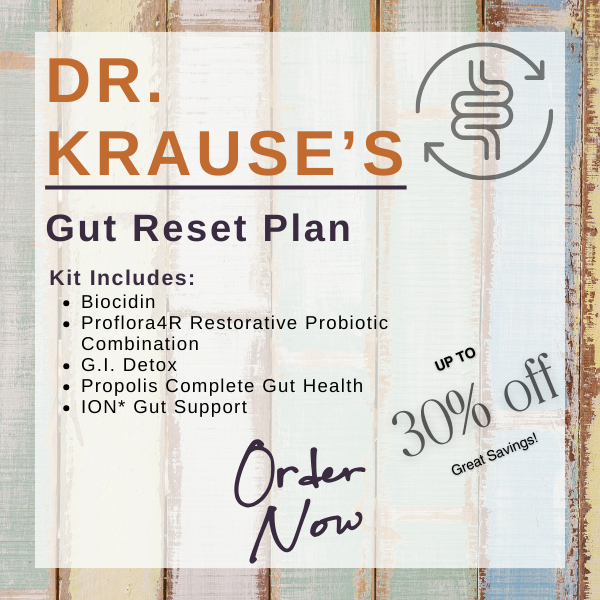
Traveling soon? Looking to detox or reset your gut? Try one of Dr. Krause’s Fullscript plans.


In this episode you’ll learn:
- The history and science of peptides plus why they’re finally getting the attention they deserve
- The difference between research peptides, bioregulator peptides and pharmacetical weight loss peptides (aka GLPs)
- Why Tai Chi and Qi Gong circulation movements are non-negotiable for gut health
- How adding in peptides and bioregulators support your microbiome and repair your gut lining in a way no one is talking about
- Practical ways to use peptide bioregulators for specific organ support
- Why overeating and chronic stress are silently overloading your gut
Timestamps:
- 00:00 – Introduction to The Health Fix Podcast & Peptides
- 00:59 – Understanding Peptides and Their Importance
- 10:52 – The Gut: Foundation of Health
- 22:02 – Circulation and Its Role in Gut Health
- 29:34 – Peptide Bioregulators: A New Approach
- 37:44 – The Future of Gut Health and Probiotics
Resources Mentioned:
- BioLongevity Labs
- Limitless Biotech Peptides
- Designs for Health – Anaerostipes probiotic
- 21 Day Cleanse Protocol by Standard Process
Key Takeaways: ✔ Cycle peptides to avoid overstimulation ✔ Rotational movements, breathwork & abdominal massage support gut circulation ✔ Research your options and demand better results from your health care
Connect with Dr. Jannine Krause: 🌐 Website: https://doctorjkrausend.com/ 📸 Instagram: @drjanninekrause 🎙️ Podcast: The Health Fix — available on Apple Podcasts, Spotify & wherever you listen
Our Partners


Podcast Transcript
Jannine Krause (00:04.792)
Hey, health junkies, welcome to another episode of the Health Fix Podcast. Today, I want you to ponder a question. What if I told you that you could speed up weight loss, belly bloat, SIBO, CFO, even just weird gut funk, like bloating. That has no explanation. You’ve tried all the different diets. You can’t figure out what food’s causing it. It just…
keep showing up and annoying you. Well, on this episode, I’m gonna dive into some of the things that I’ve been finding to be quite helpful for a lot of the folks in my practice. Now, is it perfect for everyone? Absolutely not. Is it the panacea and the magic pill? There isn’t one, sorry. You’re the magic pill. We’ll talk about that in subsequent podcasts. Nevertheless, let’s talk about what’s going on in my office and what I’m seeing and why I have to share this.
So last week I did a master class on how to put everything together to age well. And I realized in that master class that a lot of folks are still unsure of what a peptide is, what a peptide bioregulator is, what these things are. So we’re gonna dive into it organ by organ related to a lot of the symptoms I see. Over the next couple weeks, I’ll be popping these in. So first and foremost,
We gotta talk about the gut because the gut is the foundation. If your gut microbiome is off, you’re gonna really struggle with your health. If your circulation to your gut is off, you are going to struggle with your health. If your liver’s off, I can go on and on. You get the idea. Here’s the thing that I’ve been seeing over and over again. A lot of folks associate peptides as a broad statement for things that help you lose weight. That is not even the like 100th
180th percentile of what even the peptides are. They’re so much deeper than that. We’ve been led to believe that they just came out in the last couple years. They have been around since the 1970s when a guy in Russia named Vladimir Kavansin started researching these things. Then Jean-Francois Tremblay in Canada, not California, sometimes you never know what comes out of my mouth, but I will make sure I correct myself, in Canada started researching them and came up with more information.
Jannine Krause (02:32.078)
And now they’re still listed as research peptides, which makes it really weird when you’re a doc trying to tell folks like, hey, we’re gonna do a research study on you. You’re an N of one, which at the end of the day, that’s what it is anyway. Let’s be real. Practicing medicine means we are trying to figure out what’s going on with you and we don’t 100 % know. Like, could we be sure about some things? Yes. Can we tell you without a doubt? No. And so in this case,
You’re here likely because you’re frustrated with something with your health and you’re like, I really need some answers. The gut is one of the most frustrating things secondary to weight loss, hair loss, and probably sleep when it comes to medicine for us docs because there are things that drive people nutty. And I get it. Having been someone who has struggled with their weight and struggled with gut issues for a lot of my life, I’ve…
been incredibly frustrated. One of the biggest frustrations I have and why I really started to look into peptides a decade ago when they were really sketchy. Now they’re a little more accepted. Before trying to tell a patient, hey, we’re gonna use a check or a money order and you are going to buy some research peptides from Mexico. Someone’s gonna send them over to the US and we’re gonna try them out. I mean, that’s sketchy. That’s what it was like 10 years ago. Now it’s a little bit more acceptable.
I have decided that I’m going to bring out all my research on myself and give you guys kind of some of the research of what I’ve learned and from patients that were willing to dive down this rabbit hole with me. But thank goodness for y’all now, it is not as sketchy and I do believe the current administration is working on trying to make it a little safer because with the weight loss boom with peptides, it really did open up a whole new can of worms when it comes to safety.
in the research peptide space. So everything that I’m going to be talking about today is a research peptide, full disclosure. Not much research in the US shown on humans. Now, BPC 157, I’ll talk about that peptide a little bit later, there is more and more human research coming out, thank goodness. But for the rest of things, yeah, it is more rat-based.
Jannine Krause (04:52.686)
research and that’s why they are considered research peptides and why us humans are the experiment if we choose to try these. Now, normally I run in a space of being very conservative about what things I do with patients, but I’ve gotten to the point where I am sick and tired of protocols that are 85 supplements long. That’s an exaggeration. They’re like 10 supplements long. You have to take them and then sequence them.
especially in the case of gut stuff like SIBO, small intestine bowel overgrowth. Folks are taking things for almost a year, two years, sometimes even some cases three years, like literally repeating cycles of killing bugs in the gut when I don’t know if that’s 100 % what we need to be doing once you’ve done your initial protocol. I have plenty of folks in my practice who I have run through multiple kill cycles, given multiple supplements.
The reason I talk about the things that frustrate me is because I’ve done all of them. I am no saint here. I have given people very ridiculous long supplement protocols, myself included, and been like, why am I doing this? This is stupid. And this is where I see peptides and bioregulated peptides to come in and save us from the monotony of gross powders that we gotta put into drinks that you, by the end of like a month, you’re like gagging them down and trying to hide them because you just can’t take the taste.
and the amount of pills. Let’s face it, like, are we doing anything different here as natural medicine or functional medicine providers by giving people that many pills when they could just take one as a pharmaceutical and then we demonize the pharmaceutical company? It’s a conundrum. It is something you really have to like bring out there and so I’m bringing it out. I have to talk about it because it frustrates me.
and I’m sick of doing it and I’m not doing it anymore. And why I talk at Nausium now about peptides and bioregulator peptides is because of this. So what’s the difference between these two things? Peptides are small protein fragments that have been linked together to create a certain purpose. They’re either created in a lab, much like the weight loss peptides, the GLPs. Now things like KPV, which is a gut peptide,
Jannine Krause (07:12.63)
lysine, proline, valine, three amino acids linked together to create a certain function. For KPV, it’s helping with the gut lining. Now, body protective complex 157, that is meant to help with tendon and ligament repair, tissue repair. Its signaling mechanism is for that. So yes, these particular peptides signal for things. Bio-regulator peptides, or peptide bio-regulators, you could say it either way, are
directly coming from organs, things like the stomach, things like your blood vessels, things like, blood vessels aren’t organs, but coming from body parts, let’s call it that, coming from the liver, coming from your pancreas. You can get signaling molecules that are even smaller protein fragments that are extracted from these particular organs. So for example, it’s very popular right now for folks to take supplements of
ovaries from cows to help with fertility but also help with hormone balancing. It’s very popular right now to take liver from animals in a capsule. Thyroid, same thing goes for…
Heart and kidney. Chinese medicine has long recommended this actually. This is not new science. This is from ancient wisdom, which is why I blend Chinese medicine into everything I do now. Because I’m realizing that my training as an acupuncturist set me up for a really great combo here to see that we have…
modern advances coming through with the peptides. And then we have the old school versions of what they were using these organs for because peptides are essentially a honed in version of what you would get from taking, say an animal liver, an animal heart, an animal kidney. So this practice that has really seemed to blow up in the last couple of years is nothing new. In fact, as a naturopath, I was ridiculed and made fun of.
Jannine Krause (09:21.314)
by a lot of folks for recommending things like these, or glandulars, which are adrenal gland, thyroid gland, these kind of things from animals. Now it’s cool.
Ridiculous, but whatever I digress Anyway, what bioregulator peptides are or peptide bioregulars? They are extracted information from say a heart of an animal from say a kidney and when I say an animal they’re actually extracted from human heart human kidney for us to take and They are synthetic. They’re coming from a lab. They’re not
coming from a actual animal because these are so honed in. Now what’s interesting about them is that they will signal your heart to say improve its function, your blood vessels to improve their function. It can help your pancreas. Right now, I am helping someone to work on their pancreatic health using pancreagen, which is a type of peptide bioregulator.
So when people hear these, it’s a new name, but ultimately it’s on an old twist on old medicine. And so what’s cool about it is we can take Chinese medicine theories. What organs age the fastest or which ones get out of balance the most according to Chinese medicine. The heart, the liver, the digestive system, the lungs and the kidneys. You need all of these vital organs, right?
Well, guess what? have peptides that can help with each and every one of those, and in particular, the bioregulator peptides. Now, let’s go back to the gut because that is the focus of what I wanted to talk about today. So what I’ve learned about the gut in all of these years of practice and frustration of having long protocols taking forever for things to change, people getting really frustrated and I don’t blame them. I don’t, I am frustrated. In fact, I’ve…
Jannine Krause (11:35.756)
become increasingly frustrated with the natural medicine industry in the last probably 10 years. But in particular, the last few, because we just keep coming out with more and more protocols with ridiculous amounts of supplements to the point where I’m starting to wonder if we’re going towards the skincare industry, where it’s a 10 step protocol, always. We’re not helping the body when we’re taking handfuls of supplements. It’s confusing the body. doesn’t know what it’s doing.
It’s like, you’re giving me 85 signals, which one am I supposed to focus on here? This is why honing in stuff, and that’s what I’ve learned over the last almost 20 years of practice. Now the big thing for the gut is that you are not going to get results at all if you are not paying attention to the circulation of your digestive system. Many of us have jobs where we sit all day. We are compressing the gut. Then we go work out and we do more compression of the gut area, because we’re sitting in.
We’re working with dumbbells, we’re sitting on machines, we’re, you know, it’s just more compression in the same forward and backward plane. We’re not rotating. If you look at Qigong, you look at Tai Chi, you look at any of the folks online that are showing you moves to open up your heart, open up your lungs, work on your gut, they are rotating the body. We have lost the rotational plane of movement. And some folks in fitness are starting to bring it back in. Thank goodness.
Probably most of the people that are dancers and really get into twisting motions have decent mobility in terms of lymph and let’s say circulation through their gut. If I look at my friends that are dancers that are really into let’s say movement in all kinds of different ways, they do tend to have more lean abdomens. And that is because of this. I am certain of it now that it’s been.
almost 20 years of working on things. Touching your abdomen, massaging your abdomen, breath work, dialing in the diaphragm and pelvic floor piston to help move things along. I think that’s why a lot of us are constipated. We’re not moving things along, but we’re also gaining weight in that abdominal area because we’re not moving the circulation. I talked with Deanna Hansen from Block Therapy about this and how using blocks like she, in her technique, to work on
Jannine Krause (13:59.754)
stimulating myofascial release will help incredibly. A lot of women have had C-sections. That’s like set up for having trouble with moving circulation through the abdomen. So we wanna be looking at, okay, how are we supporting circulation? I use red light therapy at night on my abdomen. I do a lot of rotational movement now. I also do block therapy. You guys should check that podcast out.
Block therapy is fascinating, fascinating stuff. Myofascial work is really important. And you’ll see even in some of the Qigong, acupressure, different types of techniques for the abdomen are incredible. Maybe I’ll do a podcast on just that. But right now I wanna introduce the concept that we need to be touching our abdomens, we need to be opening up the abdomen, we need to be stretching overhead. So many people do not even reach overhead. The old school lat.
stretch with putting your hand on the wall and leaning into the wall? Game changer, game changer. But we’re not doing it. I don’t know why. Lazy? No, I think it’s just we’ve been inundated with information. We need to go back to basics and that’s what this is about. Now the other big thing is the microbiome and you see me looking to the right, have notes over here, because there’s a lot I want to make sure I say. The microbiome secondary to circulation is key. And do I believe that
Probiotics are the end all be all no. I actually despise probiotics to be honest because I feel like a lot of them don’t even work and it’s not because, it’s because their concept of them is off. I want something where I can seed it, like put the good stuff in, then maybe bring a little more good stuff and then we’re good to go. And turns out there is some research happening on that and my podcast next week is all about that with some folks that have been doing research on it.
something to think about. But the traditional probiotics, the lactobacillus, the bifidobacterium, the seed probiotics that are spore-based probiotics, all of these different things, we put them in to the digestive system and we expect magic to happen. Well, nine times out of 10, when you’re having issues with bloating, you’re having issues with small intestine bowel overgrowth, you’re having issues with constipation,
Jannine Krause (16:23.468)
your microbiome is off. And most of us is actually that we’re more sterile or we have like certain species like staph or strep that are living in the gut. More often than not, I don’t see as many parasites as one would think from watching TikTok. But in this case, we need to be thinking about a couple different things. One, hands down, if you’re eating processed foods and…
That is like the majority of your diet. It’s not like 20%, it’s not 10%, it’s like 50%. Your microbiome’s trash and you do have to work on it. There’s no way around it. You really do need to think about it. Now, if you are doing really well and you’re eating super clean and you’re like, what gives? Why is my gut crap? I avoid 85 different foods. Here’s the list of foods I avoid. And don’t get me wrong, I’ve been in that category. I’m not making fun of anyone. I had a list, not anymore, but I had a list of all the things that I wouldn’t eat because it caused me to bloat.
Well, what I realized is much of what’s on that list had to do with needing good bugs to break them down, like fibers. If you struggle to break down veggies, you do not have a lot of good beneficial bacteria in your gut to break down certain veggies. are cruciferous vegetables meant to make you have a little gas? They could, yes. Do beans, you in excess? Yes. Here’s the thing that we’re getting wrong. We’re overeating these things and we’re eating them too fast. That’s the problem. We need to slow down. We need to look at-
portions of these things. And I’m not talking like way out your macros and this and that. I’m talking like some people to build up the microbiome of their beneficial bacteria need to feed their bugs slowly. So like a teaspoon of beans or lentils when you take your probiotics or using resistant starch, like a fingerling potato that’s been cooked almost to completion, but then it’s cooled and put in an ice bath.
So the idea here is you’re going to make like you made, like you’re gonna make potato salad, you cool down the potatoes, and then you eat a tiny bit of those potatoes with your beneficial bacteria to try to help get the population going in there.
Jannine Krause (18:33.59)
Now, the hardest part here is knowing how to sequentially do that. And for a lot of people, I’m going down to using yogurt, high culture yogurt that, is spendy, but might be better than trying to wait for a probiotic capsule to open up in your gut, especially if it’s a higher up gut issue. Now, here’s the thing. Most of us know the idea of probiotics. Most of us know that our microbiomes
needs some support, but not as many of us know which direction to go. Just taking a probiotic is not gonna ensure that that is going to do anything. And maybe some of you’ve tried it and been like, these probiotic things don’t work. Whereas other folks have been like, they actually did work for me. Here’s why. They work well at night. I like to put them in the evening when nothing else is going in the gut. I like to pair them.
with a dinner meal that has something with resistant starch, whether it’s a potato salad type of thing, or whether it’s just one little fingerling potato that’s been cooked in potato salad style that you’re having as part of the meal at the end with the probiotic. Or you’re waiting, depending on how your schedule is, can wait an hour or so, have that as your dessert. Blueberries, a little yogurt and a probiotic could be a nice.
little dessert to help set things in motion. But the idea is even a little bit of beans, like I was saying, like a tablespoon, a teaspoon, depending on how sensitive your system is, and then working up over time. One of the old school naturopathic medicine things that I learned way back in the day is to add in these beans and different things on small, small levels because fibers are what your microbiome needs to.
And yes, there’s synthetic ones that people put into the probiotics and this and that and do they help? don’t know. I don’t think anything really synthetic does anything amazing when it comes to fibers and things of that nature. Other than keep you full so you don’t eat as much food, which if that’s your MO, I guess that’s your MO, but you could use other things. Nevertheless, thinking about using a tiny bit and sequentially adding
Jannine Krause (20:56.918)
as the days go by, as your microbiome gets fed with the probiotics. So it’s a sequential movement upward of taking more and more, till you get to like a half a cup, or a quarter cup, or max dosage really is two thirds cup to three quarters cup of beans. Many of us have done way more than that, and we wonder why we don’t feel good. It’s overload on our gut. I would venture to say that most gut issues come because of overloading.
eating too much or stressing the gut out, a whole nother story, which I guess I could work into that good segue. So when I was talking about circulation of your abdomen, that is also feeding into your fight or flight nervous system and being able to twist and turn and breathe can really help to have your nervous system feeling a lot more chill, even shaking the body out.
and turning gently can get you into a more chill state. These are some of the things that I really think we overlook and jump to the peptides, jump to the probiotic, jump to, you know, fancy pants stuff when we could be doing some of the really gentle like, okay, let’s signal to the gut, everything’s okay. Because your gut’s gonna go on lockdown and blood flow is gonna go out to your arms and legs and not your gut for digestion. Another reason why we have digestive issues in the first place.
Same thing goes for sitting down and eating, counting 60 seconds before you actually start eating. Just sit the thing in front of you and breathe for a couple minutes. 60 seconds, maybe even two minutes. 60 seconds, of course, one minute. So a couple minutes, give yourself whatever. But sit there and chill. Then eat. We are just too fast on things. I watch my dog eat. I’m gonna have to get him a slow feeder. I’m wondering if humans need slow feeders.
Something to think about though, check yourself. Are you eating on the go always? How many chews do you take before you swallow? I had to call myself out on it. I was like seven, boom, swallowing. That’s hard for your digestive system. I think a lot of stuff going on with the gut is self-induced.
Jannine Krause (23:17.804)
So, I talked about the nervous system. Next, I really do wanna get into the peptide bioregulators and talk about how you could use this to your advantage. So a lot of people right now are like, I wanna lose weight, so I’m gonna use a GLP, like terzapotide, or if you can get ahold of retratatide, maybe you’re using that. I don’t recommend semaglutide, I don’t think it really works other than making people sick. So, retratatide or terzapotide.
You wanna use those for weight loss. Great, microdose them though. and take breaks. Eight weeks on, two weeks off. Maybe 90 days on, two weeks off. Something like that to cycle them. And the point about talking about these is a lot of people want that and they go right for it and then they don’t lose weight. And that’s incredibly frustrating for a lot of folks, especially if it’s curbed your appetite, you’re eating less, your bowels slow down.
and you did not even lose a pound over the course of like two months to three, three months when you’re seeing your friend’s drop weight like nothing. Especially if you’ve got issues. What this tells us is we need work done ahead of time. Back to like I said, opening up the body, doing some of the Tai Chi and Qigong functional kind of movements to help open up the abdominal area, get the circulation going, get the lymph moving.
because what may be happening is you may be trying, the body may be trying to burn some fat, but things are getting stuck and they’re not moving out. And so we gotta have the bowels moving before we use a weight loss peptide. You gotta work on it. Work on the microbiome, even consider some detox. And by that I mean using herbs, food, different things to get the liver, the kidneys and lymphatics moving.
I believe like the rebounders, the shaking and the turning and even the abdominal massage will help a lot with the lymph and the abdomen. Then internally, things like celery, parsley, cranberries, incredible stuff for helping the lymph to turn and just dump stuff out, radish, good stuff there. The company standard process has a protocol 21 day cleanse that I absolutely love.
Jannine Krause (25:36.326)
and we’ll put the link in the notes at drjcrossnd.com and here below. And it’s a great cleanse to just open up everything. Is it a lot of pills in one round? Yeah. Because in this case, you would be taking a lot more herbs individually and they’re all put into a capsule. It’s called SP cleanse. I think it’s one of the best ways to start things out, to really just do a good clean out of the system. And springtime right now is a great time to do that. And
The 21 Day Cleanse is a great one. It’s easy. It’s herbs and whole food based. There’s nothing else, there’s nothing synthetic in it, which I think is wonderful. And there’s a Whole Foods fiber that’s added with it that has carrot fiber, beet fiber, apple pectin. By the way, apple pectin is one of the most amazing things for the gut lining, hands down. And it’s easy to make. It’s just boiling down apples. And.
It’s kind of like going beyond applesauce and it is a great feeder for beneficial bacteria. You can look up recipes everywhere. It’s easy to find. You can buy supplements, but why not? Apples are everywhere. Use the real deal thing. So peptide bioregulators have things like pancreas. You could support the pancreas. You could support the stomach. And I’m looking over to the site to get the Stamacort is the stomach one.
There’s also blood vessels bent for it. It could support circulation in the body as a whole, but also if you’re working specifically on the gut. And the reason why I say support specifically, if you’re focusing on one protocol at a time, you’re not trying to do 85 different things for the body, one thing, focus on the gut. I would recommend if you’re still struggling with gut issues, it’s probably why you’re here listening to this.
and you got maybe belly fat that’s annoying you, maybe you want to lose weight, maybe you tried a peptide and you didn’t lose weight, this is where you want to go. Start here. Start here. And with these peptide bioregulators, if you suspect that your stomach chi, so your stomach energy is weak, how do you suspect that? Well, if you need digestive enzymes to be able to digest food.
Jannine Krause (27:53.16)
Or if by the end of the day, your stomach feels really distended. It’s not lower abdomen, it’s higher abdomen. Your stomach’s on the upper left side, underneath the rib cage there. If that feels distended, then perhaps there is a little bit of a stomach chi issue. If it takes forever for food to digest for you, and it kind of just sits in there, that could be a stomach chi issue. I use the peptide bioregulators to help support that. If you’ve had testing done to see that your pancreas is weak, or you’ve had pancreatitis,
Pancreatic can be really helpful. If you’re diabetic, pancreatic can be helpful to help boost pancreatic. I call it chi, really. It’s force, chi. Same thing goes with looking at the blood vessels, the liver. There’s peptide bioregulars that help specifically with the liver. And like I said, vent port for the blood vessels if you feel like circulation is a big issue. How would you know that? You might have broken blood vessels like a long…
the lining, like just right like at the underside of your rib cage. I’ll see that a lot in folks that have liver issues, that have pancreatic issues, digestive issues in general. Massage is really great there, like I said, the myofascial release, but in this case, if we’re looking at…
Could a peptide bioregulator help? The cool part about these, you’re not taking these for life. 20 to 60 days and you’re off. And you’re off of them for a quarter. And I have a lot of folks who, if we feel like their stomach hurts if they don’t eat, they just feel like there’s always gas in the stomach. It’s almost like it’s a balloon that’s just always kind of hanging out there. the stomach, not vent for it, but stomach.
Stomach court is a really good peptide bioregulator. And these things, like I said, are not meant to be used 24-7. It’s 20 to 60 days on, and then you’re off of them. And sometimes they’ll do 20 days on to two weeks off, then go back if it feels like not 100%. And then the idea is that 60 days, things should be good. But you’re also working on microbiome. You’re also working on Qigong, Tai Chi, getting the circulation going, and then seeing kind of things.
Jannine Krause (30:10.958)
play out. Now, peptide bioregulators have been around, like I said, from the 70s. These are almost 50 plus years old now. However, we’re approaching them like they’re a new thing in the US. But if you look, there’s a lot of Russian and European studies. And some of them are on humans. But there are a lot that are on rats, and that’s why they’re considered still research peptides. Now, one of the big things that I get asked a lot is what
of if these things promote cancer production in the body. And the truth is we don’t have enough data to say one way or the other. But what I can tell you is that the benefits people receive from these and the function regained, the ability to be able to travel and eat what you want and not be afraid of what’s gonna happen when you eat out, that’s life changing.
Jannine Krause (31:07.916)
I believe cancer starts in our bodies because of being frustrated, not living your ultimate life. I think there’s a huge emotional component to it. And if you’re frustrated from being sick and you just keep getting sicker and sicker because you’re afraid to try something, I don’t know what to say. I think the problem with these lies in not cycling them.
Jannine Krause (31:29.868)
I think we do need to cycle them to be able to let the body, you know, settle out from the trial. I think that with anything. But I’m not as afraid of these as I’m afraid of having someone just dealing with their frustrations in life of not feeling good. Like we might as well try something.
Now, BPC-KPV-VIP, all abbreviations for peptides. These are longer than the peptide bioregulators. They are combinations of amino acids that are put together to help with certain function of the gut. BPC-157 is popular now for taking as an oral capsule. And I do think that it can really help a lot of folks, especially through perimenopause and menopause, when we just get…
gut funk that comes out of nowhere. Well, not really out of nowhere as the body gets dysregulated with hormones, but it can be incredibly helpful for some people. Not everyone. BPC isn’t magic for everyone. And what I’ve been recommending for a lot of folks is we consider what they do to understand what one is gonna be the best for you to start with. BPC 157 is known for helping with tissue repair.
So if you feel like your intestinal lining is inflamed, maybe you’ve done a GI test and you’ve seen that your lining has a particular inflammation to it, like calprotactin or lactoferrin are elevated. That means the lining is inflamed. Okay, that’s somewhere to start. You can start with that. Maybe you’ve ulcerative colitis. Maybe you have Crohn’s. Maybe you have celiac. Maybe you’ve been glutened you need to shut the process down.
I would use activated charcoal first in the immediate situation and then go to the BPC. It’s worth a try. I usually do 60 days of a trial and then stop with BPC. If you notice that two weeks off of the BPC, so say you got better and at two weeks off the BPC things are starting to show back up in terms of symptoms, but you really did feel better with BPC, okay, do another month. Then take a break, see where you’re at. If…
Jannine Krause (33:45.974)
At that point, you’re like, yeah, nothing really changed. I still am kind of back to square one. Then I would go to something called KPV, which is lysine, proline, and valine put together. It works on the mucus layer. This is what good gut bugs stick to. Theoretically, you may be thinking, well, I should probably do all of these. You could, sequentially. Usually I will use BPC first, then KPV, then I’ll go to something known as VIP.
vasoactive intestinal peptide. It is a neuroimmune peptide, meaning it works between the nervous system and the digestive system. A lot of us need that support. And I often will use it if I’ve suspected that someone has Lyme or a mold toxicity. VIP can be really nice, especially because it comes in nasal sprays. And so if anything’s stuck in the sinuses, I’ll also use it if someone has sinus plus gut issues.
So if there’s something going on with acid reflux that’s coming up irritating the sinuses, also a great component. So that’s the VIP. Now, you might be thinking, okay, where do you get these things? Limitless Biotech has the VIP nasal spray. The other ones I’m talking about with the peptide bioregulators, that’s BioLongevity. Those are the two companies I trust at this point because so much has happened in this space.
and these two companies are keeping up with the regulations that the government has put on them to operate in a safe manner. And that’s what’s most important here. So if we’re looking at the three main gut peptides that you can take orally, there are combination formulas that have all of them in it, including some Tributrin, which is a fatty acid that’s great for the gut lining, probiotics, zinc carnosine to calm the gut lining inflammation.
There’s something called BioGut Pro. There’s also another formula like this that is called Gut Feeling from, and I always get this wrong. It’s integrative peptides. Integrative peptides. Those guys have a formula called Gut Feeling, which I love. It’s one of my favorites. It’s been around for a long time and I get praise at least weekly.
Jannine Krause (36:10.862)
from a patient saying, holy cow, this changed my life. This is amazing. I’m gonna keep using this. And the idea is, yes, max use, 90 days, then you gotta take a break. Sometimes you only need two months, then take a break. But the point is, you gotta take a break at some point, much like I had said before, because yes, there is this concept of overstimulating and could we be causing trouble? And we don’t know enough. And I am…
venturing to say that I would much rather have people get results and feel good than be worried about something that we don’t even know if it’s possible and theoretically if you take breaks things are gonna be okay. Now am I gonna give peptides like this that are promoting and stimulating to someone who has cancer? Absolutely not. However, most of us have cancer cells on our bodies. That is a reality. So.
If you’re not eating well, you’re not taking care of your body, and then you try to take peptides, well, what do you think’s gonna happen? Your body’s not gonna use that effectively. It probably won’t work. So I’m speaking to the folks who 80 % of the time you’re eating organic, closest to nature, you’re really taking care of yourself. Peptides are best for folks that take care of themselves. If you’re eating out 50 % of the time or more,
I don’t know what’s gonna happen to your body. have so many other variables. If you’re drinking alcohol in excess, you have a lot of variables. So you can’t blame it on the peptide. mean, we have, there’s a lot going on there. Chances are, those of you who are listening to this are eating pretty clean and looking to optimize. But I just need to make that disclaimer that when I get the question about could these peptides be causing cancer, my number one thought is one, yes, of course, we don’t 100 % know. We don’t know about anything, really, because I don’t think everything’s been cross-checked about that. But the second thing is, is,
we have to think about, like, what else are you doing that could be contributing to cancer in the body? Are you harboring, you know, trauma and not unresolved things? Are you, you know, are you not working out? Because circulation is absolutely freaking key. Are you junk and are you drinking in excess? Those are all gonna be setting you up for trouble and you can’t blame it on the peptide alone. So, that’s my soapbox there. Now, next week, I’m gonna be interviewing
Jannine Krause (38:34.444)
some folks from the company Designs for Health because they’ve been doing a lot of research on a concept that I have long hoped that someone would help a sister out with. It goes back to my frustration with probiotics. I believe that microbiome is an absolute key thing for us to be taken care of, whether it’s on our skin, whether it’s on our sinuses, vaginal tissue, oral stuff, all the way down through the gut. But probiotics are not the answer.
alone, we need something that’s gonna help with the ecosystem of the gut. Not just here, keep taking these good gut bugs and keep taking them and keep taking them and keep taking them. Like I said before, we can build up some of the beneficials in the gut using good food, good fibers. But for those folks that, let’s face it, don’t have the patience to do those kind of things, or have come off of a whole bunch of antibiotics,
just the guts trashed, we need another step up. And this is possibly something that they’ve uncovered that may be beneficial. Anytime a new thing comes out, I’m gonna sit back, watch all my colleagues, try it, see what they’re saying, see what they have to say, try it myself, see what happens, and then I’ll report back. I have not tried this probiotic that, and it’s considered
more of a seeding type of probiotic, not to be confused with the company seed, like that’s not what we’re saying here. This is a type that is meant to help go in and help get the bugs, like call out the troops and be like, let’s heal this up. And then they will end up supplementing secondarily with beneficial bacteria that we’re used to, like the lactobacillus and the bacillus and all those guys. So I am curious.
And so I’m curious to see what you guys think with the podcast. And so next week I will have them on, Dr. Oscar Coetzee, or Coetzee, and Danny from Designs for Health will talk all about that. Now, we’re in a place of advancement in the medical system. No, not in the medical system. We’re in a place of advancement in healthcare and it’s individual.
Jannine Krause (41:03.982)
And we have the potential to be able to dictate what we want, what works for us, versus falling victim to pharmaceutical stuff. And the interesting thing is much of pharmaceutical industry, seeing the writing on the wall, they’ve bought out supplement companies. And this is why I’m not 100 % sure if a lot of these protocols that are really long and extensive are not coming from the idea of making money, which sucks. But at the end of the day,
What I want you guys to be thinking about is do you need handfuls of supplements to be healthy?
and have you tested it out on yourself if you took away a lot of your supplements, do you feel any different and added them back in one by one? I’ve done this with many of my patients and the results are a little bit sad. Especially when it comes to the digestive system. If you are surviving on an enzyme, you got glutamine, you’ve got a probiotic, you’ve got a prokinetic, you’ve got, I mean,
Claustrum, if you’ve got all the things on board and you’re still not feeling better after 90 days, it’s time to look into it and go, okay, what needs repair? And oftentimes it’s going back to the basics. Circulation, working on your gut, circulation, hands down. Then considering, could I use a peptide to amplify?
the results because I am finding that out of all of the things going on, we have the potential to use less supplements if we use a peptide in between and cycle them. We’re at the beginning of folks really starting to talk about how they’re cycling them, what they’re doing in their practice. That’s where I’m going to start to share what I found because it’s
Jannine Krause (42:54.71)
It’s been impressive and it’s the most amount of praise that I’ve been getting lately in terms of quick results with folks. And let’s face it, if you’re not getting quick results with weight loss, you’re not getting quick results with bloating, gas, or anything, it’s frustrating. I don’t know why someone would wanna see me for very long if I’m not getting them results. It makes sense to me. But for some reason, a lot of us are just chugging along.
Let’s start researching and demand better results from these things. mixing the old traditions with the quote, new stuff, granted it’s from the 70s, but new stuff, let’s see if we can really crank it up and improve some of our outcomes. And I’d love to hear from you guys. I…
I want to know what you’re seeing out there because I hear a lot of people talking, but I don’t hear a lot of people talking about what they’re actually seeing with their clients or patients. And I’d love to hear that versus all of the talk about how amazing certain things are because a lot of times I’m utterly disappointed by supplements, probiotics, different things out there, especially for the gut, since it is such a big deal. I don’t know about you, but…
I wanted to share that today and I hope this lands well for you and I hope it gave you little insight. I trust that it did.
All right, well stay tuned for next week where we are diving into the ecosystem of the digestive system and some latest research from Designs for Health. Now yes, they are a supplement company, so we do need to think about that. But the research is independent. The research was not sponsored by them, so something to keep in mind. But at least an idea, and something I want everyone to be thinking about going forward when it comes to your health.
Jannine Krause (44:50.04)
There’s a lot of noise out there. There’s a lot of folks looking to sway you in a one size fits all situation. But what if you keep the idea of an N of one?
being your own experiment. That’s what I talked about in my workshop. And while it didn’t turn out as well as I was hoping for, nevertheless, if you’re interested still in getting your hands on my workbook to show you how to create a research study on yourself, let me know. Hit me up at info at Dr. Spelled Out, J-K-R-A-U-S-E-N-D.com and we’ll get that over to you. All right, you guys have a great day, whatever you’re doing.