Why does chronic pain, stiffness, tension, and injury seem to become more common as we get older?
In this episode of The Health Fix Podcast, Dr. Jannine Krause explores the connection between chronic pain, circulation, gut health, hormones, nutrition, movement, and the nervous system.
While hormonal changes during perimenopause and menopause can contribute to aches and joint discomfort, learn why estrogen may not be to blame for every ache and pain. Dr. Krause draws from nearly 20 years of working with women over 40 to help you explore how circulation and other foundational aspects of health may influence pain and recovery.
Dr. Krause’s Protocols
Instructions Included
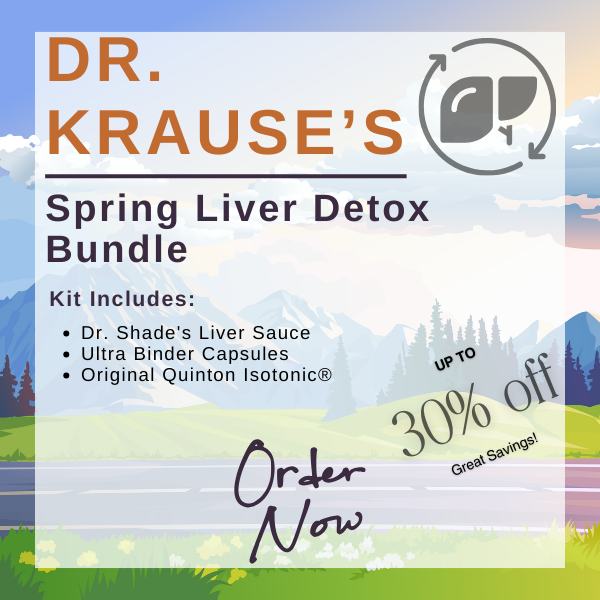
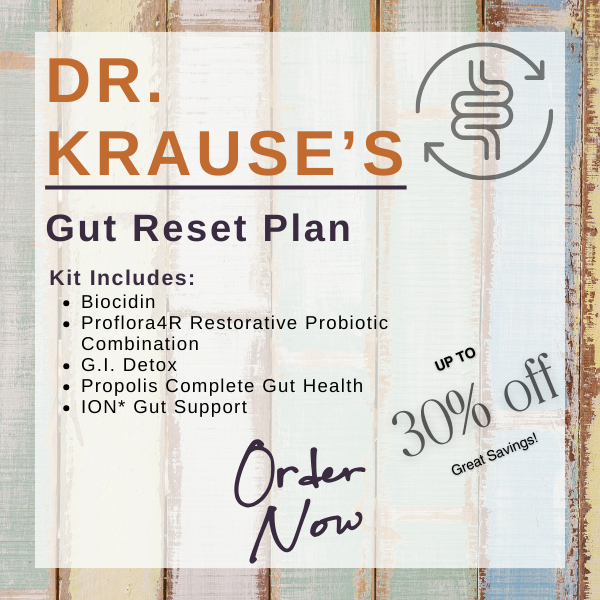
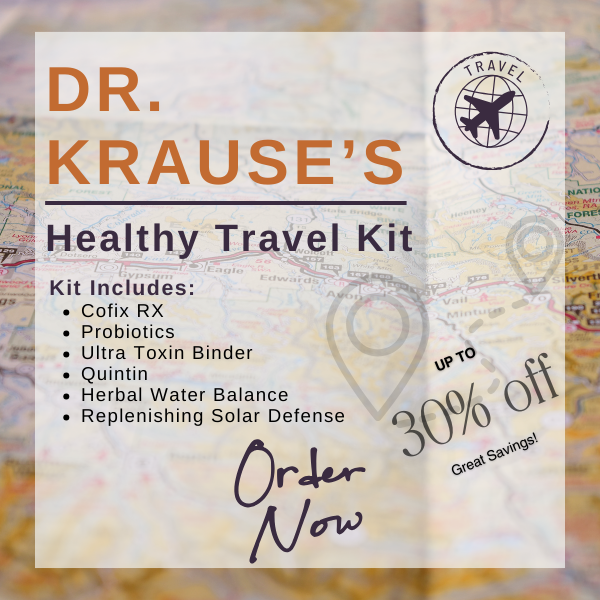
Traveling soon? Looking to detox or reset your gut? Try one of Dr. Krause’s Fullscript plans.

In this episode you’ll learn:
- Overlooked reasons for why chronic pain and injuries can increase during perimenopause and menopause
- The connection between circulation and pain
- How gut and liver health may affect tension, pain and inflammation in the body
- Why sitting, lack of movement, and past injuries can contribute to tension
- The role of nitric oxide, nutrition, oxygen transport, and nutrient deficiencies in recovery
- How myofascial release, acupressure, tapping, and gentle stretching may help reduce tension
- Why chronic pain stresses out the nervous system
- What you likely haven’t heard about stress, emotions, and tension held in the body
- How mitochondrial health declines over 40 and it’s role in energy and recovery
- Simple myofascial techniques for the jaw, neck, shoulders, and other areas of tension
The Big Takeaway
Pain isn’t always just about the place that hurts.
It’s key to look at the whole body, including circulation, digestion, movement, nutrition, past injuries, stress, and nervous system regulation, when trying to understand your chronic pain and tension.
Get on the waitlist for Dr. Jannine’s upcoming acumyofascial release workshops, designed to help people work with specific areas of pain and tension.
Resources Mentioned
- Chemical Free Body Organic Energy Juice — use the code: thehealthfix for money off your first order.
- Vibrant Pelvic Health and Dr. Brianne Grogan’s – Experience
- JumpSport – use the code HEALTHFIX
- Vibrant Blue Oils – Fascia Release
Note: This episode discusses supplements, herbs, hormones, peptides, and other health interventions. Always consult a qualified healthcare professional before starting new treatments or supplements.
Connect with Dr. Jannine Krause
Check out Dr. Krause’s Website for more resources and subscribe for more conversations on functional medicine, longevity, brain health, hormones, nutrition, and natural strategies to optimize your health.
Be sure to Like, Subscribe, and Share this episode with someone who wants to protect their brain and age with vitality.
This episode of Health Fix Podcast is sponsored by Chemical Free Body – home of Dr. Krause’s favorite green juice – Organic Energy Juice – enter “thehealthfix” for 15% off your 1st order.
Our Partners


Podcast Transcript
Jannine Krause (00:01.998)
Hey Health Junkies on this episode of the Health Fix Podcast. It’s a solo podcast. We’re gonna be talking about pain. One of my near and dear subjects, but also one of the subjects that I work with a lot on a daily basis in my office as an acupuncturist. Now, my biggest thing with pain, having worked with women over 40 for the last almost 20 years, is that I’ve noticed that pretty much everyone tends to start to develop.
pain, whether it’s in the joints or getting more injuries, and then we’ve got this chronic injury thing situation happening right around when the hormones start to decline. But here’s the thing it would seem like everything is because of estrogen decline. And yes, estrogen is part of this, but it’s not everything. Testosterone, yes, part of it, but not everything. I could argue a lot of different directions, but today I’m gonna talk about
What we’re overlooking when it comes to chronic pain, chronic injuries, tension in the body. I just read a meta-analysis that came out in January of this year, and it and it surveyed like 92,000 women, something like that. And it was looking at the categories of perimenopause, menopause, and beyond. And it found that 57% of women in perimenopause have some sort of pain issue.
And by menopause, that number jumps a little bit to 59%. Now here’s the thing. If menopause was truly, or or if estrogen was really the issue that causes this chronic pain issue, it would have worsened even more exponentially as we move from perimenopause into menopause, because in perimenopause, our estrogen levels are starting to decline. They’re not completely gone.
And then as we move through menopause and beyond, now we’re looking at estrogen levels bottoming out if you don’t take any hormone replacement therapy or do anything herbal to help support yourself. So just looking at this data, it’s like, yeah, that’s a lot of women, but it doesn’t exponentially go up once the hormone levels decline considerably. So
Jannine Krause (02:24.681)
We’re gonna talk about what you can do about it because if it’s not all hormones, what else is there? And one of the biggest things is circulation. And if you’ve listened to any of my previous podcasts of me talking on my own, you’re probably gonna hear me mention the word circulation at least a hundred times. And and the point being is if I if I learned nothing from my acupuncture and Chinese medicine training, but I learned one solid thing. So I can’t really say I didn’t learn anything. If I learned one solid thing.
It is all about circulation when it comes to getting older. Because if your body isn’t getting good circulation to a particular area, it is going to send signals of pain. Pain is just a signal. It is a histamine response within the body that goes up to the brain that says something isn’t right. Now, of course, if you just injured yourself, you’re like bleeding terribly, your bones sticking out of your body, obviously go get the emergency care.
But if you’ve been to the physical therapist, you’ve been to the orthopedic doc, and they’re like, yeah, there’s really nothing major wrong, or maybe they told you you have a little bit of tears in your shoulder, a little bit of tear in a tendon in your knee or something like that. But they’re like, it’s not surgical case situation. It’s just a little tear. And yes, these things happen. And it’s not always estrogen. Sometimes it’s overuse.
Sometimes we injured ourselves in our 20s, didn’t really notice it much because we had good circulation going to let’s say the shoulder joint, because this is a big one I hear a lot about. And just as we got older, that tear just got a little bit worse and worse and worse. The rotator cuff, which is a group of four muscles that surround the shoulder, that is a very common spot to have tears.
And that they get worse and they show up over 40. And it’s why people do their shoulder surgeries. But here’s the thing: we can prevent a lot of that, especially if we catch it early, and especially if we we enhance the circulation thing. Now, in today’s podcast, I’m gonna be diving into yes, circulation, but I’m gonna be diving into the factors that impede our circulation. What are some of the things we do as humans to jack up our circulation? Because there’s a lot of them.
Jannine Krause (04:44.341)
And some of them are obvious and other ones are like, I didn’t really think of that connection. And I’ll be honest, I had to think about it over the last almost 20 years, all of the different areas in which we can have circulatory issues.
And so we’re gonna go into that today. So let’s dive into it.
My first thing that I want to say right out and about about circulation is that your liver and your digestive system are kind of foundational to circulation. And if either one of them is off, you’re gonna have some issues throughout the entire body. I bet you were thinking I was gonna say your adrenal glands or your thyroid. Or maybe I was gonna say like anemia. No.
Those are factors and we’ll get into it. But no, the gut and the liver actually have a lot to do with circulation. Here’s how. Your digestive system, if you are not eating adequate protein, okay, we’ve heard that a million times in the perimenopause and beyond space. Yes, it f has a factor. But the other thing is is if you were eating too many cold foods.
If you’re eating foods that are beating up your gut, if you’re eating too fast, you will mess with your digestive qi, which is otherwise known as spleen qi. Why they call it spleen qi, I have no idea. The the Chinese put the spleen and the stomach kind of in the same category, even though there’s there’s two channels for for both, but it’s really all kind of lumped together. But what we notice is that if you don’t get the right nutrients to your gut, then you’re gonna have trouble with blood flow.
Jannine Krause (06:29.441)
Because you may end up with leaky gut. Leaky gut is when foods come across the gut lining that normally are supposed to be eliminated. And instead, when they come across the gut lining, they create inflammation responses. They make your blood sticky. They create pain. Why? Because all of our joints are like narrowing within where the capillaries flow, where the blood vessels flow. And so we’re gonna have stagnation or stuck blood.
As the Chinese call it stagnation. I’m gonna call it stuck blood just to make it a little bit easier to think about. But that’s gonna happen in a lot of the joint spaces. So it’s easier to have pain in a joint space. Now, add on top of that that we have a lot of joints that whether you believe in evolution or or however us humans got here, were we on all fours like animals? Maybe. and maybe not. But
Regardless, our design of our shoulders and our hips, there’s a lot of ligaments holding these joints together. They’re actually quite unstable joints. And they’re the ones that tend to tear. Interestingly enough, they’re the ones that we tend not to move well either. So we sit on our bottoms a lot because life is that we’re on computers, or we’re driving, you know, commuting, et cetera, or we’re just getting older and we don’t move as much as we used to. Hips get compressed, we’re gonna have less circulation in those hips.
shoulders. How many times do you reach over your head during a day?
Chances are, dependent on what you do for a living, you might not. You might have not reached over your shoulder in like five years. I don’t know. But there’s something to think about in terms of just greasing joints, moving, and and how things are are related here. Now, how I tie this back to the gut, because you might be thinking, well, wait, you just talked about the gut, and then you went into shoulders and hips. There are gut points in your shoulders. Large intestine channel runs straight up.
Jannine Krause (08:29.267)
Into your shoulder. Small intestine channel comes from the back of your hand up and goes to the back of your shoulder. That rotator cuff has two digestive channels running through it: your hips, the gallbladder channel, the stomach channel, the spleen channel, the urinary bladder channel on the back, which is an elimination point, but I’ll explain that in a second. The three gallbladder, stomach, and spleen and liver all run through your hip. Hmm.
What does that tell us? If we don’t have good circulation through our digestive channels, we don’t get good circulation through our hips and shoulders. Shoulders, hips. Easy toes. Okay. I digress. So back to the gut. It’s very common over 40 to feel like you’re getting more food sensitivities and having issues that increase over time with the gut, more digestive stuff like
constipation, diarrhea, etc. Acid reflux, bloating, gas. All of that is wear and tear on the gut. Because think about it, how many meals do you think you’ve had since you were born? It’s a lot. There’s some mileage there. Add that on top of how many times you have had a lot of alcohol. You’ve not sat down to eat. You’ve been eating on the go. You forgot to chew very much. You ate food like my golden retriever eats an ice cream cone. This is a problem. This is hard on the gut.
Another thing is is we tend to get lazy, like my myself included, if I’m busy, I’m not gonna warm up food. So I eat it cold. Or I’ll eat raw foods, especially in the summer. And when I’m recording this, this is heading into the fall right now, and a lot of people will struggle with gut stuff at the end of summer, early fall. And it’s because you’ve been hitting all of the raw foods, then you add on top of it the foods that are high in histamine.
I’ll tennise issues in June when the strawberries come out, and then right around August, September when the tomatoes are hitting pretty hard because both of those high histamine. What’s the histamine thing? Histamine is an irritant to the body. It’s a warning signal, like we need it, but when we inst in are ingesting a lot of it, it can create more issues in the body. Now, tomatoes, a lot of folks know those are nightshades. Those can create issues with inflammation in the body. But like how do they do it? Same thing with potatoes and peppers.
Jannine Krause (10:55.905)
Which are all, by the way, in season at the end of the summer, why are they a problem? Well, nightshades in particular have some pretty good caustic stuff on their plants as a whole to protect them. So if you go to pick them, a lot of times you’ll get itchy. That’s histamine release there. But also when you eat them, they have lactins. If anyone’s followed Dr. Stephen Gundry’s stuff, lactins, okay. But here’s the thing: these are food.
They’ve been food for a long time. Some people can tolerate them, some not. What is the difference? Leaky gut. If your gut lining gets irritated, these things get across and they create inflammation, like I said, with the narrowing points of the vessels. And so this is why you want your gut point on health. Like on health, on point. You really want to focus on keeping your gut lining healthy. It turns over every three to four days, but if the new cells that come up aren’t healthy, well.
We’re not doing ourselves any favors. One of the most amazing foods, and I’ve got it right now, is warmed up apple pectin. It’s like apple cider. It’s great in the fall to help your gut. I don’t know if we were intelligently like blessed with these kind of things. I like to think so. But apple pectin. You boil up with like five cups of water, and you’ve got like two pounds of apples, you boil them up with the with the peels on. So get organic or ones that haven’t been treated.
And you literally boil it up, strain off the apple matter, and you get the liquid. The rest of it you can make applesauce out of. Like boom, good stuff for your gut. How does this work? It’s working on helping the lining of your gut have a good amount of mucus on it so that the good bugs can stick to that. Because a lot of us have sterile guts because we can’t our lining isn’t sticky enough. We don’t have the mucus layer.
That’s what pectin helps with, but pectin also helps with putting the cells together on the gut lining. Now, how does the liver play into this? Well, whatever gets absorbed from the gut always has a pass through the liver because our liver’s got to filter out our toxins. In perimenopause, menopause, and beyond, it’s kind of like a sick joke. I don’t know. I mean, in a way, I’m like, really? I believe we have an intelligent design, but I I think that we’ve just life has created different ways to jack this up for us.
Jannine Krause (13:17.665)
But our liver, when it goes to filter what we’ve what’s come across our gut lining, it has to process these things. And unfortunately, in perimenopause, menopause, and beyond, we are more prone to fatty livers. Fatty livers will decrease the real estate of what you can use to detox. So now we’ve got decreased detox capabilities. Where does that crap go that doesn’t get detoxed?
Back into our bloodstream to make our bloodstream sticky to reduce circulation and create potential for tension in the body. What is the organ of detox if your liver’s not detoxing? Your skin. What’s underneath your skin layer, your fascial tissue? What gets trapped in fascial tissue? Toxins. A lot of us may be tight, not because we have a secret amount of stress, because not because our posture is bad, not because
Of any other factor other than just toxicity within the stinking body. And that could be why we have pain. Is that not insane or what? Wild. Wild. This is why I’m a big fan of saunas and getting warm and warming yourself up. The Chinese do not love cold anything. Cold food, any of that. They’re like, yeah, that’s hard on the gut. And if you are gonna do something cold, you gotta mix it with something warm. I think the prime example is is another Asian culture, Jap Japanese, the sushi.
You’ve got raw fish and cold rice, and you’ve got cold, like if you do the veggie ones like me because I’m afraid of parasites. Now we’ve got, you know, the cucumber rolls, all raw. And what do you do to warm it up? The ginger and wasabi. And so they’re pairing it. And so that would be the other way that you can work with if you do really love raw food, you gotta warm it up some way. Like ginger’s an amazing way, walnuts are a warming. You’re you’re using your dressings and your sauces and dips to help warm things up.
But the point that I was trying to get across here is that if we keep going on cold, cold, cold, cold, cold, we are going to have some problems, especially with the digestive system. And what I see for a lot of women over 40 is if they’re more prone to eating raw foods, a lot of times they’ll end up with a weak gut where they’re you eat a little food and you’re quick to bloat. You have early morning diarrhea or you’re waking up because you gotta go to the bathroom.
Jannine Krause (15:41.736)
the the bloat is probably the biggest complaint, but you just feel like just always full and so you’re not eating a lot and you trend towards raw f raw foods, this can be a problem. Now the other side of things I see is of course chronic constipation. And if we’re looking back at the gut and liver here, if we’re constipated, we’re not detoxing well. So more chance for things to back up into the liver and if the liver’s got some fattiness to it
Now we’re backing up into the skin, and now we have more chance for tension in the skin. Constipation is a is a beast in and of itself. And sometimes if we look at constipation, we’re looking at are you eating a lot of dry foods? Things that don’t have a lot of moisture to them. Chances are fibrous foods, but ones with not a lot of moisture. I’ve noticed that a lot of people who eat like crackers and bread maybe trend towards more constipation.
Even if these foods have fibers in them, what is it? It’s because they’re just dry by nature. So we need to be thinking about this because most of the time as we get older, the wear and tear is that we you lose the mucus lining, a good, healthy mucus lining and a good lining, but we also lose motility, coordination. This has to do a lot with the nervous system, but it can have a lot to do with the circulation in your core. And
By that I mean has a lot to do with what’s going on in your pelvic floor and your diaphragm. Are you taking deep breaths? Are you moving your pelvic floor in a good manner? And I’m not talking about Kegels. My really good pal, Dr. Brian Grogan, has fabulous stuff. If you look at Vibrant Pelvic Health on YouTube, you will see all the releases for the pelvic floor. Go there and and check that out. plug for her. And plug for her if you really do have gut and pelvic floor issues.
that nothing seems to be helping. She has a wonderful three-day retreat at her home where she cooks for you. She does internal public floor work and massage types of therapy to help release the public floor and teaches you what to do to keep it going. 100% recommend that she’s in central Oregon. It’s a great vacation area in and of itself but she has just a great location. So
Jannine Krause (18:04.747)
I digress, but that is a fabulous thing to think about if you’re really struggling and need to help with circulation to your gut. Now, right now I want to challenge everyone. I want you to take your hand and put it on your abdomen. Is your abdomen
Jannine Krause (18:21.717)
If it’s not, what does that tell you about your digestive system? It’s likely cold. Same thing goes with putting your hand over under your right side of your ribcage. That’s where your liver’s at.
Same thing goes with putting your hands on your low pelvis, like right above your hip bones there, or right between your hip bones. And then my other favorite one is touch your butt. Is your butt cold? That that’s like detox areas. Your urinary bladder channel runs right through your gut and then or your butt and your gallbladder channel runs through the side of your butt. If all those are cold, that means we have decreased circulation and gotten
Now, the other side of circulation that I love talking about is what’s going on with nutrients. Over 40, we decline on our nitric oxide, which means nitric oxide opens up our blood vessels. So if we’re declining on our nitric oxide, maybe we’re eating a lot of sugar, maybe we’ve got molecules coming across in the bloodstream. You can imagine that your blood is kind of sticky. I’ve read a ton of research on enteric coated.
baby aspirin being a like secret weapon to fight inflammation. And like the truth is I look at it and I go, you know, they’re not far off. And of course I’m a naturopath, right? So white willow bark, that’s what salicidic glass said, that’s what baby aspirin is made out of. If you want something natural, white willow bark, you could dose on that. Now you could also work on Chinese herbs like salvia root. This is known as Dan Shen. Or you could do Dung Kwai.
Which is Angelica sinensis. Or you could do ginkgo.
Jannine Krause (20:07.041)
Now, these are all things to boost circulation. And personally, I do believe this day and age with more people having strokes, more people having clots, just whatever section you believe on spike proteins and things of that nature, doesn’t matter. You want to boost your circulation any way you can because nitric oxide’s declining. And yes, we could boost nitric oxide. There are supplements for that. And I and I do give them to people from time to time. But sometimes we need to thin the blood a little bit. And that’s where
These Chinese herbs are coming in. Now, what else can you do to help with circulation? Identify your areas of pain and what’s going on. Remember, I said pain is a signal that something is not getting proper circulation. That’s a warning sign to your brain.
Jannine Krause (20:57.581)
Chronic pain is a warning sign that there’s still not good circulation in an area that had an injury long ago. You can have organ pain.
Still means poor circulation. One of the coolest things that I’ve really started to get into, thanks to my my good pal and Tacoma, who has a jump sport trampoline. I played on it last time I was there in May and was like, my God, I need one of these. And then I did a podcast with with Steve Carver from Jump Sport and they gifted me one. It was like I was like a kid in a candy shop. I’m like, my God, thank you. And so now I have my own trampoline.
I actually played on Dr. Breeze one too in Oregon when I was down to visit her. I love it because it just even bouncing on it just a little bit will help reduce tension in the body because it’s reducing all of that tension along the spine. It’s decompressing your spine. And and all of us like have compression because we live on this earth and there’s gravity. But not only that, if you’re sitting and not moving or you’re sitting in a chair because you have to work on the computer for work, or you’re watching Netflix like crazy or prime, whatever it is.
Point is, we need a little bit of fun in our lives and ding that trampoline’s fine. But it helps with circulation. That’s where movement comes in. That’s where all those things, and that’s the truth when it comes even to where my dad stands. The biggest thing that I think secondary to dialing in his digestive health and helping him with good food was getting circulation going. And he’s had that going all along.
There’s some countries and and some research that says that alcohol is beneficial because it helps thin the blood. That may be the case. I mean the man drinks Miller Light two to three a day. If you listen to our podcast together, he’ll tell you all about it. There’s a podcast just before this one. But
Jannine Krause (22:51.413)
What I really want to share here is that you’ve got to move. Gotta be moving. And if your hands and feet are cold and you were born that way practically, or it’s been that way forever, don’t keep blaming it on your thyroid. Get your thyroid tested. Of course. TSH, free T3, free T4. Get it tested. I have a theory that nine times out of ten, our thyroid issues come from our adrenal glands, which I did learn in school.
So I guess it’s not really my theory, but my theory weaves in in that I think most of us have restricted blood flow in the neck because of tech neck, because of poor posture, because of just a lot of us shrinking to be small in this world and not standing up and speaking our truth.
Jannine Krause (23:39.339)
Louise Hay said that the thyroid and and the whole neck area, if you have issues in the neck area, it’s because you’re not speaking your truth. You’re not speaking up, you’re not speaking out like what you what saying what you need to say.
And so my point here is that is it possible that the thyroid decreases on its function when there’s not enough circulation in the neck?
Acupressure, myofascial release can really help this area. And I notice it over and over again. Like, think about it this way too. A lot of women who have thyroid issues had Epstein Barr virus chronically before that. And now we have long haul COVID. All of that affects the immune system. Lot of lymph nodes in the neck. Pair that with having like chronic throat stuff.
Like maybe you had strep throat chronically, maybe like your throat is the area where you get sick and that’s what happens and you lose your voice when you’re sick. Yeah. All the lymph and all of the immune system activities here. I mean, we have tonsils, we have adenoids, unless you’ve had them removed, this is all gonna be affected. And if you have had your tonsils or adenoids removed, think about how much these lymph nodes in your neck and in your mouth area have to work double time.
Pair that with like dental infections and all of that stuff. I could go on for hours on just the neck alone. In fact, it’s one of my favorite areas to work with pain. But I want to pose it to you that I and I fell into this too because as a naturopath, I I I feel for folks with thyroid stuff. But I also am like, could we be mistaken in that the thyroid is really the secondary issue because of tension that happens in the neck and decreased blood flow to the thyroid.
Jannine Krause (25:25.175)
Just gonna put it out there. Now, secondary to the thyroid and and often goes along with it is anemia. And anemia being a decr a deficiency in iron, but also can be B12, could be folate, it could be copper and zinc balance. There’s a lot of different factors when it comes into this. Now, what’s the d the common denominator? It’s nutrition and getting these nutrients in. Why do we want iron in the body? Because it carries oxygen. What does oxygen do? Oxygen helps.
your tissues to heal when there’s an injury. And there’s injuries happening all day long. You bump yourself on things, you know, things happen.
So if we have poor nutrition, we’re not getting the nutrients we need, and they’re not getting to where they need because of poor circulation on top of poor nutrition, you can imagine we would have pain and tension in the body. So we wanna be systematically thinking about all these things. And in my upcoming courses, I will be talking about this. And I’m not gonna call them courses. Nobody wants to take a course. It’s a workshop. It’s helping you to help yourself is where I’m going with my acomyofascial therapy courses. Workshops.
I’m gonna keep trying to say WordChaft. Anyway, now let’s get into how we can manually help release some of this tension in the body because it’s incredibly important to think about boosting that circulation. And with manual myofascial release, acupressure, tapping, whatever it may be, all of these things are stimuli, things that get the cells moving, the circulation to the area. I use tuning forks.
That vibrate the skin to bring things in there. So you could technically vibrate. You can you can do sound baths to help, and you can put this the bowls on the chest or wherever the abdomen if you need more vibration to increase circulation. You are a sensory being. So any type of rubbing, tapping, all of this stimulates the fascial tissue and brings blood flow to it. Chances are by now you’ve seen cupping. And when you put cupping on the skin, you’ll see.
Jannine Krause (27:33.164)
That redness comes up to the the cup. It’s suction. By all means, if you feel like getting out your vacuum cleaner and s and going up and down your muscles, it’s kind of like cupping. I do not recommend that. It’s I’m totally kidding. But the idea here is that it’s stimulation to the body. Absolutely stimulation to the body to get circulation going. And with over 14 channels in eight.
Extraordinary channels and a whole bunch of sinew channels in the Chinese medicine space, we have a lot of areas to target.
So you could dial this in a lot further. And that’s what a lot of my courses are gonna be, or my workshops. I can say this, a lot of my workshops are gonna be on targeted areas. Like you got neck pain, I’ve got something. You got hip pain, you know, we can we can dial it in. Now here’s the thing: what’s the best way to move the myofascial tissue? It likes a little pressure, it likes a stretch, and it likes torsion. It likes all three of these. So you can add these in all at the same time.
So let’s say, let’s say you got some jaw pain. Cause this one’s a really easy one for me to demonstrate on a podcast and and also talk through for those who are not watching on YouTube right now. So if we open and close our jaw, like a la la la la, open and close it, you will feel a condyle, which is a bone that moves in and out. You’ve got like a divot that that shows up when you close your mouth and one that pops out.
Up and out when you move your jaw. That guy there is your temporomandibular joint, the TMJ. A lot of people heard of TMJ pain, that’s the spot. Now, what you can do is you can pin and stretch, meaning like you can pin the area and stretch down the fascial tissue right above the jaw there. And that feels nice. You could also pretend like you’re erasing the area and just do this.
Jannine Krause (29:26.849)
Now at the same time, if you’re like, I really don’t want to use my fingers, you can use an old school one of those rectangular erasers. Remember those pink rectangular erasers? If you grew up in the 80s or 90s, you gotta know what I’m talking about. If you grew up before that, you definitely know what I’m talking about. Those guys are amazing little tools. And chances are we got one sitting around that’s kind of hardened and doesn’t really erase well anymore. Perfect. Use that bad boy for your fascial tissue. Now here’s the thing: we got the pin and stretch situation, we got the eraser situation.
The other thing that you can do is torsion. You can get in there and just kind of pinch it. And go on an upward angle when it’s on your face because we don’t want to draw downward because we don’t want wrinkles to come downward. So a little bit of aesthetics here. You’re pinching and moving it up. What this does too is moves your lymphatics. Amazing for not only helping your body on a base level for the pain, but you’re also moving lymphatics because.
Pain usually goes along with stuck lymphatics. So couple seconds, like 30 to 60 seconds. You’ll notice I’m red. I got blood flow there. I challenge you to do this and not get blood flow. If you didn’t, then you maybe need to work a little harder there or tap. Like little tapping. Works lovely. Two fingers tapping upwards. That will be good to get some circulation moving in the jaw. Now open and close the jaw. I bet it feels a little looser.
Alright, so the other part is the angle of the jaw here behind the jaw. for a lot of people, that’s a spicy spot. And if you’ve got ear stuff on top of jaw stuff, chances are it’s because the fascial tissue is stuck here. One of the reasons we have ear pain or have issues with dizziness and all that after or during getting sick is because this jaw and tension in the neck will block us from draining the ear.
down the Eustachian tube, which that Eustachian tube is that connection between your inner ear and your throat. It’s right behind the jaw there. And so back again, pin, stretch, pin, stretch, just like you’re stretching a little taffy. And then do a little eraser motion and do a little eraser motion. And then you can also do a little torsion here. Just pinch and move, pinch and move. Gentle here because we do have the jugular vein coming down towards the front of the neck. But behind the ear you’re good still. You’re pretty dang good.
Jannine Krause (31:52.244)
one side at a time. Don’t do both. That’s why I like the pin and stretch with one finger and then the other. Works really well. Now after you do that, you’re gonna feel your jaw move a lot better. You’re gonna feel your neck move a lot better. Now the other spot that a lot of people do not talk about is underneath the jaw. Holy cow. If you go to like under your chin where the jaw is and go under there, for a lot of people pinning there and stretching out can feel incredibly intense.
So go gentle, but that is another great spot to release all around the jaw. So these are just some of my gentle myofascial release spots. Now, are there acupuncture points in there? Yes, there are. And in particular, where I showed you the jaw opening and closing, that’s stomach seven. If you go down to where your jaw muscle, the maceter, attaches to your jaw, that’s stomach six. That one can be really spicy for folks too. And so doing a little bit of pressure.
Doing a little eraser motion, doing a little bit of pinching and moving upward from there can help that point. These are both notice points on the stomach channel. What did I teach you about circulation? Yep, works on the gut. You got it. So that’s just one idea. Now the other stuff is if we start getting into things like what’s going on in that knot that most people have on the top of their shoulder, that gallbladder 21, is that is lovingly known.
for us acupuncturists, that spot, you can do the pin and stretch, you can do a little bit of the eraser, the pinch works nicely too, to be able to pick it up and move it. But for a lot of people, that doesn’t necessarily get rid of that stuck feeling or even that knot. Which by the way, a lot of people ask me, what is a knot? A knot is really your fascial tissue like sucked down, almost dehydrated like beef jerky to the motor point. And the motor point is where your nerve comes into the muscle. So that’s what a knot.
really is. And when someone says they’re breaking up the tissue around your knot, they’re not breaking up your tissue. Your tissue is not going to rip unless you actually injure it. What they’re doing is they’re getting more circulation to the area to help the tissues glide over each other better. You’re not breaking up anything. You’re just boosting circulation. I really wish that we would change that because I started singing it too and then I’m like, wait a minute, I’m not doing any of that. I’m getting circulation going. That’s the name of the game.
Jannine Krause (34:12.915)
So with the top of the shoulder, one of the fun things with the shoulder, and one of the things that I add into my acumyofascial workshops is I’m working on moving the arm in different directions to see what feels better. And you’ll notice I’m moving my head too, because the arm and head, in the way that they move, you will find what gives the best stretch and the best kind of ooh release to that area because chances are there is a particular motion that it’s stuck in.
And if you counter that motion that it’s stuck in, it’s going to help release. This is your fascial tissue releasing. Now, what you can’t see, and it’s really hard for me to demo here in this particular format with the podcast, is that you can also use your legs and the opposite ones because we’re crisscrossed in terms of how we’re wrapped. It’s like an X. So a lot of times if you got left shoulder pain, moving your right hip can help.
In this case. And so what my motions end up looking like is much like an aesthetic dance where we’re holding, stretching, and then moving another area of the body. So, like right now, I’m holding my left shoulder while moving my right hip and then moving my head up and down, stretching out my arm, seeing what helps to get that area to release. It feels good, you feel like you’re greasing the joints, and in particular.
The way I can it describe it the best, and and I don’t know how many people would actually relate to this, but I’m gonna try, is like you almost feel like you’re you’re squeezing in a little juice in there and it’s just lubricating it. My dad would tell you it’s like when we used to have to grease the machinery. he had a backhoe. Well, he still has the same backhoe. That’s a whole nother podcast. But that thing has been around since my childhood, but it’s working well to this day because he squeezes this.
lubricant into the hydraulic system and he’s grease in the hydraulics. So anyway, grease your joints. But not only that, grease your knots in your fascial tissue. And that’s what we’re working with in my program. So all right, back back to my my list of things I want to talk about. So the myofascial release is my jam. I love it. It’s the best thing ever. and chances are if you’ve worked with me in person you’ve seen little bits and pieces of it, but I I’ve not put it together till now. And I’m
Jannine Krause (36:32.633)
really excited about putting these workshops together. And I’m gonna do a test one here soon in Tacoma with some live volunteers to to help go through it for me. And yeah, we’ll we’ll send that information out soon. But if you’re interested in looking at what these little workshops look like, get on my wait list. And if you are in Wisconsin or Washington State, you will be able to even get chances to do them live with me if you’d like.
So that’s the acumyofascial release side of things. The other side of this is essential oils. And the reason I love essential oils is not necessarily for the scent of them, but how they stimulate the body. So much like I was talking about the tapping, the stretching, the torsion. Another way to get more circulation boosted is to use targeted essential oils. My favorite is something called Dr. Bop’s Medicated Oil by Blue Poppy Press. It’s been around for eons. You can get it easily yourself.
It’s cinnamon, peppermint, licorice root, and dragon’s blood. Don’t worry. It’s inert. But the dragon’s blood is fun because it’s a stimulation booster. It’s a circulation booster. And this, if you’ve worked with me in person, you have seen this oil because I’ve had it since like day one of practice. It’s it’s my jam. But the cinnamon, the peppermint, and licorice root really stimulate the skin and it improves circulation locally. But
Also on that tissue level that a lot of us struggle to get the circulation going to. So as a kid, I watched my grandma put on like bengay and all these other types of liniments. She called them. She had these really old bottles of stuff that I think she probably hoarded from when she was, you know, younger. And she would use it to help to get her hands moving. And you know, I I look at that now and I’m like, dang, we should be doing this so much sooner. She was in her eighties when I watched her do that.
I’m like, let’s do this in our 40s to grease the skin and the joints and the acupressure points and just all of it. So those are some of my favorite things. Now, there is also a company Vibrant Blue Oils. They have a fascial release oil that is amazing as well. And it smells a little better than cinnamon peppermint liquor shrub. If you’re not a jam in the jam of that and you want something a little more luxurious smelling, then you’ve got that.
Jannine Krause (38:48.791)
The other cool thing about vibrant blue oils, just a plug for them, and and they’re also local from Seattle. Jody Cohen is awesome and genius. She has oils tailored towards all of the acupuncture, the main acupuncture channels. And so we can put these oils on the points and on the channels, and it pairs so lovely together to boost circulation. That is that is the whole goal there. and it also helps with emotional support because once you start moving things in the body, emotions will come up.
This is that whole idea of like trauma stuck in the body. Yeah. I’ve I’ve put in a lot of needles on folks. I’ve done body work on a lot of folks and they start crying and they’re like, my God, I’m so sorry. I don’t know what’s happening. I have no idea. You’re releasing. It’s normal. It’s cool. So if you have ever cried in a massage or acupuncture session, that’s what we want. Like honestly, we’re like, yes, it’s working.
Obviously, we’re not going to say that right in front of you, but you’ve heard it now. We’re we’re like, yes, it’s working because we want that release, because it means we’re letting and get that, we’re getting that circulation up to the surface and we’re just helping you to release. So that being said, there are different types of things you can do peptide-wise. There’s different types of things you could do mitochondria-wise to help with circulation as well. Because one of the big things that happens as we get over 40 is our mitochondria also decline.
So nitric oxide declines, estrogen and all the hormones decline, and our mitochondrial function declines. These are all things related to why we have fatigue and chronic pain. And my favorite of the, I’m gonna say it’s probably my new favorite of all of the things for mitochondria is something called five amino. Now, I didn’t think much of it injection wise, but since I’ve started trying it with the supplements, I’m like, hmm, there may be something to it. Now,
I haven’t had it on board long enough to speak to it yet. So hold tight. But things that I also know help really well for the mitochondria. Coenzyme Q10. Amazing for the mitochondria of the muscle, especially the heart muscle. If you’re on a statin you gotta be on coq10, if your doctor’s not told you that, get on coq10 to help your heart muscle. It is amazing for that. And like, what does it do? It helps your your heart muscles, the mitochondria work in all your heart muscles to help to them to recover from.
Jannine Krause (41:06.547)
Day’s activities, your heart’s beating all the time. Wouldn’t you want something to help keep things going? Yes, yes, you do. So coenzyme Q10, definitely a a game changer there. Now, in recently, a lot of folks have introduced Urolithin A, which is an extract from pomegranates. Now, you could drink pomegranate juice and get get some benefit. Urolithin A supplements are pretty expensive, but for a lot of people.
I I would say if you’re really struggling, you’ve tried a lot of things and you do like supplements, sure. Pair some urolithin A with some coenzyme Q10 and maybe a little bit of creatine and see if that helps with your brain fog and energy. For a lot of people, it does, especially if you are not getting your muscles to recover well from workouts. That could be important to help with the mitochondria. Now the other side of mitochondria is something called our phospholipids, which are our good fats. So omega-3s.
Also, our omega-6’s things like sesame and sunflower seeds, those are incredible to help with our good fats in the body. So we do want to make sure we have these things on board as nutrients, much like I said before. But if your circulation isn’t good and your gut’s not good, are you gonna get these supplements to where they need to be? I don’t know. Like I there is no test other than a micronutrient test to see if they’re getting to where they need to be, at least in your body. So if you’re
Taking a lot of supplements and you’re not working on your circulation, go back to working on your circulation. But if you’re taking a lot of supplements, you are working on your circulation, you’re still not feeling better with pain and tension in the body. It’s time to do excuse me. It’s time to do a micronutrient test because that can be a game changer.
For helping you to know what nutrients you’re missing out on, because there’s some B vitamins that are crucial for mitochondrial function as well. And all those things can decline dependent on what’s going on with your nutrition. So we gotta think sequentially. A lot of us will will jump right to the supplements, but if your foundational health is not there, and that’s why I talked about those things first, we got problems. Now, of course, there is the whole concept of getting your hormones in to help.
Jannine Krause (43:23.841)
with aches and pains. And I think estradiol, which is your most useful estrogen for your joints and tissues, estradiol can be incredible. But if you don’t detox it well, if you are only doing that, it may not be enough if your nutrition’s not on point. So it’s an added layer. Now peptides right now, I had mentioned five amino injectable. I hadn’t seen that be incredible compared to like supplemental, but hey, for some people might be great.
NAD plus, if you’re gonna use it, you do want to make sure that you’re cycling it and you want to make sure that you’ve got it like a couple days a week, not every day of the week. And there’s a lot of research that shows that five amino plus NAD are a good combination to help with recycling of the nutrients needed to help you boost energy. So something to consider there if you’re only using NAD at this point and you’re not cycling it.
The other thing with peptides is with tissue healing. And if you’re really, let’s say you’ve been prone to a lot of injuries, maybe you have a rotator cough injury right now, maybe you have a knee thing, whatever it may be, glow and clow, which are combinations of copper, TB500, and BPC 157. Now you might be thinking, geez, she sounds like a German U-boats. These are all the abbreviations for certain peptides, can be incredibly helpful to help with tissue healing.
Clow compared to glow. Clow has something called KPV in it, which is lysine, proline, and valine. Three crucial amino acids that help with the tissue. At this point, I don’t even know why anyone’s using glow. I think clow is is a better option. And when you put the water into the powder to inject these, it turns blue. Who doesn’t love a little smurf juice? So, anyway, the the the peptides can be incredibly useful. You just want to make sure that you’re talking to someone that’s got
lot of knowledge about them and knows good sourcing on these things because you can get a lot of crap online and us doctors we do have access to doctor grade peptides so something to think about and you can always reach out to me if you want more information there. Last but not least and I kind of talked about and alluded to it a little bit when I talked about emotional releases with the the working of the tissue. It is very common that your nervous system is tied up in your pain and tension.
Jannine Krause (45:47.84)
In fact, it may be one of the drivers. And if you’re stressed and your body is holding tension and stress, you are going to keep creating a loop that keeps going back and forth. And you ultimately there is a drive to to signal to your body that you you are safe in your body. And how do we do that? It is incredibly important when you’re doing body work that hurts.
A little bit. And this is something I learned from pushing it to the limits with really heavy weights on trigger points to try to get them released. You get quite a nervous system reaction. When I was working with professional football players, we would use 135-pound metal tubes filled with concrete to roll out their bodies. And that weight is incredibly hard on your nervous system.
I’ve put it on myself before. I mean, that’s as much as I weigh. And it’s intense. And dependent on your level of tolerability and sensitivity, having body work, you may have steered away from it because it hurt, or you felt worse or more sore after having bodies. This is a huge sign that you need to work with the nervous system a little bit when you have body work.
So, more gentle massage, not deep tissue, like crank it out, you know, get beat up on the table, kind of sessions. And granted, I’m known for that. And I’ve learned over the years that certain people, that is not what you can do with certain people. And this is where finding those knots, like say that one on the top of your shoulder, and gently working with it and breathing and having the movement kind of like I was showing you in different parts of the body, because the more we can move with our releases of our tension.
our tissue, the more that a lot of the nervous system stuff falls away because your body will feel that release on a deeper level with some motion and with added circulation. The Chinese believe that emotions stuck in the body are stagnation. So liver qi stagnation is anger, frustration, spleen qi, worry, heart chi, anxiety, lung qi stuff.
Jannine Krause (48:10.813)
All related to grief, kidney chi stuff that’s fear. And so all of these main emotions that come up are signs, are things are things that can be trapped in the body, in the fascial tissue, just because when we feel emotion, we often will tense in one way or the other. Think about the last time you cried, a good cry.
Like your lungs are involved, right? And you’re snotting all over. I mean, it’s just deep. And so what the body goes through that process to work that through. And sometimes it’ll get we’ll have tension and the memory of that emotion may get stuck. Same thing goes with where we have pain. If a channel is compl is very emotional, like for example, a lot of people have shoulder pain and I go into the armpit. This is heart one. This is a heart point in the middle of your armpit. What do you think’s stuck in there?
Heart energy, anxiety, all that, like whoa, that builds up, especially as we get, you know, over 40. Anything in the pecs, that’s also heart energy. It’s some lung, but heart. So it could be grief. It could be anxiety and grief all tied up in a one. Abdominal pain. That’s worry. And if it’s up in the right side by the liver, that could be frustration, anger, pain.
If we’re looking at pain lower in the pelvis, back, mid-back, that’s kidney area. If you’re looking at, you know, pain that’s kind of diffuse, I would say back to tension and I would say back to stress, back to anger, frustration, because it’s it’s diffuse through the whole body and and moving out in into the the skin. Cause our skin, tendons, ligaments, those are all a
manifestation of our liver energy and think about the skin being the detox organ back to liver because liver is detox Chinese wise. So there’s so many things that you can tie in here, but I really wanted to get the point across that pain is not just pain and does not need to be treated as just the localized spot. It’s a whole body experience. And over 40, we have a lot going on related to how our liver’s working, how our gut’s working.
Jannine Krause (50:27.893)
And so if you’ve been struggling with pain and things are not releasing, you’ve done PT, you’ve done OT, you’ve done chiropractic, maybe you’ve even had acupuncture massage and nothing’s sticking, you gotta go a little deeper. And there’s some layers to work through. Now my podcast notes will highlight a lot of this. And if you’re interested, I will be hosting some workshops going through all this information piece by piece. So meaning
If you have neck pain, you’re gonna have a targeted workshop to neck pain. If there’s hip pain, we’re gonna target that. And so that will be my online versions of things, and it’s gonna come with the community. And if I’m doing it in person, we’ll go through the whole body. So that’s in Wisconsin and in Tacoma to be determined. I’m gonna test out my first group this week. But if you want to get on the wait list for when I fully release everything, which is gonna be before the end of the year.
just click the link here in the podcast notes and jump on. Or if you’re on Instagram, you can click the link in my bio on Instagram and jump on the wait list. I also will be promoting it through my email list. So if you’re not on my email list and you want to learn more about how all this ties in, you want to learn more about pain, you want to learn more about hormones and getting older and how to just rock the aging thing.
Head over to my website, drjcrausnd.com, and jump on my email list. I get three mails, three emails a week where I dive into fun topics related to your your health as you get older. And also if you want to get on that wait list, there’s some information there and I’ll be talking about it more. And that’ll give you the exclusive scoops. So
That’s what I’ve got today about pain. I trust this gave you a ton of value. And I know that there will be some questions. If you have them, by all means, just fill out the forms on my my website and submit a question and let’s talk. All right. You guys have a great day, whatever you’re doing.