Chronic fatigue, brain fog, anxiety, and joint pain are often dismissed as stress or hormones but what if the real cause is an underlying infection?
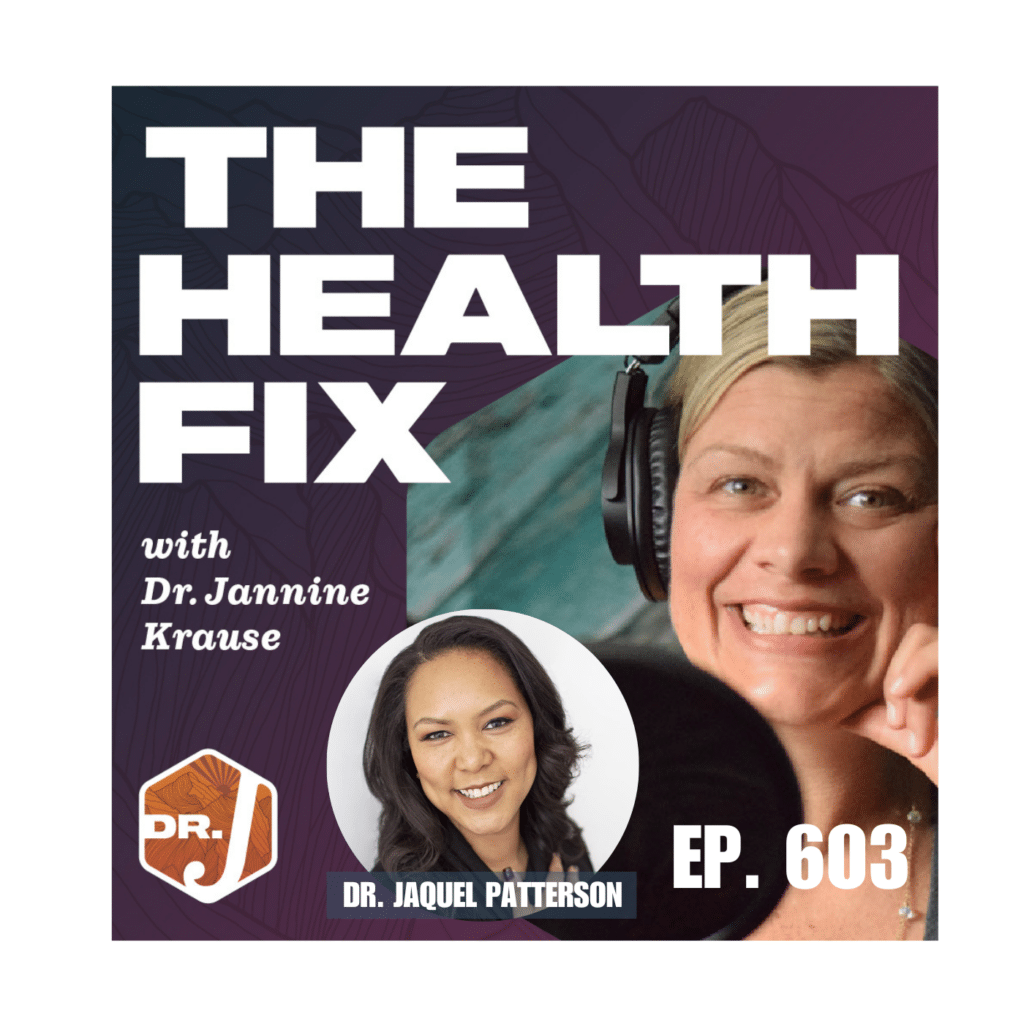
In this episode of The Health Fix Podcast, I sit down with naturopathic physician Dr. Jaquel Patterson to discuss the complex connections between Lyme disease, long COVID, autoimmune conditions, and hormonal health.
Dr. Patterson shares her personal journey with Lyme disease after experiencing unexplained symptoms shortly after graduating from naturopathic medical school. Her experience shaped her clinical focus and passion for helping patients who are often misdiagnosed or overlooked.
We also discuss how COVID-19 may reactivate infections like Lyme disease, trigger autoimmune responses, and contribute to lingering symptoms many people experience today.
Dr. Patterson explains her integrative treatment approach, including herbal medicine, immune support, and personalized care strategies designed to address the root causes of chronic illness.
About Dr. Jaquel Patterson
Dr. Jaquel Patterson is an internationally recognized naturopathic physician, 3-time Amazon bestselling author, speaker, and Forbes contributor.
She is the CEO of Fairfield Family Health and has over 16 years of clinical experience treating Lyme disease, autoimmune conditions, ADHD, PANS/PANDAS, autism spectrum disorders, allergies, and environmental illness.
She is the Past President of the American Association of Naturopathic Physicians and currently serves on the board of the American Academy of Environmental Medicine.
Dr. Krause’s Protocols
Instructions Included
Traveling soon? Looking to detox or reset your gut? Try one of Dr. Krause’s Fullscript plans.


What You’ll Learn In This Episode:
• Why Lyme disease is often misdiagnosed
• The connection between Lyme disease and long COVID
• How infections can trigger autoimmune symptoms
• The role hormones play in chronic illness
• Integrative treatments including herbal medicine and immune therapies
Key Takeaways
✔ Lyme disease symptoms are often mistaken for anxiety or hormonal issues
✔ COVID-19 may trigger flares of Lyme disease and autoimmune conditions
✔ Treating chronic illness requires addressing infections, hormones, and immune health together
✔ Personalized care is essential for lasting recovery
Resources From The Show:
If you enjoyed this episode please like and subscribe to this podcast for more information just like this.
Our Partners




Podcast Transcript
Chapters
00:00 Introduction to Lyme Disease and Long COVID
02:52 Personal Journey with Lyme Disease
06:02 The Intersection of Hormones and Lyme Disease
08:50 Base Protocols for Treating Lyme Disease
11:54 Innovative Therapies for Lyme Disease
15:03 The Role of the Clinic in Patient Care
17:59 Gene Silencing and SOT Therapy
20:59 Testing for Lyme Disease
23:53 Expanding the Clinic and Future Plans
Jannine Krause (00:00.989)
Dr. Jaquel Patterson, welcome to Health Fix Podcast.
Dr. Jaquel Patterson (00:04.482)
Hi, thank you so much for having me and we’re looking forward to this discussion today.
Jannine Krause (00:09.649)
Well, anytime I have the chance to have a fellow naturopath on, I’ve got to geek out a little bit because, you know, that’s what we do. We got to see like, what are you up to? What’s happening? All that stuff. So one of the things that really drew me to him was like, my gosh, I really want you to come on the podcast is because you have quite the history of talking about Lyme, talking about long COVID. A lot of things that folks right now are starting to really wake up to and be like, okay, could this be my thing? Could this be something that’s going down?
So I would love for you to talk a little bit about your own journey with Lyme and how you kind of were like, this could be Lyme, or if you knew it was Lyme right away, and then kind of help folks to really see like, what could they be like thinking about? And then maybe they’re blaming it on hormones, maybe they’re blaming it on perimenopause, but maybe it’s actually Lyme showing up.
Dr. Jaquel Patterson (00:56.206)
And that’s why I love with the discussions when you’re fellow naturopathic doctor is that I think with us, I always say we’re kind of like ahead of the curve. We do these things and we have these interests or research that’s like 20 years before it becomes like the in thing. And so one is like infections, like we’ve been talking about.
like even the role of like infections and autoimmune conditions, it’s becoming more looked at. I think COVID just pushed it along further. But these were all things that have been, know, as NDs, we look at the whole person. So we’re always looking at like what factors can play into influencing someone’s health or their health trajectory. So my personal story was that ND, I was around 28 years of age when I graduated from naturopathic school. But the reason I’m saying all that was that at that
time in like that last couple years is when I first got Lyme disease and also what I think I had it because that was where all my symptoms began. So I started having a lot of symptoms of like fatigue, joint pain, and I remembered when I when I was in school being out studying outside and I had a bite on my leg and I they couldn’t figure out what happens they thought it was just a spider bite and so
when I look at my pattern six months after I started having joint pain, a lot of fatigue, I could just fall asleep anywhere. Brain fog, I had hot flashes. I forgot that was one of my…
big symptoms and I was in the clinic the and we in our fourth year and you know this well we have to wear like our white jacket to differentiate like fourth year from third year and I would be so drenched that literally walking from one room all the way like to basically the front I would be literally drenched so I would have to put like tissues in the bathroom and like stuff stuff stuff my clothes because it would go through and I didn’t even realize until like three years looking back that I was wearing like dark clothes
Dr. Jaquel Patterson (02:52.592)
for like a good two years because of this like this adjustment and so when I’d go the reason saying all the things with my age is like at that age and why I see with a lot of my my patients that are in their their 20s and especially women you just get kind of you get ignored and care so it was like oh it’s because you’re anxious and I was like yeah but I’m not anxious I’m grocery shopping and I’m drenched or I’m doing things that don’t cause anxiety and I’m completely drenched
I was having sleep issues, just all these symptoms that didn’t match up. So just like my patients and a lot of the people that see NDs, I went to seven or eight doctors. I went to rheumatologists. I went to primary care. And it was kind of like there was really nothing conclusive. The only thing they found was…
an autoimmune marker ANA that was positive, but I also have family history of lupus, my mom, my aunt. So they had to just keep track of, it going that route? And so what happened was fast forward, I started doing a lot of, you know, actually lifestyle stuff and just, you know, taking better care of my health, herbal medicine, et cetera. It wasn’t until I started working with patients and that had Lyme disease. And I’m like, wait a second, you know, I have all these symptoms. was like, you know, after like the, I have all these symptoms. I had all these symptoms too.
And I checked and mine were all active. It was Lyme, Babesia, then later I had like Bartonella. And so I started treating myself for it, but part of it helped to inform me when I was working with patients because they were coming in with the same things like, it’s in your head.
or not being able to explain symptoms even after being on psychiatric medications and all these things with no symptomatic improvement. And for me, it would have went down the road of like, we just think you might be in the early phases of an autoimmune condition. And then after helping with those infections and seeing all those symptoms and even my autoimmune markers going down. So that was one thing. And then when I got COVID, we started at our office. started because of that, I feel like…
Dr. Jaquel Patterson (04:48.366)
I always worked with autoimmune conditions, then infections and more of a focus on Lyme disease. I got COVID in 2020 early on in the time of getting it. And at the time I just happened to run like every six months I would run like my markers. I just happened to like a few weeks before check for Lyme disease. And all those were past infections, check for like mono, all those things were passed. I got COVID and then three weeks later I did pretty well with it. I felt like I was going back to the same symptoms I had before, like when I had Lyme disease, when I had mono.
I rechecked my blood work and everything turned on. It went from like IgG to IgM and it was as though I just got all those infections. And then I started also having patients come in that hadn’t seen in years and they were like…
I think I have Lyme again, like I got COVID and then now all of these symptoms started coming up the same and we test. And so because of that, that propelled me to go forward with writing the book Long COVID and Beyond. And it was basically about like what markers to check for, can other infections have triggered up? saw people’s autoimmune markers go up. Iron and ferritin change. So I really did that based on like my own experience early on of seeing all of these like shifts in infections. so that kind of, yeah, it took me to where I am, but it’s like, I think with any ND or any
anybody in the space of like integrated medicine. We have our own personal journey and story or family story. But each thing it’s like I’ve learned pieces along the way and even my other book I wrote. I I got I was bored during COVID and I came out with like two books.
like 2020, 2021 was women in Lyme. And the reason I wrote that was for the same reason, because of my own personal experience and because a lot of the women I have, if you look at the stats, you see that the people like 80 % that have continued Lyme symptoms are women. And also women’s understanding of like pain is seen differently in medicine. Women are told like, it’s just anxiety or it’s in their head or your stress. And so I felt like I needed to write a book specific to that, because there wasn’t anything about that.
Dr. Jaquel Patterson (06:47.464)
And how hormones affect us differently with like inflammation, with mental health. And so that’s what like really pushed me forward to write the Women in Lime book based on my own personal, like personal experience dealing with it. And then patients coming in all the time and seeing those changes when they were menstruating or perimenopausal and seeing that shift. That wasn’t really a conversation in the lime world, that they weren’t really talking about hormones and can that play a role or even cortisol, your adrenal glands. was just about the infection, maybe stuff about supporting your immune
system, but not about like that full picture approach of like what other factors can make the disease condition worse.
Jannine Krause (07:25.737)
my gosh, you’ve said like so many things that I’m like, yes, I see this. And I think a lot of people, you know, they will think, like you said, it’s Lyme’s back and it’s like, well, maybe, you know, this intersection between the nervous system, the immune system, and what you’ve had in terms of exposures from Lyme to Epstein-Barr to COVID. seems like I’m now seeing for a lot of people, every virus that they get.
almost throws them back in if they’re not balanced.
Dr. Jaquel Patterson (07:56.622)
Yeah, 100%. And then also you’ll see as years in with women, like we’re looking at hormone replacement therapy, bioidentical hormone replacement therapy, getting a lot more managed. Like there’s neuroreceptors, immune receptors for all of those hormones. So if that is not working optimally, there is going to be an impact on their mental health. There’s gonna be impact on inflammation. There’s gonna be their impact on like this cascade of events that results as part of it. So I think it’s easy when you have,
easy when you have one disease condition then you kind of just go down one piece but with the way we’re trained and how we do it’s like okay what are all the other reasons like why and that’s what happened like I was like well why my patients would say I feel like one week a month that’s how it kind of started like one week a month or two weeks I’m not good and then I’m like okay that doesn’t make sense so it was hormones you know what is why would someone be really stay why does some people are sick
They have the same number of bands, their husband will have it or, you know, or vice versa, and they’re completely fine. And then another person, it’s not. And each person, it makes it harder for us to see patients this way, but each person has their own individual story. So it’s not always, you know, one size fits all. So that’s the other, that’s the other piece. So each person’s story is uniquely different.
Jannine Krause (09:12.147)
Absolutely. That’s one of the things that I keep trying to say over and over again. nothing’s cookie cutter. Nothing, you know, when we look at like the different cases and what someone’s experiencing, it’s like a lot of people will be like, Dr. Janine, Dr. Jal, what is your protocol for lime? Or what is your protocol for this or that? And it’s like, well, there’s multiple flavors of that.
So I am curious, because I love to pick brains of other NDs in terms of your guys’ base, let’s call it base protocol that you build off of. And I want to talk about the SOT big time in a couple of minutes. But what would be your guys’ base protocol? What kind of things? sounds like you’re addressing, if someone needs hormones, we’re addressing that. You’re addressing the nervous system. You’re addressing the immune system. And then a lot of people want to know. And then, of course, I do too.
what kind of products are you using for addressing the actual infections? What’s your favorite companies? What kind of jams do you guys have in that department?
Dr. Jaquel Patterson (10:10.874)
yes, and I can actually say the companies. like so. a couple of them, Lime Core is one, and we usually will do a combination of herbs. So if you look at the studies on PubMed, some of the ones most known for Lyme is Artemisia,
Jannine Krause (10:13.906)
Yes!
Dr. Jaquel Patterson (10:26.518)
Artemisia anua not epsinth so epsinth that they use for like parasites particularly so Artemisia aptoabua Cryptolepsis is one scutellaria bycalensis and Japanese knotweed So those are like four key herbs that have been studied you can see tons of literature on it for actually several different co-infections to like Babesia and Bartonella and anaplasma So lime core has those I also my favorite go-to are nutrometics. So two of the key ones they actually have a rotation
of herbs they have over every, think, four to six weeks. We kind of at all office use like a core one. I even created like a kit particular to that. So the ones I often use a cemento and banderol to the key, like introductory ones. The other ones that like are Kumanda, Huda Tunya. I always say it sounds like Lion King, like Huda Tunya. like everyone says a different way, that one’s also used for like Mycoplasma and Bartonella. So some of my key companies like NutriMedics, Lime Core, but people do like Beyond.
balance is one because they’re in glycerites which are more like a sweet flavor and then BUNR herbs. Another thing I do which is a little different we’re trained there’s only a couple hundred practitioners trained in something called low-dose immunotherapy. So low-dose immunotherapy is actually based on really isopathy but it’s dead or rated protein of that like so of Lyme disease and the concept is that it allows for what’s called antigen acceptance so it’s not like
increasing or suppressing. It’s actually saying, hey, I have it and I’m not reacting to it. You know, like I’m seeing it there, but I’m not having overreaction. So the people I’ve seen it work the best for are my patients with a chronic Lyme. I’ve been dealing it for like 20 years because at the end of the day, it’s like what I said, like, why do you have the infection and Dr. Krauss has it? And I’m still reacting to this 20 years later. And Dr. Krauss was fine after four months.
So in my opinion, it’s because the body, it’s like an autoimmune condition where it’s just like continuing to have this reaction that it doesn’t have to have. And so what low dose immune therapy is great is in like neutralizing it so your body’s not continuing to have this this overactive response. And so it balances what’s called TH1.
Dr. Jaquel Patterson (12:41.31)
And th2 is part of your immune functions. And so you could be dominant one way versus the other when it’s like more autoimmune or there’s like an infection what they call like stealth pathogens. So I love that. So that’s one. And then we’re starting to do a lot of like other therapies like IV therapy. still do. NAD is one people are using ozone therapy. Methylene blue. So one of the pieces with Lyme disease or infections, mitochondria is something you really have to support because
these infections like eat away like they take away from the mitochondria. So you need what that means is you need that’s like your energy center. So mitochondria is for your energy center. So these chronic infections you need more of it. So you need like the coq10, the NAD which is going to be a lot stronger, the ozone. If you look at methylene blue that increases that helps with the mitochondria. So all of those things
are always important when we’re looking at anti-aging, but even more vitally important when we’re working with somebody with like Lyme disease, because there’s going to be a deficit. So that’s the first thing we’re looking at.
Supporting what you said like dietarily so it’s like antioxidant and support for the mitochondria And then the other thing are going to be herbs that are antimicrobial, but that also are helping with the immune modulation And then a lot of the patients I have to we always have to do some support for the gut Because the patients we see oftentimes they’ve been on antibiotics for years So I am often seeing the people had been on it for five or ten years and no one’s ever done like a stool test for them And have seen like what other infections can relate so we’re doing tens of like gut health things
Jannine Krause (14:02.983)
Thank
Dr. Jaquel Patterson (14:12.752)
kind of helping to re-establish that based on their history. So it is a combination of, when we first come in, as you said, there’s no cookie cutter approach. We’re seeing what their history is. We are looking at antimicrobials. We might have to have them like antibiotics, but we’re also looking at those supportive therapies that are gonna help to increase their ability to kind of get over the illness faster and thrive. My goal, I always say to patients, is to have you graduate or to not see you again.
It’s like, love you, but I don’t wanna see you. I want to see that you’re gone and you’re healthy and thriving and not needing to be on something forever. And that’s what I love. I know you do a lot in biohacking with some of these, longer term where they last longer rather than something they’re taking every day. So that’s ultimately the goal whenever we’re working with any patient.
Jannine Krause (14:42.835)
Yeah.
Jannine Krause (15:05.426)
Absolutely, I know right I would love to see you out at the park or out you know walking around or at a restaurant or something versus you know hanging out my office all the time and it’s Chronic illness is hard. It is hard to work with us, and I’m curious What do what do you guys do you know you and your staff to help you take care of yourselves? Well while we’re
Dr. Jaquel Patterson (15:09.516)
He’s like…
Dr. Jaquel Patterson (15:15.969)
Okay.
Dr. Jaquel Patterson (15:28.439)
So.
Yeah, so we have, so in terms of taking care of it, so there are a lot of studies. So we do have the cool thing is we moved into a new building, built out a building. One of the biggest built out our space. And one of the biggest things I wanted to have was wellness of things that are also supportive. So because of that, we fully built out more of like our IV therapy suite where we’re also doing ozone therapy. So a lot of people know of like eBoo or you can start with just the, the ozone that basically what it does is it takes out your blood, oxygenates it and infuses it back into your system. And there’s certain, you know, number
times people typically people do before. Some of my patients will feel great from just the first treatment, but most people are doing like at least a handful of treatments. And so what I wanted to build was these other, you know, NAD where we were having one of our providers that you can do like injections or, know, that you can actually do it through IV. So I wanted to build other stuff for people to do outside of just like coming in as for appointments.
So we did that. also added a far infrared sauna. We also have like cold laser redo and then also red light therapy. And those red light therapy has helped with like cellular repair, know, mitochondria regeneration sauna. If you look at, there’s tons of studies on its impact on decreasing inflammatory markers like CRP particularly, which is really helpful for Lyme disease. So most patients, if we start with like one
Like you said, like one general supportive thing we can do if they can afford it is definitely like the sauna for 15 or 20 minutes because what happens is it helps to decrease inflammation. It helps with sweating and detox. There’s usually issue with that. And oftentimes it’s hard because people with Lyme disease or tick-borne infections, might be limited with like, they can’t exercise the same way they did before because they don’t feel well. There’s many different reasons for that, but something like a sauna allows their system to…
Dr. Jaquel Patterson (17:19.736)
They just feel a lot better without pushing their system as much as like a really strenuous exercise. Other than that, we start doing the basic stuff of like walking and activity. But yeah, I’ve had some patients that have been marathon runners have done Ironman and they can’t even, they’ll tell me like, I can’t even run. They got Lyme disease. Like I can’t even run a couple of blocks now. And I used to do marathon. So those are the people where like just getting back into being outside and walking.
or sauna, definitely will help the disease condition are really great.
Jannine Krause (17:51.708)
Yeah, there’s I mean, there’s definitely like so many things to choose from, right? So a lot of people are like, my god, where do I start? So it’s great that you were like sauna, if you could do sauna. Step one, know, step in there, definitely get in there. Now, let’s let’s talk a little bit about gene silencing, because I’ve never talked about it on the podcast. And I think a lot of people are like, OK, gene silencing, SOT, what is this? So tell us a little more about that so we can educate folks on that.
Dr. Jaquel Patterson (18:00.471)
is one thing, yes.
Dr. Jaquel Patterson (18:15.192)
is that.
Dr. Jaquel Patterson (18:20.054)
Yeah, so we have a therapy at our office is called SOT, oligonucleotide therapy. And they actually have studied it for research for cancer, actually initially was cancer therapies. And now they do it for viruses. So that includes like EBV. And also they do it for bacteria and also in things tick-borne infections like Lyme disease. And so what it does with gene silencing is they actually take your blood,
and you first have to test. So let’s say I’m positive for Borrelia burgdorferi, which is what most people know for Lyme disease. Your blood gets sent out, it gets analyzed, and what they’re doing is they’re actually looking for that in your blood, the Borrelia burgdorferi. And they create basically what they call like a therapy that…
allows, it’s called gene silencing. So it basically stops that stop sequence. So it prevents the replication. So it’s great for people. basically then it gets infused back into your blood. And so what I’ve seen is people have tried everything like antibiotics, treatment that this has been effective in the studies have shown it and the studies they have had above 80 % effectiveness. So the great thing about it is it’s something that it’s like one time and some people have to do it a few times. You know, overall, you can only do it a few times in a year,
but that they don’t have to be on what we talked about, know, antibiotics every day, or they don’t have to be on a ton of herbs and supplements every day. When it works, it really does help people, but they have initially used it for like cancer therapies. And so the reason it’s funny, it’s like I said with like Lyme disease.
with, and I don’t know if you noticed this too, Dr. Cross, like lot of the reason I start looking into things is because patients come with it. So it’s like, know, peptides, people are telling me, okay, I got a research, you know, what is this, what is it about this? So the same thing was with SOT, was our patients were coming in and they were asking about it because they were going to like places all over the country, like, we’re going to Georgia for it. we’re going to New Hampshire and we’re in Connecticut and no one is doing it. So I was like, okay, you know, we should offer it.
Dr. Jaquel Patterson (20:29.194)
at least for our people, patients that are actually asking for it because they’re accessing that in a lot of different locations. So it is one thing and we’ve been doing it. We’ve seen some really good results so far from the patients that have done it, but it’s definitely a different type of a therapy service to offer for Lyme treatment and is getting more traction as being known.
Jannine Krause (20:51.955)
Okay.
Okay. And so like the testing for it, it like for Lyme, you using like, iGenics? Like, are you using…
Dr. Jaquel Patterson (21:00.588)
Yep, so we do eigenics, Vibrant. So I use both. I used to do also medical diagnostic labs. Typically medical diagnostic labs will only look at like a couple infections. It used to be different before. So it’s mostly like Lyme disease, but eigenics will do. Vibrant does like a full panel as well. And sometimes we’ll do the good thing with Vibrant is what they’re looking for is like the very specific subspecies. So you’re going to look at like.
Bartonella like Quintana or Bartonella hensile and some labs will just say species.
or it’ll say, yeah, so that’s lot less specific. So they’re looking for very specific ones to find in the blood. So that’s like how specific it is. So I like Vibrant for that reason. The great thing I like with Igenex and well also Vibrant too is that they also do what’s called like PCR testing. So for some patients, if you’re immunosuppressed, you might not show, if you look at the conventional labs, and the reason we’re talking about these specialty labs, conventional labs like Cuesta LabCorp are like 58
false negative if you look at the studies. So a lot of people it’s more likely to be false negative than positive and even though they have the symptoms and per CDC it’s still a clinical diagnosis. You’re not supposed to base it purely on the lab test result. So these other labs, you know, they mentioned like Hygenics and Vibrant, they’re like Lyme Literate and Medical Diagnostics, meaning they might show, you know, all the numbers that are going to show in terms of like a Western blot. They’re not going to just do the ELISA test. They’re going to do like a PCC
test is some people don’t produce enough antibodies, but they might do well in finding like the DNA. And so like 15 % of people get missed with just that alone. So these tests are going to be a lot more, more accurate and the specificity when you look at it, specificities are like above like 98 % for some of them. So they’re just, they’re just better, they’re better in that regard if you suspect that someone has Lyme disease.
Jannine Krause (22:58.323)
Good to know, good to know. think that helps a lot. Because yeah, I spend a lot of time being like, I don’t think we should get the LabCorp or the class if we really want the answers. So it’s one of those things, right? You’re like, if you’re going to spend, I mean, it’s some money, but it’s worth it. So.
Dr. Jaquel Patterson (23:05.538)
Hahaha
Dr. Jaquel Patterson (23:15.446)
It’s worth it. Actually, if you haven’t had answers, the people, so I might do, like you said, like lab core requests initially, but if like someone’s went, was just usually people coming into our office, they’ve went to many doctors. So they’ve already done those tests. And so that’s when you’re like, okay, if I’m done those and I still don’t feel well and I’m not moving the new to forward with how I’m feeling and I’ve gotten other treatments, you really want to look at those specialty tests so you can be sure to rule out things that you may or may not believe you have.
Jannine Krause (23:41.617)
Makes sense, makes sense. And let’s talk about your clinic for a little bit, because you were saying you’ve expanded, you have people coming in, people are probably coming from all over to visit you guys. How does that look?
Dr. Jaquel Patterson (23:50.38)
Yes. Yeah, we see people all over the Yeah, so we have…
Patient it’s interesting like 40 something like 40 percent of my patients aren’t even in Connecticut And I think it’s because we’re so specialized one thing that we’ve done is I’m known for like Lyme disease and infections and also like Integrative psychiatry I do a lot with mental health and that kind of all folded in together with infections pans and pandas is another thing I do and then and then Hormones ends up coming in there somewhere, you know, like it always ends up folding over but then other doctors in our office
have like one focuses on SIBO. We have one that focuses on oncology, like naturopathic oncology. We have one that focuses on like biodentic hormone replacement therapy. So it’s been great because we have a team we built out. There’s nine doctors. One does like allergies. They do sublingual immunotherapy for, so it’s an alternative to getting allergy shots. And so what’s great is we have this team.
that we wanted to make it almost like a one stop. if I see someone and I’m working with someone, they start having like more serious like SIBO, I might say, okay, for the next three months, you’re gonna see Dr. Pierre, you’re gonna see Dr. Hernandez for that. They have, let’s say allergies and eczema, I might say, okay, I’m gonna have you see, you know, Dr. Pritchard for that for this period of time. So it’s really been great because we…
all as NDs can do everything. you know, like we, and ultimately any disease condition you do, if it’s eczema, you’re still gonna affect everything. But there’s a difference in like that nuance of like really deep diving specialty in a certain area. So that’s the great thing about having the team. Plus we have, now we’ve had like, I built it out. One of the big things to me, it’s 4,200 square feet. So we built that out, but we took over the building, which is 9,000 square feet. So pretty big.
Dr. Jaquel Patterson (25:35.294)
was that we built like a conference room with like, with the full like video capability. We have a podcast room that we set up, like basically a media room that we set up. And it’s like a hangout room. It looks like a speakeasy. So, so, so, so that’s like for video recording, like YouTube’s the conference room ultimately was so that we can like do, we’re starting to do like recorded webinars and live webinars for patients because that’s what they’ve said they wanted education on. We set up an area, back area to be able to do at night, like yoga,
Jannine Krause (25:48.381)
Nice.
Dr. Jaquel Patterson (26:05.168)
yoga classes, meditation classes. And then we have like the other room eventually getting like a hyperbaric and such. So one of the biggest things for us that I think and you know, like equally in health is people feeling like listened to and heard. And we wanted to make sure we had a space that created that, that like even down to all the colors with the design. And when I knew we got it right was the…
when we first started the contract or some of them said, I don’t know about this space. Like, I feel like you would want to hang out too long. Like several of them said, like, it’s a little too relaxing. And I was like, yes, we got it. Cause that was exactly what our goal was. Like, how do we make it? Cause we were in a house before and you know, a house feels people said, I feel like I’m entering your house. I feel cozy. We wanted people to come in. I think that’s a thing we do in this space is and he’s like, you want to come in and feel like I’m supported because I feel like I always say that’s like half of their health is like you’re coming in.
Jannine Krause (26:37.949)
That’s exactly it.
Dr. Jaquel Patterson (26:57.676)
and you finally say something and somebody actually believes and listens to you, people don’t realize how much of a, what do call it, baggage you carry on because of that when you don’t feel well. And so it’s just like that piece is really important down to like how we actually even set up our space. But we do a lot still with telemedicine, but we’re offering, know, we do have people fly in, we have people…
travel from far. have the most other common states, we’re in Connecticut, Massachusetts, New York, and Jersey. So people will come in a few hours and they really love coming in.
It’s funny, I also have people that are five minutes away that still do video conference because you know, the world, the way the world is, everything’s about time. So, but we want to make sure people feel that not even if they come in, but also just in booking their appointment. They love speaking to our patient coordinator, our clinic director, and that experience all the way, you know, from the beginning to end and how we even, you know, how they get the supplements, the speed in it. We want people to feel like it’s like they were in the office, even if they were in here. So all of that was like really important with every single thing we do.
Jannine Krause (28:03.037)
That’s huge, that’s huge. I mean, in this day and age, having all of it as a team, you know, I like it. It’s kind of like the mayo of naturopathic medicine for a chronic illness, you know, having everything right there and having that personal touch because yes, I agree, that is one thing that is definitely like ingrained in us naturopaths, like make everyone feel comfortable, have everybody come in and just feel like it’s their place that they can hang out. So I love that.
Dr. Jaquel Patterson (28:29.962)
Exactly. That’s what I think is special that we, you can’t explain it. We get it because that’s, because I think we’ve had our own ways and walks of life of how we’ve come into medicine in the first place. And that’s what we’ve learned from like day one of being in school. So.
Jannine Krause (28:46.706)
100%. Well, I’m excited if I’m out in Connecticut one of these days. I definitely want to pop by and see what you guys are up to. And we want to make sure that folks know how they can find you, where they can find you, how they can get a hold of your books and learn more from you and all of the things. I’m like, wow, you’ve got webinars, get all this stuff. I’m like, share with us how folks can interact with you more.
Dr. Jaquel Patterson (28:53.018)
for sure.
Dr. Jaquel Patterson (29:07.246)
How do we get this? Yes, our practice is Fairfield Family Health. You can follow us at Instagram, Facebook, Instagram and Facebook and also LinkedIn at Fairfield Family Health. I also, in terms of my books, Amazon, Women and Lime, also Long COVID and Beyond. And we’re opening up a satellite clinic soon in New Hampshire. It’s like 20 minutes outside of Boston.
I have to, I’m trying to slow down because we just moved into this a year and a half ago. So I just like expanding. Cause I think also it’s equally important as people seeing like a different care. Like that was.
part of what we always say like healthcare is it should be like this is this is one of the reasons why we didn’t change our name to like integrative or that it was just like Fairfield family we’ve had that question and the reason is because we feel like it should be part of how care is it shouldn’t be like this is a different kind of thing this is just how it should be in terms of everything and how we do the operation so yeah I’d love for you guys to follow me also YouTube I released a YouTube recently and that is dr. Jaquel Patterson and prepping up at some point this
year for a TED Talk so I had to get my YouTube active so love for you guys to follow me there to see kind of my journey along the way too.
Jannine Krause (30:24.679)
goodness. Well thank you so much for taking the time to meet with me today. I know you’ve got a little one to go run to so I appreciate your time and I can’t wait to put this one out and share it with folks. I think they’re gonna learn a lot about all the different options out there for what they can do if they have Lyme or any other chronic illness. So thank you so much to Cal for coming on.
Dr. Jaquel Patterson (30:43.65)
Yes, thank you for having me again, Janine too.