In this episode of The Health Fix Podcast, Dr. Jannine Krause sits down with Brad Pitzele to explore the deep relationship between chronic illness, inflammation, and oxygen balance in the body.
Brad shares how low oxygen levels can fuel inflammation, the silent driver behind many chronic health issues and how restoring optimal oxygenation helps the body’s natural healing mechanisms switch back on.
Together, they uncover how to bring your system back to homeostasis, where true wellness and repair can finally occur.
Whether you’re managing chronic fatigue, autoimmunity, or just want to optimize recovery and longevity, this conversation offers powerful insights into how oxygen may be the missing piece in your healing journey.
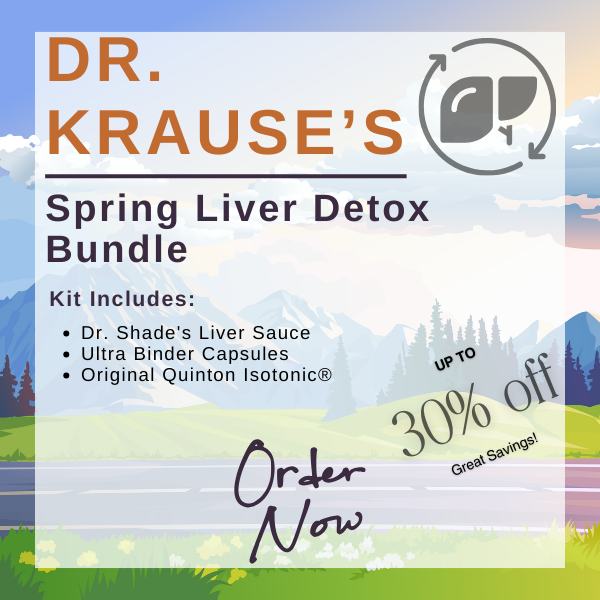
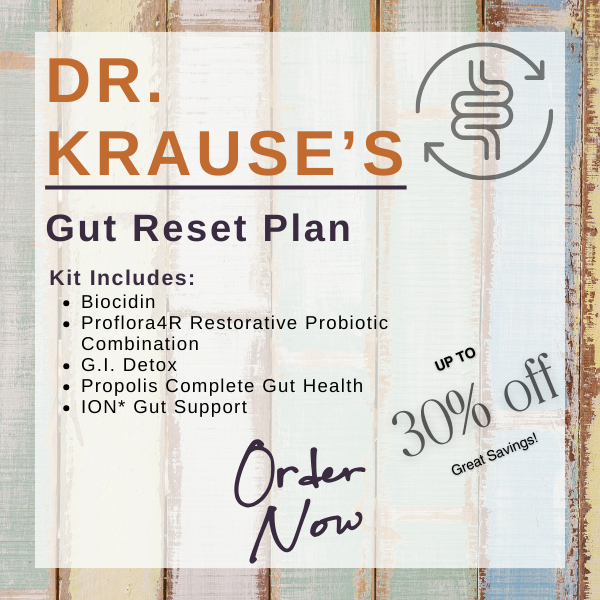
Dr. Krause’s Protocols
Instructions Included
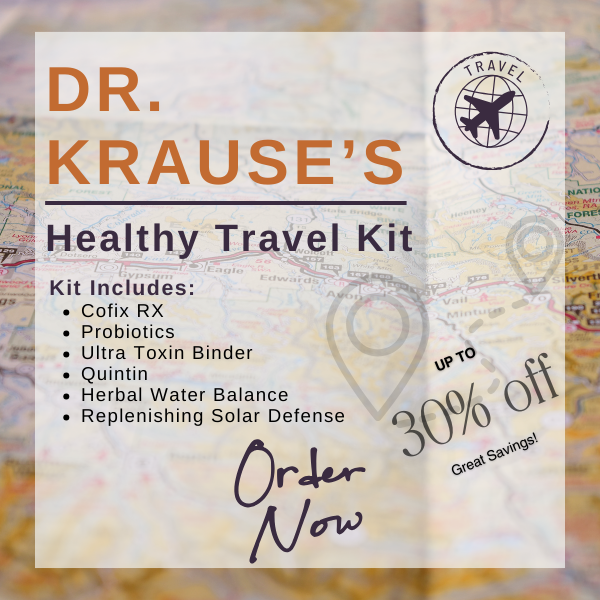
Traveling soon? Looking to detox or reset your gut? Try one of Dr. Krause’s Fullscript plans.

What You’ll Learn In This Episode:
- Why inflammation might be the true root of your chronic symptoms
- How oxygen therapies and breath work can improve cellular healing
- The science behind oxygen balance and inflammation regulation
- How to create an internal environment that supports natural repair
- Simple steps to begin restoring homeostasis in your daily routine
Resources from The Show:
• One Thousand Roads EWOT –
Our Partners


Podcast Transcript
Jannine Krause (00:01.612)
Brad Pitzley, welcome to the Health Fix Podcast.
Brad Pitzele (00:04.753)
Thank you so much, I appreciate it.
Jannine Krause (00:06.882)
Well, you since I saw the info on EWOD, I was like, yes, we’re thinking about that for the clinic. My husband and I used to play with it, as I told you a little bit, in terms of our very generic ways of doing it when he worked for an oxygen company in Colorado. And so it all comes full circle, right? At the end of the day, it’s all the subliminal messages that maybe I need some more oxygen in my world. So, of course, a lot of folks are gonna be like, how do you come to deciding that
You wanna work with supplemental oxygen in your world. And you’ve got quite a story. So please, let’s start off with how you came to vibrant owner of a business and not so feeling so great not too off a long ago.
Brad Pitzele (00:41.23)
Hmm.
Brad Pitzele (00:51.079)
Yeah, it didn’t start out so great for me. You know, I always had strange little, I had small autoimmune conditions and like strange health things that would kind of pop in and out of my life from early childhood. But they never were really significant enough or stuck around long enough. We might go to the doctor and they’d give it a name, but there was nothing to do and it just kind of went away. But things kind of took a turn for the worse.
And maybe 2011, I want to say, my autoimmunity developed into autoimmune arthritis. And things, you know, I started getting it in my hands and it was kind of bad. I went to a rheumatologist and they put me on the typical meds. Eventually when they got to the powerful meds, they started to help, but they would only help for like six months and they’d wear off and then they’d double the dose and it’d work another six months and then it was on to the next drug.
And I was on that treadmill of pharmaceuticals until I developed melanoma. And one of the side effects of these drugs is it causes a higher risk of cancer, and particularly melanoma is one of them. And so I went to my rheumatologist and said, hey, what do I do here?
I feel like if I don’t take the drugs, I’m gonna die of this painful autoimmune condition. If I do take them, I’m gonna end up with cancer and die. And obviously neither one of those is particularly appetizing. So is there another way? And he kind of was like, we’ll just try another drug in the same class and it probably will react different with you. And it was a great, great uneasy feeling to walk out of that doctor’s appointment and just know you felt like you’re being fed to the sharks.
And I was like, I guess I got to find my own third way. I don’t know what it is. And like a lot of folks, I Googled around, I did all sorts of research, read through PubMed research, tried everything. I tried diets, elimination diets, I tried supplements, I tried all sorts of wellness technologies, and nothing was working.
Brad Pitzele (03:08.839)
until I eventually ended up at a naturopathic doctor and he recommended I try EWAT, exercise with oxygen therapy. And probably like most of your listeners, I’d never heard of this thing. And so I went home and I started to research it and I didn’t really have a lot of faith in the companies that were selling it at the time. There was a lot of marketing hyperbole. It didn’t come off as authentic.
And I tried everything and nothing worked. So why was I gonna go spend, at the time it was five to $25,000 on an experiment. It would just be another bone in the bone yard is kinda how I felt. And- Exercise with oxygen therapy, EWOD. Light exercise with- I don’t even know why my phone did that. It sounded like do not disturb and it’s starting to talk to us. But it’s really excited about oxygen therapy as well.
Jannine Krause (03:54.018)
Yeah.
Jannine Krause (04:02.35)
It’s exciting about it too, you know?
Brad Pitzele (04:04.879)
when a smartphone gets too smart for its own good. That was interesting, I’ve never had that happen before. That’s fine, you can leave it in, that was kinda funny. So, sorry, that was just funny. I’ve never heard that voice out of my phone ever, like, thanks for waking up now. So anyhow,
Jannine Krause (04:11.264)
We can edit that, don’t worry about it.
Brad Pitzele (04:28.357)
You know, so I started to look into it. I didn’t have a lot of faith in what I saw in the marketplace, and certainly not enough to invest that kind of money, and I decided to make my own. And I did start to get better. About a year ago, or excuse me, a year ago, a year later, I went back to that doctor and he was surprised at how much better I was doing, and he asked me.
if I was doing EWAT and I said yes, and he said, who’d you buy it from so I could tell my other patients where to go? And I said, I made my own. And he said, he was kinda shocked. And then he’s like, would you consider making them for my patients? And so that was the birth of 1000 Roads. We wanted to do something to kind of pay it forward. It was a very lonely and dark place when you feel like.
your life force, if you will, of starting to dim. And there was just everyone coming at me with, you know, $20,000 $50,000 solutions. And I just felt like no one knew about this technology. And if we could bring down the price and democratize it, so many more people could benefit from it because it’s really, I mean, it’s really tremendous. And
I continued to get better and I continued to try different things. took me a little while to get to my full health. Eventually I worked my way into trying something that’s now become more well known, red light therapy. And I did a lot of research on that and actually…
red and near infrared light therapy kind of work on the same sort of oxygen principles. And they kind of work at it from two different sides. And so when I started to add that to, I saw an acceleration in my healing and returning to wellness. And so it was kind of an exciting journey. here I am years later. At the time, if you knew where I was, mean…
Brad Pitzele (06:32.205)
I had this foot pain so severe from a Lyme disease co-infection called Bartonella that I could barely walk. I had severe brain fog, neurological issues, arthritis. All my muscles were stiff. I had like 60 or 70 different symptoms that were just like, someone would come in and take over and then they’d go away sort of thing. But I was dealing with all of them and I was just like.
faking it to make it through the day, you know what I mean? And hoping nobody at work noticed. And really didn’t feel like I was fully there at the time for my family because I was just so low energy and brain foggy and in so much pain and discomfort. so sometimes today I look back and I’m just kind of shocked how far I’ve come. So it’s pretty awesome.
Jannine Krause (07:25.016)
You know, you give hope to a lot of folks who are listening to this, who are in a space, maybe just similar to where you were, maybe somewhere a little less than that. Because one of things you mentioned that I hear often from folks that have chronic illness is that they hear these really expensive types of things like, hey, we can help you with this and we can change your life. And you almost get addicted to being like, let me try the next thing, let me try the next thing. It sounds like you kind of went through that whole pathway of
Brad Pitzele (07:51.495)
Yeah.
Jannine Krause (07:54.05)
This is the thing that’s gonna work. This is the thing.
Brad Pitzele (07:57.223)
Yeah, I I tried so many things. My family has reminded me from time to time of some of the weird and crazy things I’ve tried. You know, some of them I’ve just completely blanked out on, probably a survival mechanism or something, but yes, I do. And you’re so hopeful, but then you also are girded with your hope because you don’t want to get too hopeful because everything else has kind of let you down. And so it is, it’s a little bit of a roller coaster.
Jannine Krause (08:24.416)
It is, and I see that with a lot of my clients. And one of the big things that brought me to looking at EWOT2 is, you know, a lot of people struggle with one, circulation, and what comes with circulation, right? Oxygen. The other big thing is a lot of people struggle with exercise, just to be able to move in general. And I mean, if your feet hurt, I can’t imagine, you know, someone’s like, well, you could go swimming instead.
And then now we have swimming has other issues and I’m sure you’ve heard all the different things. We’ll just try this instead or just try that instead. Now you have an engineering background. Is that what I saw? that correct? Okay. Okay. And so bring us, bring us back to like your mind thinking about oxygen and creating something and thinking about it with exercise and just kind of bring us into the space you were in and kind of how things came together because I think a lot of people, especially folks who aren’t really
Brad Pitzele (08:54.619)
Yeah.
That’s right, McCown’s lying to me.
Jannine Krause (09:17.07)
exercise minded wouldn’t think about like, why with exercise? Can’t I just sit around and suck on some oxygen? Why can’t I? Remember the oxygen bars of like the 90s? Like why can’t we do that? So, I’ll let you.
Brad Pitzele (09:26.875)
Yeah.
It’s a great question. you know, I was always very research minded, to be honest. I spent a lot of time on PubMed reading everything I could about the label they gave to my disease.
did a bunch of reading on like even social media and groups of folks who had similar issues. I was just, I just wanted all the information to try to figure it out. That’s where I learned things people were trying and what was working or not working from. And it was…
It was a lot, but then also I wanted to know the science, because some of the stuff comes off awfully woohoo, and while you desperately want to believe the woohoo, anything to get me out of this trap, I also wanted some comfort in knowing that I wasn’t just wasting my time on hope without any kind of science behind it. the science is really fascinating about oxygen. So,
Oxygen doe
Brad Pitzele (11:02.285)
Oxygen is fundamental for our fuel. If you take a cell…
and you force it to produce energy without oxygen, it can only produce about 5 % of the energy it can produce with oxygen. So it’s in bare survival mode. It’s not even doing all the essential functions. It’s just barely hanging on. And so as we all age, this naturally happens to us. And so some of the first research I read was the gentleman who discovered EWAT. He was doing…
I mean, really prolific inventor, von Ardien, Manfred von Ardien in the 1960s and 70s. Now this is the guy who invented like the scanning electron microscope. He helped commercialize CRT television sets in the 1930s. And then another Nobel Prize winner, Otto Warburg, discovered that oxygen is essential.
and that if you take a cell into private of oxygen, you can turn a healthy cell into a cancer cell. And so he won a Nobel Prize for that, and so von Ardien started to do research around oxygen, and he’s kind of the godfather of EWOT. What he found was not only could he turn a cancer cell, non-cancers, through doing EWOT, but he also discovered that as we age, we have this inflamaging that we now call it.
this natural, supposedly, inflammation that builds up in our body, including in our circulatory system. the ends of your circulatory system, have capillaries that are thinner than a human hair.
Brad Pitzele (12:46.341)
when they have inflammation in the lining of them, they swell shut and your red blood cells can’t get through. And so this is the cause of that 1 % loss of oxygen utilization. There’s no oxygen passing this blockage, if you will. And all the cells that depend on that capillary to feed them, they’ve now gone into this anaerobic survival mode where they’ve only got 5 % of their energy. And so this is part of the reason why as we get older, we have memory challenges, we don’t have the same,
We as energetic as we used to. We start to feel aches and pains a lot more. A lot of this has to do with the oxygen status in our cells. And what he found was that when you do EWOT, oxygen is incredibly anti-inflammatory. And actually the science is really clear on this. Anywhere in your body you have low oxygen, you have inflammation.
And anywhere you have inflammation, you have low oxygen. They’re just two sides of the same coin, which was a really exciting discovery for me at the time, Janine. It was like, well, that’s pretty intense, right? Like at the root of inflammation is low oxygen. And so that was one of the things I bought into. But then what von Ardien discovered is when he gave people EWAT,
He causes anti-inflammatory effect in their capillaries that allowed the red blood cells to flow through again. And he took some elderly folks and he had them do EWOT just two or three times and they came back many weeks later and they still had normal blood flow. So it wasn’t just while they were doing EWOT, it was continuing on, right? And so that was like, that was a light bulb moment for me because I knew I was having circulation challenges as part of my many symptomologies.
And obviously I knew inflammation was at the root of my arthritis, my neuropathic pains and my stiff muscles. And what wasn’t inflammation was probably lactic acid. so…
Brad Pitzele (14:50.317)
And by the way, you know how your body gets rid of lactic acid is it uses oxygen to break it down into fuel, believe it or not. it was just, as I started to get deeper and deeper into the physiology of us as humans, it was like, well, geez, yeah, if I have less oxygen and it’s causing more, like, none of this is good for me. And I kind of came to the conclusion.
Early on when I started to buy in, was like, well, you know what? What’s the worst thing that could happen if I tried it? I guess I get too much oxygen. There wasn’t a major downside to it, right? It was just oxygen. We weren’t talking pharmaceuticals or anything like that.
Jannine Krause (15:31.32)
That makes sense. That makes sense. So as this podcast has had interesting things, my dog is outside howling and I’m trying not to laugh at him. It’s Halloween today and my dog’s howling. I’m gonna grab him so that I stop giggling because it’s like, he’s a trip. Get in here, come on.
Brad Pitzele (15:39.632)
It’s Halloween.
Brad Pitzele (15:43.686)
Right.
Jannine Krause (15:51.886)
Goodness.
Brad Pitzele (15:52.369)
Well, it’s been a little bit of a haunted podcast. You have a howling dog. I had a phone that was like phantom talking to me that I’ve never heard it do that before. mean, so it’s fitting of the holiday.
Jannine Krause (16:02.094)
Hey, you know what? It is totally fitting of the holiday. My God, he was like cracking me up. He’s like, oh, oh, and I had to put it on. It was so bad and I couldn’t, I was trying so hard to contain myself and I’m like, can’t do it. Okay, oh, I’ve not had him do that during a podcast ever. So here we are.
Brad Pitzele (16:08.923)
I saw you laughing, I’m like, don’t know what I’m saying, it’s that funny,
Brad Pitzele (16:17.926)
You’re okay.
Brad Pitzele (16:23.429)
My fault for booking on Halloween, I apologize.
Jannine Krause (16:26.068)
no, this is great. It’s gonna be awesome. It’s gonna be an awesome release on this one because your information is so good though. It’s so good because I think people really need to understand how… I’ll back up. Chinese medicine talks all about circulation. That’s what Chi and blood flow is. And so they knew back 5,000 years ago how important oxygen was. And so…
Brad Pitzele (16:46.149)
Yep.
Jannine Krause (16:52.694)
You know, you’ve now just opened up another way for folks to enhance it, because we do so many things that decrease our oxygen levels. You know, like you’re saying, you need oxygen to decrease lactic, but we also like sit around and do nothing all day, and we eat poor foods that, you know, suck up our oxygen and things of that nature. I’m sure you’ve done the research on all the things that deplete our oxygen in our bodies.
Brad Pitzele (16:59.248)
Yes.
Brad Pitzele (17:11.047)
Yeah.
Brad Pitzele (17:16.795)
Yeah, you know, and here’s the other, like, as you’re talking about, like, eating terrible things and if you think about the environment and all the toxins we take in every day, you know, detoxification is so important. And when I was really battling Lyme disease, you know, there was kind of three different areas I was trying to get.
Jannine Krause (17:27.086)
Mm-hmm.
Brad Pitzele (17:40.923)
battering if I were, like maybe four. One was probably just general energy, give me energy to like just try to be myself. Two was like inflammation, get rid of all this pain and all this sort of stuff. Three was help me kill this bacteria and like get my immune system on top of it versus underneath it sort of thing. And the fourth one is actually one of the largest ones that we would talk about a lot in the Lyme community, which is detoxification. Now,
I always say people with Lyme disease are kind of the canary in the coal mine. The things that they’re trying to do are things pretty much all of us could benefit from in society, but because you’ve got this bacteria basically taking you down several notches, it’s more apparent. And that was kind of the cool thing too, is to realize that there’s a couple of really interesting tidbits that also got me onto oxygen with detoxification, which number one, about 70 %…
of all the toxins you remove from your body actually come through your lungs, which nobody really talks about that one. And the second one is, even when we’re using traditional detoxification pathways, oxygen itself is critical because oxygen is used as a chemical reaction called an oxidation reaction, which breaks down these chemicals into smaller bits and components that our elimination organs can remove. And so…
Jannine Krause (18:46.104)
Yeah.
Brad Pitzele (19:08.583)
So it’ll help with your kidneys and your liver and every other elimination organ in your body helping sift through this stuff and get it out more quickly. So whether it’s lactic acid or toxins, oxygen is like at the root of it again. And then the interesting thing is just the synergy between the two. obviously another one of our detoxification modalities is through our lymphatic system, right?
your lymphatic system does not have a pump like your circulatory system. There is no heart for the lymphatic system. So the way we get our lymphatic system pumping is through movement generally. And so that’s the exercise component and getting your lymphatic system moving while you’re enriched with oxygen. Obviously it’s just a multiplier effect there.
Jannine Krause (20:00.076)
You hit on so many points that I think about and we talk about, you know, in our clinic with our different patients because the lymph, like everything’s stuck in the lymph, feel like, especially with Lyme, so many folks are stuck there. And also like, you know, back to where I was before, like you don’t wanna work out, you don’t feel good, you don’t wanna move. And so, you know, people are talking about, you can enhance your oxygenation by sprint training.
Brad Pitzele (20:13.351)
Yeah.
Brad Pitzele (20:19.291)
now.
Brad Pitzele (20:26.128)
You
Jannine Krause (20:26.594)
I can’t even walk across the living room without turning. You want me to sprint? Like, are you kidding me right now?
Brad Pitzele (20:32.677)
Well, and that’s a good thing to tell your listeners is like this doesn’t have to be super intense exercise. And the interesting thing is, again, I talk about these synergies. If you put the mask on, so the way you do EWA is you’re breathing through a mask while you’re doing, let’s say cardio generally. You put that mask on and you’re breathing 93 % oxygen. And that’s compared to the 21 % you’re breathing at sea level. So it’s a massive increase. And immediately the exercise gets easier.
Jannine Krause (20:38.52)
Yeah.
Jannine Krause (20:50.776)
Mm-hmm.
Brad Pitzele (21:02.631)
Like, I’ll give you an example of me is I started exercising and I was on an elliptical machine and it was at a resistance of 12. And that was fine and I’d done that before I’d gotten sick. And then I put the mask on and immediately I was like, I wasn’t getting a workout at 12, I had to go up to 14. And then over time it was 15 and 16. And today I do it at like a 17 out of 20 and I…
which is kind of a crazy high level for this elliptical machine, but I don’t feel like I’m working any more than I did back in the day. I probably could read a magazine if I wanted to while I was doing it, but it immediately makes it easier and it quickly improves your athletic ability where you’re just like, okay, I’m not getting anything out of this, I need to do a little bit more, and you naturally increase your intensity. it does make.
it does make exercise more tolerable and an EWAT session is only 15 minutes. So if you think of a normal cardio session, most folks are probably doing 30 or more minutes. And so for me, it actually became a time savings versus anything else. was like, I can find a way to make it work for 15 minutes. And we have folks who come to us from all levels of health. We have elite athletes who are using this to improve their performance, but we have sick.
know, 86 year old people using it. I actually had a lady call me yesterday and said, you know, she bought our system a couple of years ago when we were having a conversation. She wanted to buy some air filters and she was telling me at the time they wanted to do knee surgery on her. And she was adamant about not getting knee surgery and she thought she was gonna be in a wheelchair. And she credits this with allowing her to walk and you know, having her pain free mobility back. So, you know, it’s…
It’s something you can start wherever you are and kind of make your way up the intensity chain as it permits.
Jannine Krause (22:59.384)
So of course just to give people a picture of it, like let’s go to like the most deconditioned, someone who’s in a lot of pain. You know, I always think about like some of my folks, like a little bit of chair movement. They’re sitting and maybe they’re just, you know, maybe some, just to give folks who are listening versus the video on YouTube, you know, the little bike, tiny little pedal or things, right? Let’s…
Brad Pitzele (23:23.527)
I recommend those all the time. The pedal bike you can do on a chair is a great place for people to start. We have folks who start on those pedal bikes. They’re 49 bucks on Amazon, right? We have folks who start by bouncing on a rebounder, which is also great for lymphatic flow, as you know. We have folks who even just start walking or marching in place, slow walking on a treadmill.
Jannine Krause (23:28.726)
Okay.
Brad Pitzele (23:50.885)
Some will even just start doing stretches or maybe a little bit of weight training sort of thing or some calisthenics. The idea is simply to get your heart rate up while you’re breathing this oxygen and this goes back to like the synergies. So when you start exercising, your body immediately recognizes that it’s going to go into an oxygen deficit and it won’t be able to continue the exercise. in all the infinite wisdom of our body,
has all these physiological changes. You start breathing deeper and faster. The membrane between your lungs and your blood, your circulatory system thins out. Your heart beats faster and deeper and your blood vessels dilate, which allows more blood to flow through. And so we basically just hijack all these physiological changes to bring more oxygen into the tissues at a time when the tissues are.
really thirsting for it and they’re in the most receptive kind of state, if you will. And so that’s why if you do a 15 minute EWAT session, you can bring in as much oxygen as you would in a normal day in like 12 or 14 hours. So it’s a massive amount of oxygen in a really short period of time. And it’s something that’s actually accessible to people regardless of fitness level.
Jannine Krause (25:12.558)
Gotcha, gotcha. Yeah, I think a lot of people are thinking, well, maybe they do work out, right? Maybe they’re like me, they’ll do some weights, they’ll do some sprints, some things of that nature, you know, and going like, could this benefit me? And what you were saying, like, you’ve got elite athletes who are doing this to work on their oxygenation. Do you see, do you guys track, like, HRV with this on some folks to see, is it, like, how is it working with heart rate variability and improvements in that level?
Brad Pitzele (25:40.059)
We don’t have any data on HRV. We do on things like VO2 max. There’s a lot of research on VO2 max increasing, which is the, for your listeners, that’s the volume of oxygen you can intake. And basically it’s a score of fitness, hard, very hard metric to actually change, you know, without a lot of training. But you know, we see that, we see really the things that matter more to me. I told you I spent a lot of time on science, but.
Jannine Krause (25:44.407)
Okay.
Brad Pitzele (26:09.831)
Really the things that matter more to me is hearing the stories from folks who are doing it. Some of them you can see on some of the reviews in our site, people talking about how it got rid of 90 % of their chemotherapy side effects, or they felt it helped them avoid doing chemo or radiation, or talking about their aches or pains or brain fog or whatever it was going away. Here’s the truth of the matter. At the root of every chronic illness, so.
any listener you have who’s dealing with chronic illness, the root of your chronic illness is inflammation. And at the root of your inflammation is low oxygen. So if you can find a way to obviously turn that teeter totter back to a more balanced oxygenation state, you’re already going to put yourself in a better situation where all the systems in your body can help do what they’re designed to do, which is to repair and bring you back to homeostasis.
Jannine Krause (27:08.718)
Well said, well said. I inflammation, you know, and I’m gonna sound like a broken record back to the Chinese. I mean, it was like, once you have stagnation of blood, which is not getting nutrients and oxygen to the tissues, the tissue can die and it won’t work optimally. And this is gonna be your source, right, of inflammation. Now, devil’s advocate, some folks might be like, well, Brad, how does the body know where to take the oxygen? Is it gonna, you know…
Brad Pitzele (27:32.039)
Thank
Jannine Krause (27:34.892)
Is it gonna go right to, let’s say my lungs are chronically inflamed. Okay, that’s easy enough, because we’re breathing. But what about if it’s like my pancreas?
Brad Pitzele (27:46.373)
Yeah, well, you know, your circulatory system is what happens. So one of the other cool things that happens in exercise that I don’t talk about too much is your systolic blood pressure goes up. people, that makes people nervous, like wait, that’s bad, high blood pressure. Well, high blood pressure at rest is bad, but high blood pressure during exercise is natural and it’s a good thing.
And the pressure difference between your circulatory system and the cells adjacent to it that need oxygen is actually the force that’s driving oxygen in. So everywhere in your circulatory system is experiencing higher pressure, which means the oxygen can get further into the tissues. And so we see benefits in folks from everything. We’ve got folks doing this to help themselves with Alzheimer’s or early onset dementia.
CTE, stroke, concussions, Parkinson’s, Lyme, long COVID, autoimmunity, cancer. mean, because at the root of it, all of these are dealing with the same thing. And when we say cancer, it’s all sorts of different. There is pancreatic cancer. I’ve got a very wealthy gentleman locally I know who is using it to help treat his pancreatic cancer. And he was given just, you know, weeks to live sort of thing. And here he is.
know, 18 months later, feeling better than ever sort of thing. And his wife unfortunately developed colon cancer. And so he had his system, his EWOT system at his place of business, and they came back and bought a second system for the home for her. And they’re both doing great. I mean, just, know, every day I hear these stories of folks, like real stories, right? Because it’s great when you read it on the science, but to me, that’s what’s so meaningful.
Jannine Krause (29:40.142)
Yeah, yeah. Now thanks for sharing that the pressure differential and the gradients because I think a lot of people, know, maybe we had them in biology in high school and we’ve since forgot it then, but it’s one of the things that I’m often asked. Now of course I asked you before we hit record because there is a, you know, talk about how one would integrate oxygen deprivation on top of oxygen supplementation and what…
this whole principle that you just mentioned right now makes sense that if we deprive the body of oxygen, of course we would have more inflammation. And so I’m gonna let you take over from what you had said to me because a lot of people will think, well, what about oxygen deprivation then? Could we intermittently do one and then the other and drive things faster?
Brad Pitzele (30:12.423)
That’s right.
Brad Pitzele (30:25.167)
Yeah, there are, there’s a like a school of thought around that, that you can do that. the challenge is with most folks, I don’t recommend it. Now, I would say if you have listeners out there and they’re elite athletes and they’re looking to hit a new PR sort of thing, I think oxygen deprivation could give you, you know, the last one or 2%. You just have to be careful because obviously increased inflammation can also.
lead to increased risk of injury. So you just have to be smart about that. For most folks, people with chronic health conditions, can’t deal with the, and that’s the feedback I get from our customers who’ve tried it, is it really sets them back, the extra inflammation. And even people who are doing EWOT for general wellness or anti-aging benefits, most of them will not benefit from it. And I do tell folks, you could do it with our system if you wanted to.
You basically do a minute of cardio and for about five or seven seconds, you just hold your breath. Now the school of thought on why people do this oxygen deprivation is it creates this hormetic effect. In effect, what happens is exercise creates a hormetic effect, right? And so when you’re exercising, you are going into some natural oxygen deprivation. so your body has all those compensatory changes we talked about, including vasodilation.
So if you dial down your oxygen consumption more, theoretically you’re gonna generate even more vasodilation and potentially be able to bring more oxygen into certain tissues. The challenge becomes that inflammation and a lot of that oxygen needs to go to fight off the inflammation you created by depriving the body. And you know, obviously anyone who’s spent any time underwater knows our body would prefer to have a steady stream of oxygen.
versus being deprived and then replenished sort of thing.
Jannine Krause (32:26.242)
Yeah, yeah, it makes sense. And I can see in the elite space, but for every single one of us, mean, that are just trying to get by, or who have chronic pain, and pain in particular, I couldn’t imagine. I couldn’t imagine. And my Chinese medicine principles would be like, mm, that’s not a good idea. It’s kind of like putting too much ice on somebody, which is a whole nother podcast of talking about cold plunges.
Brad Pitzele (32:41.127)
That’s right.
Brad Pitzele (32:51.687)
Yeah.
Jannine Krause (32:53.728)
But that’s a whole different story. It’s triggering different things. But when it comes to like you, you know, you would say 15 minutes. That’s the amount of time more or less. Do you recommend it every day? Should you take a break? Like what’s kind of the interval that you find to be best for if we got like Lyme or chronic pain? Let’s go in that realm.
Brad Pitzele (33:06.471)
Thank
Brad Pitzele (33:14.863)
Yeah, and it’s really the same kind of protocol I recommend for almost everyone. And that’s that you do it, if you can, up to three to five times a week. You could do it seven times a week. The only reason I don’t recommend seven is because you are exercising and your body can use at least a day or two of rest. I always tell folks, but if you’re one of these people who exercises seven days a week, there’s no harm in adding oxygen to it. You will get benefits from it. And then we have really sick folks who can’t…
Jannine Krause (33:19.406)
Okay.
Brad Pitzele (33:43.557)
You know do three times a week or it’s gonna take them many months to work up to three times a week And that’s okay. They’ll still get benefits I always always caution against perfection being the enemy of progress sort of thing like you just need to put one foot in front of the other when you’re that sick and Like we have folks who are doing it once a week to start out with and that’s fine And then you know in a couple months they can add a second session and then it starts to kind of snowball and they start to be able to do more and more and
It becomes one of those modalities that, I mean, I hear this all the time that, you know, because we’ve got folks who have all the, they have the cold plunge and they have all the other toys and they’ll come back and tell us this is their favorite because it’s such a noticeable difference. Like they can feel it in a way that a lot of these others, you you can’t necessarily feel day to day. So it becomes self motivating at some point where you don’t wanna not do it.
Jannine Krause (34:41.454)
Absolutely, mean cold plunges on a cold day in the middle of Wisconsin in the winter. No, no I Great. I’d as well go outside and some snow angels and call it good you know, it’s and it’s all about preference, you know, and if definitely something’s gonna make me feel better I’m gonna keep wanting to do it and and that’s what I find with chronic, know, unless we look a lot, know into supplement protocols with killing line we do all these different things, but it’s like why not let the body do its own thing and
Brad Pitzele (34:44.871)
Just go outside.
Brad Pitzele (35:08.869)
Yeah, and the thing for me with Lyme, I always used to joke, the hardest part about Lyme was what I called all the ceremonies. You had to count the pills out every night. And then you had to go do this treatment, and then you went and did that thing. And then you keep stuffing more things in to try to get better. And then you find you’re spending seven hours a day, and even if you do feel better, so what? It’s like time to go to bed by the time you finished them all. And then you just wanna throw the baby out with the bath water. And…
That was a thing that really got me on this early on. was like, wait a second. This will help fight the Lyme. It’ll help fight my inflammation. It’ll help detoxify me and it’ll improve my antidepressant. It’s 15 minutes. I can definitely find 15 minutes to do this. I think that’s one of the most powerful things is it’s something that does so many different things for you and you can do it in your own home.
That’s a really nice feature for folks because consistency is what really drives results for people.
Jannine Krause (36:11.63)
For sure, for sure. mean, it’s one thing having it at an office, you know, and you have to go to it, but if it’s at home, so huge. Now, I’m curious, I love red light therapy. It’s one of my favorite tools out there. How do you pair it with EWOT? What are you doing? How do you, you what’s kind of your jam for it?
Brad Pitzele (36:27.043)
Yeah, so what most people don’t know about red light and near-infrared light therapy is they actually work by increasing the demand for oxygen in your mitochondria inside your cells. So those are the little organelles inside your cells that produce energy. And so all the benefits practically of red and near-infrared light is due to stimulating the increase of oxygen demand.
And so you hear about it, you shine it on your skin, you see more youthful skin, less wrinkles, et cetera, et You shine it on your brain, it improves memory, improves bone healing, muscle recovery, all these sorts of things. It’s all the same thing, which is increased oxygen demand in the cells. So there is a really specific way you use it, and depending on what you’re trying to use it for. If you’re an athlete,
trying to like again hit your PR, I recommend you do red light right before you exercise on the muscles you’re about to exercise and do like an endurance test or a speed test or whatever you’re trying to do and then do the EWAT while you’re doing that because both of those synergistically will help you be able to kind of hit new peaks on what your output could be. But for most of us who aren’t looking to hit those records, I actually recommend you flip the order of that. So,
you start doing a session of EWAT and you flood your body, massively increasing your oxygen supply. And then immediately you get, when you’re done, you get underneath the red light and then it causes all of your cells to suck up all of that extra oxygen and it’s really a force multi.
Jannine Krause (38:10.574)
Nice, nice. Sounds amazing. Sounds amazing. I’m thinking like, well, I need to do some stuff like this. I have a ton of red light. I just don’t have the oxygen at this point. Hmm. All right. Well, I know a guy now. I know a guy now. So tell us a little bit about 1000 Roads. Tell us a little bit about all you guys are offering because I’m seeing red light on there. also seeing different, you know, two different main types of EWAT. Give us give us a little scoop of what you guys got there.
Brad Pitzele (38:39.367)
Yeah, that’s right. we have Red Light Therapy and EWOT are the two product categories we carry. So EWOT, we offer two different systems. So basically you buy an EWOT system and the only other thing you need is maybe a piece of exercise equipment, whether that be that little pedal bike or a real piece of cardio equipment or, and some folks to be quite honest, like I said, they’ll start out doing some kind of exercise in place, but it’s basically meant
for all, kind of like everything you need to get going. I’ll tell you folks, look at them, they look a little intimidating, but usually customers have them set up in 15 minutes. They’re made to be super simple, because we know we’re dealing folks with chronic illness and they’re brain foggy and low energy, and so the machinery itself is super simple. It’s flip a switch sort of thing and off you go. And basically, the way an E-Watt system works is,
you have a device that takes the oxygen in the air at 21 % and purifies it to 93%. And we sell two systems, one that can produce five liters of oxygen every minute, and the other that can produce 10 liters of oxygen every minute. Now, the problem is, when you’re exercising, you could easily use 50 or 60 liters in a minute. And so neither one of them produces enough oxygen. So what we do is we take those devices and we fill this thousand liter
reservoir filled with oxygen and you attach the mask to this reservoir. So the device fills the reservoir and you breathe off the reservoir. And the difference between the two systems is just how long it takes to fill that reservoir. So the five liter system takes three hours to have that reservoir full and the 10 liter system takes about 90 minutes to have it full. And then away you go sort of thing. we…
Probably sell five to one more of the larger system because people love the convenience and if you have multiple people using it It’s just it’s a more practical solution But when we have folks with chronic illness who are in tight budgets the five liter system is a great option We were probably the first company in the space that even offered that option Because we were trying to make it more affordable for folks who you know if you’ve got a
Brad Pitzele (41:01.413)
That was the goal there. And then we have, we currently have our first red light on the website, probably perhaps by the time this launches, we’ll have two others. So we’ll have a suite of three different red lights. They each offer eight different wavelengths of red and infrared light. So there’s four red infrared wavelengths and four infrared.
There are some of the most heavily researched ones. Obviously I told you I’m very science back. So we went back to the science and crawled around on PubMed and anywhere else we could find and want to understand what things were having best benefits for people. so having a broad spectrum in red and near infrared lights is important because red lights generally affect more superficial tissues like skin and subskin and then near infrared.
will target deeper tissues and get deeper into the body, connective tissues, muscles, brain, et cetera. And so we pair those, so we’re having a broad impact on various different systems in the body.
Jannine Krause (42:12.206)
Makes sense, it makes sense. And I think for what you’re looking at, I it’s kind of like, I’m gonna be so kitschy on it, but like the one-two punch, like literally you’re getting things primed and ready to go and gosh, it’s really cool. It’s really cool. Now, in terms of masks and things of that nature and being able to apply those.
Obviously different folks want different masks. I’m guessing, you know, what are some of your secrets there? Because that’s the biggest thing I hear from a lot of folks when it comes to the right kind of mask.
Brad Pitzele (42:46.267)
Yeah, you know, when I first got into EWOT, there was a mask people were using and there was challenges with it. the challenges were it didn’t have very good oxygen throughput. So it was fine for folks who were deconditioned, but once you started to get conditioned, which happens fast with EWOT, you kind of felt like you were sucking oxygen through a straw. And so…
we set out to find a better solution. And the mask we use today is used by several companies in the space. It’s a wonderful mask. It fits the vast majority of folks. It has so many great characteristics to it. And one of the things it has is has this, there’s different sizes to your point for people of different size faces. And it has this five-way adjustable harness that you put on. So you kind of fit it just right to you.
and then you can clip in and out of it and you don’t have to mess with that harness again. we get a really good fit with, I mean, just about everyone. I think there’s probably been one or two people I can think of throughout the history of the company where the mask wasn’t a good fit for them sort of thing. really kudos to the manufacturer on that one, I’ll tell you that.
Jannine Krause (44:02.358)
And then of course people are gonna ask me it, so I’m gonna ask it, what about the nasal cannulas? Can it even be done with a nasal cannula?
Brad Pitzele (44:09.255)
So our masks, if you go on our site and you look at them, they have what’s called this green component on the front, which is a valve. And it’s called a two-way non-rebreather valve. And so what that means is when you breathe in, one valve opens and the hose connected with the oxygen, so near pure oxygen is flowing in. When you breathe out, it forces that valve closed so you’re not exhaling back into the reservoir. And the other one opens and you breathe out into the room. So every fresh breath,
is 93 % oxygen, you’re not mixing your exhale gases. With a nasal cannula, the flow rate, you would be talking five or 10 liters a minute. And because it’s in your nose, obviously everything else you’re breathing around it would be air and you’d be diluting it. So if we go back to Manfred von Ardien, he did a lot of research on the different percentages of oxygen and how long you’d need.
to do it in order to get some of what I’ll call the magical effects of EWAT. And if you were doing it with a nasal cannula, you’d have to do it for many, many hours each day. We’re probably talking eight plus hours, no one’s gonna do that. So that’s the great thing about this mask is actually one of the secrets to being able to get the whole process done in 15 minutes.
Jannine Krause (45:28.974)
Just for folks who are listening just just for like, you know, you’re talking five liters or so a minute Usually if we titrate somebody on oxygen, it’s a liter a minute is a lot less because that five I can imagine that blowing up my nose Just having felt even a liter a minute just in a can you let’s me feels like too much I always doubt when I would play with it in Colorado. So I’m like
Brad Pitzele (45:46.919)
Yeah.
Brad Pitzele (45:50.791)
And the nice thing is when you’re doing IWA, it’s not really pressure-driven oxygen. Your diaphragm’s pulling it in. So each breath, you basically control the flow of oxygen.
Jannine Krause (46:04.334)
That’s nice. That helps a lot of folks too. mean, there’s also like the anxiety of having a mask on too and being able to be in control versus, you know, I think a lot of people also are kind of traumatized from CPAP machines, which is another whole podcast of how I feel about those. But I mean, it’s just blasting people with Aaron and I imagine.
Brad Pitzele (46:15.652)
share.
Brad Pitzele (46:22.063)
Yes. Nope, that’s not really happening here. know, CPAP too, you’re trying to sleep and you’re trying to go into a peaceful state and you’re getting, you you feel like you’re underneath a tornado of oxygen. That’s kind of a little bit of a different scenario. But no, I mean, we don’t really have a lot of issues with that. The mask is clear as well, which I think helps people like anxiety. You can still see your face. It’s not like hidden from you.
And usually, you know, the first time sometimes people just getting adjusted in the feel of it, so, you know, okay, I gotta put this thing on. But usually by the second or third session, I don’t hear anybody like really, you adjust to it really.
Jannine Krause (47:05.966)
make sense. So you said you’ve got some more red light coming out. Beyond that, what’s next for you guys? What are you thinking about, Brad?
Brad Pitzele (47:12.891)
Well, you know, I’ll just say on my journey, I learned a lot about different health and wellness technologies. And my hope is to continue to bring more of those forward and make them affordable to people in the chronic health space and do what I really try to do, which is make sure that we bring science and transparency to all the places we play.
You know, we’re one of the few that does customer reviews on our site that puts, you know, a lot of science on the site and just try to talk to people about it. You know, it’s when people have the information, they can make an informed decision. And I think that’s so important. Cause I know when I was early on in this, like there just wasn’t any information except for what a manufacturer wanted you to hear. And you know, you have to, obviously you have to think about is that, you know, is that legit or not? And so I always want to try to bring the science and transparency to it.
Jannine Krause (48:08.558)
It’s so important. It’s so important. I’ve had multiple people, you know, that are in…
my one clinic or the other, whether it’s my Washington or my Wisconsin, say to me, you bring a lot of cool stuff on, and I feel like I need all of it, and I don’t know. I’m desperate to feel better. I feel like I need all these things. And of course, in my place, I feel kind of guilty, but at the same time, I’m like, well, my mission is to present the opportunities, but also love when someone is coming on, gets it, but also you’re presenting the information in a way that someone can make their own personal.
choice.
Brad Pitzele (48:43.003)
That’s right, that’s right. And not try to dazzle them with fancy words, but like bring it to them in a level that they can absorb it. Because we all, I just feel like in this day and age, we all need to take control of our own health and wellness. that starts with having the right information to make the right decisions.
Jannine Krause (49:02.83)
100 % 100 % that’s why I like to do this podcast. So for folks that are like Brad I’m super interested here. Can they get in touch with you? I mean, I’m sure you’ve got some folks that they could talk to if not you how does it work? Let’s talk about your website Let’s talk about all those details so folks can reach you and if you guys are on social media, let us know too
Brad Pitzele (49:23.995)
Yeah, absolutely. So if they just want to learn more and they don’t, you know, about Red Light or EWOT, we have a YouTube channel and the handle is 1000roads, H-Q, all spelled out, O-N-E, T-H-O-U-S-A-N-D, R-O-A-D-S, H-Q. And you can find us there. We post videos every week and it’s a great information resource. We bring science, we bring stories of, you know, how people are doing better and results they’re seeing and all that sort of stuff.
If you’re a little bit deeper in and you want to contact us with specific questions, go to our website 1000roads.com and on the contact page reach out and we review every single one of those. We get back to folks or you can even give us a phone call. So a real person will answer the phone and answer your questions and could be me, could be somebody else, but we’re always there for our customers to give them the information they need and answer all their questions.
Jannine Krause (50:23.342)
Excellent. Well, I like it when you’ve got someone live answering the calls. That always makes it a big difference. Brad, thank you so much for coming on and sharing your insights, your story, and some really cool stuff about EWOT that I didn’t even know. I learned a couple things today. So this is huge. I love it when I learn. Thank you.
Brad Pitzele (50:41.243)
Thank you so much, I appreciate your time.