Waking up between 2-5 AM every night? Your sleep struggles may not actually start at bedtime.
In this episode of The Health Fix Podcast, Dr. Jannine Krause dives into the neurological, energetic, and Chinese Medicine perspective of insomnia and why what you do during the day may be the biggest factor impacting your nights.
After years of battling insomnia herself and surviving on just 2-4 hours of sleep Dr. Jannine shares her journey through endless sleep solutions including melatonin, herbs, L-theanine, ashwagandha, 5-HTP, progesterone, magnesium, and more.
But eventually, the supplements stopped working.
The missing piece?
Looking beyond the nighttime routine and understanding how your daily habits, digestion, hydration, circulation, stress, hormones, and organ rhythms influence your sleep.
In this episode, you’ll learn how the Chinese Medicine Organ Clock may provide clues about why you wake up at specific times and what your body could be communicating.
Dr. Jannine also explores why detox pathways, lymphatic flow, gallbladder function, liver health, and lung function may influence insomnia patterns.
If you’ve tried “all the things” for sleep and nothing seems to work, this episode offers a different perspective.
Your body isn’t broken it’s asking for a different approach to sleep.
Dr. Krause’s Protocols
Instructions Included
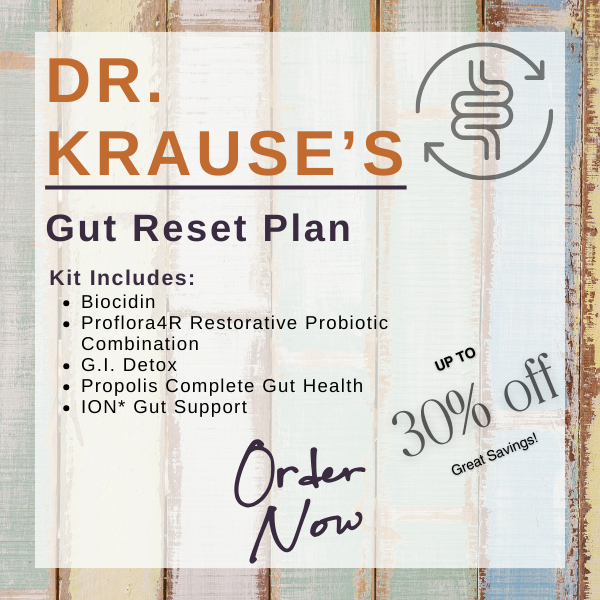
Traveling soon? Looking to detox or reset your gut? Try one of Dr. Krause’s Fullscript plans.



What You’ll Learn In This Episode:
- Why waking between 1-3 AM may connect to liver function, stress, detox pathways, and emotional processing
- The connection between 3-5 AM wake ups and lung health, oxygen delivery, circulation, and stress
- How digestion during the day impacts nighttime sleep
- Why hydration between 3-5p matters for detox and sleep quality
- How your afternoon habits may be sabotaging your nights
- Why your sleep hygiene starts at 1p
- How HRV tracking helped identify the habits improving Dr. Jannine’s own sleep
Chinese Medicine Sleep Clock Breakdown
9 PM – 11 PM: Lymphatic + endocrine reset
Trouble falling asleep may indicate stress, lymph stagnation, or nervous system imbalance.
11 PM – 1 AM: Gallbladder
Possible connection with digestion, fat metabolism, and unresolved decisions.
1 AM – 3 AM: Liver
Associated with detoxification, hormones, blood processing, stress, anger, and frustration.
3 AM – 5 AM: Lung
Connected with breathing, oxygen, grief, immune function, allergies, and circulation.
Resources From The Show:
- Vibrant Blue Oils
- Deanna Hansen’s Workshop with Dr. Krause for diaphragm release and relieving shoulder pain
- HRV tracking with the Elonga device
- Chinese Medicine Organ Clock from Radiant Shenti
Our Partners




Podcast Transcript
Chapters
00:00 Understanding Insomnia Through Chinese Medicine
02:18 The Chinese Medicine Clock and Sleep Patterns
06:44 Hydration and Detox: Key to Better Sleep
10:36 Emotional Connections to Sleep Issues
14:36 Acupuncture Insights for Insomnia
21:24 Practical Tips for Better Sleep
27:50 Cyclical Nature of Sleep and Health
Jannine Krause (00:05.528)
Hey Health Junkies, on this episode of the Health Fix Podcast, I am talking all about insomnia as it relates to Chinese medicine. So if you’ve been struggling with insomnia, you’ve tried lots of different herbs, melatonin doesn’t work for you, progesterone stopped working for you, you’ve tried estradiol, or maybe you’ve tried none of those things and you’re just curious about what you could do to help yourself naturally to sleep better.
I’ve got a different perspective for you that you probably haven’t heard too many places unless you follow someone who talks about Chinese medicine. So if you’re new to the podcast, I’m Dr. Janine Krause. I’m a naturopathic doctor. I’m an acupuncturist, and I’ve been in the game for about 20 years now. This June was 20 years. Holy cow, here we are. So let’s dive in. Now, one of the interesting things about Chinese medicine is that it looks at the day-to-day.
In a clock type of method, much like we do in terms of time, but it’s day-to-day in terms of each two-section of hours matched to an organ and an organ system. And for most people, when we’re looking at insomnia, there’s a couple different ways that it can present. It can be we have trouble going to bed, like falling asleep, we have trouble staying asleep, and then we have these early morning wake-ups.
Which for most people, trouble falling asleep is somewhere between 9 and 11 PM or later. And then from there, a lot of folks wake up between 1 and 5 AM. And there are certain organs related to these time frames that can give you a lot of insight as to why you might be having trouble with sleep. But here’s the interesting part. What
I don’t know how many people have talked about. I’ve never talked about it before. And in fact, it kind of dawned on me in the last couple of months, hmm, we have the Chinese medicine clock for all 24 hours of the day. But what about if we look at the 12 hours exact opposite of the trouble times with our sleep? So for example, if we have trouble waking, like where we’re waking up between one to three a.m., what are we doing at one to three p.m.?
Jannine Krause (02:23.818)
Or if we’re waking up between 3 and 5 a.m., what are we doing at 3 to 5 p.m. during the day? So here’s the interesting connection. So for example, between 1 and 3 p.m., it’s small intestine time. Between 1 and 3 a.m., it’s liver time.
So what’s happening in your small intestine? Well, you’re digesting food. 1 to 3 p.m. is after lunch for most folks, unless you’re eating a late lunch. But here’s the thing. What if during the day you’re skipping your lunch? What if you’re not sitting down to enjoy your lunch? What if you’re in a rush? What if you’re standing at the kitchen counter eating lunch like sometimes happens to a lot of us busy folks? It’s a very interesting thought process. What if you’re having trouble digesting your food?
So the small intestine time from one to three PM might be something to look at if you’re having trouble between one and three AM. And I’m especially targeting folks that really struggle with doing all the things. Like you’ve done your evening routine, you got off the screens, you’re trying to take different herbs. Maybe you have like five herbs. Maybe you’re doing like sleepy time tea, you’ve got melatonin on board, you’re taking, you know, maybe L theanine, and maybe you’re taking holy basil.
Totally the only one of those ones I just mentioned of an herb is holy basil. But maybe, you know, maybe you’re doing that kind of thing. Maybe you’re taking ashwagandha. Maybe you’re using magnesium to help you sleep, but it’s not doing the full trick. I’m gonna look at what’s going on between one and three p.m. The other thing is looking at, okay, if it’s not one to three a.m. that you’re waking up, it’s it’s more three to five a.m. What’s going on between three to five p.m.? Now this one blew my mind when I started looking into this. Three to five p.m.
is bladder time. So how many of us are not so great at hydration during the day? What if you were better at hydration between three to five PM?
Jannine Krause (04:32.126)
Just a thought, something to put out there. Cause maybe we need to help with our detox earlier on in the day versus getting home from work and then trying to chug all the water. Like a lot of folks will tell me, Doc, I I cut off my water by 7 p.m. so I could go to bed at nine and not wake up overnight because I had to pee. And then I have a lot of people that are like, I’m waking up multiple times between 3 and 5 a.m. to go to the bathroom. Or I typically wake up between 3 and 5 a.m. to go to the bathroom. What if 3 to 5 p.m.?
Could be a good time to look at your hydration. Something to think about. Now, here’s an interesting component to that. 3 to 5 a.m. is lung time. That’s when your lungs are most active. And the most interesting part about that is that your lungs are in charge of exhaling detoxing for you, much like the bladder is in terms of eliminating what gets filtered by the liver.
What gets filtered out through your kidneys goes into the bladder out of the body. But then we also have the lung. There is where we exhale our toxins. Now I just had a workshop with Deanna Hansen. And if you haven’t checked it out, look at my YouTube channel where I have my workshop section. And she and I talked all about how if you’re not breathing well, you’re gonna have trouble losing weight.
Now, a lot of people will say, well, if you don’t sleep well, you’ll have trouble losing weight. Well, what if you need to go back to 3 to 5 p.m. during the day and check your hydration at that time to help you with detox? And then possibly things between 3 to 5 a.m. might work better. Something to think about, just something I was kind of tossing around because so many folks struggle with sleep. And
We talk about the neurological components to it, we talk about the stress components to it, we talk about the anxiety for not being able to go to sleep, but we haven’t really talked about what’s going on in the body during the day as it relates to the morning. Now, here’s an interesting component. Between five to seven PM is kidney energy time. And that’s when you’re primed to recharge yourself.
Jannine Krause (06:55.64)
From the day, because your kidneys are your batteries in Chinese medicine. How many of us are running around trying to get things done, taking kids to sports? I mean, just go, go, go between five to seven. It’s kind of mind-blowing. And so I’m like, no wonder we’re depleted. Now, how can we change our days to to balance out the 5 to 7 p.m. time being a restorative time? Well, could be tricky if you’ve got kiddos. But if you don’t, it could be a time that you could structure for yourself.
And maybe if you do have kiddos and you’re not coaching them there at their sports, maybe it is a time where you put down the screen and you take a little like nap or or you really just do something you like to do. Relax, breathe, read a book. Now, for most people, no one’s gonna complain that they’re waking up between five and seven a.m. But I sometimes have folks, you know, with with trouble in that department. So then the question becomes, what’s happening?
Between 5 to 7 a.m. for some folks. Well, if we go to the Chinese clock.
Jannine Krause (08:28.92)
The 5 to 7 a.m. timeframe with the Chinese clock is the large intestine. And so sometimes folks will wake up and they’ll have some trouble with needing to hurry up and go to the bathroom at that time frame. Well, this means that there could be something going on in the intestine. But it could also mean between 5 to 7 PM, the 12 hours ahead of this.
You wanna be working on restoring yourself, balance, connecting, maybe some meditation, maybe some breathing, maybe staring and doing nothing. And interestingly enough, it’s after dinner, usually, where if we’re eating dinner a little bit earlier. So I find it interesting to think about these kind of things. So let’s move back through the evening, because I’ve kind of went back and forth, and you might be having a little trouble following me. So I just want to put it into perspective.
Between 11 p.m. and 1 a.m., if you’re having trouble with either falling asleep or staying asleep, that’s the gallbladder time. So the gallbladder, even if you don’t have one, this still applies to you. Because the gallbladder goes with a certain type of energy. In Chinese medicine, they call it the judge. It’s the decision-making gland or organ or part, if you want to call it. It’s not really a gland, it’s a part. and
If it’s part of decision making or resentment, bitterness, and the liver is irritability, anger, and frustration, and the liver time comes right after between 1 and 3 a.m., you may be having trouble falling asleep and staying asleep between the 1 and 3 a.m. time frames. So thinking about these things, okay, the gallbladder, what does it do functionally? It helps us with digesting fats. If we’re having trouble digesting fats,
And we had a lot of fat for dinner or even at lunchtime. Because remember, between 1 and 3 p.m. during the day is small intestine time. The gallbladder is connected to your small intestine. So in this time frame, if you’re having trouble between that 11 p.m. and 1 a.m. and even a little bit later, there may be some connections here to digestion.
Jannine Krause (10:52.438)
Now, one to three a.m. wake ups could be the liver. Now, could this be parasites? That’s like a hot thing that people talk about now. Well, yeah, definitely. But it could also be that your liver’s having trouble metabolizing things. Most folks over 40 have the starts of fatty liver. And a lot of people have it. Even if you’re thin, you could have fatty liver, which sounds insane.
But here’s the thing, if you’re constantly waking up at this time frame, you do want to look back at your digestion because a backed up liver is often a manifestation of you not digesting your food well. So 11 p.m. to 1 a.m. is gallbladder, 1 to 3 a.m. is liver, 3 to 5 a.m. lungs. Remember how I was mentioning if we’re waking up between 3 to 5 a.m., we could be having trouble with detox.
Because remember, the 3 to 5 p.m. is bladder time. Maybe you didn’t hydrate enough. Because if we need to hydrate well to be able to exhale well, maybe you’re struggling with breathing. Maybe you’re having a little bit of trouble between 3 to 5 a.m. with a little thing called sleep apnea. Happens more often as we get older, especially in women, as our estrogen levels decline and our ligaments become lax, our tissue becomes lax. So
We have floppy tissue, if you will, in the throat that can mess with your airway, especially if you have a tongue tie. I just found this out a couple months ago when I went to a holistic dentist who was like, Yeah, you have a tongue tie. If you’ve been having trouble waking up between three to five AM, that could be why you’re having trouble breathing. Like
I’m like, this is wild. All these things that I didn’t learn in school. And now we have so much stuff. It’s fascinating. But if you’re waking up between 3 to 5 a.m., you might want look at your lung health. You want to look at are you breathing well? Are you diaphragmatically deep breathing? Once again, my last workshop with Deanna Hansen, we talk all about how you breathe, makes a huge difference in how you thrive.
Jannine Krause (13:06.358)
She said 84% of weight loss is through your breath. Like, what? That’s crazy. But something to ponder. So 3 to 5 a.m. long time. 5 to 7 a.m. large intestine time. So if you’re having gut issues, you might wake up at 5 a.m. on the dot. Keep waking up like that. So we might want to be looking at like, okay, what can we do to help your digestive system? Maybe you have bloating, maybe you have constipation.
Maybe digestion is sluggish.
Another interesting thing about the energetics or the emotions that go with your large intestine is that stuckness, inability to let go of things, feeling overwhelmed, wanting to hang on to something tightly, but you know you need to let it go. That can all be part of large intestine issues. And so that wake up between 5 to 7 a.m. could be due to an emotional component. I also forgot to mention that.
With the lungs between three and five AM. This could be grief, this could be sadness, this could be emotional suppression.
What’s frustrating for a lot of folks is we try all the things and then nothing’s working and then we get more worked up emotionally. And a lot of folks are prone, and myself included, I’ll be like, Okay, it’s it’s probably a stress response, it’s cortisol. But maybe it’s even deeper than cortisol. It’s a deeper rooted emotional thing.
Jannine Krause (14:36.8)
So, what do we do about this? Well, I’m an acupuncturist, so of course I’m gonna be like, have you seen an acupuncturist yet? All of us are trained in the Chinese medicine clocks and the time frames and what’s going on in the time frames. And we will think about it when we put together a point prescription for you, meaning what acupuncture points we’re going to use. And so in this case, when we’re thinking about insomnia, a lot of folks will tell me.
And I would say probably 75 to 80% of my patients will tell me they sleep better the night of acupuncture and sometimes a couple nights going into that time frame. Why is that? Because more often than not, the acupuncturist is looking at what are someone’s symptoms? When are they showing up? What channels or organ systems are involved.
And so when I’m in the office and folks are telling me, well, between you know 11 to 1 a.m., I’m having trouble sleep, I’m gonna use some gallbladder points. I’m gonna try to help that gallbladder. Even if you don’t have a gallbladder, that’s the best part. Because it doesn’t matter. You still have gallbladder channels. Nobody took those from you. So we can manipulate these channels. And I and manipulate’s probably not a great word, but the term is we can put a needle to a point in the channel to get the circulation of
Chi energy blood ions moving.
One of the coolest things that I’ve seen with folks in my office is especially if there’s a 3 to 5 a.m. wake up. There is a point called lung seven. So if you take your hand and you kind of look at your thumb and trace your finger, like your your point your finger down your thumb and you’ve got the wrist there and you’ve got this like little divot. If you stick your your thumb up like this, this little space comes in there. That little space is called the anatomical snuff box.
Jannine Krause (16:34.924)
The rumor is that back in the 1700s when there were body snatchers, like literally people stealing bodies so that they could research, so dissect people. they’re probably murdering them, like let’s be real here. But anyway, they would get bodies and they would literally use this point supposedly to sniff cocaine so that they could investigate the bodies. So dissect the bodies, look at the different organs, see what’s going on in them.
And so from your thumb, you have this little tendinous little hole there between your thumb tendon and the one tendon here that connects to your your base of your thumb. That’s the anatomical snuff dock snuff box. And then when you rub your finger just a little bit further, you got a little hump there from the end of your radius. And then you’ve got a divot there. That’s lung seven. Lung seven, right there. You can press that. You can tap on that. You could put essential oils on it to help you.
With sleep, if you’re having trouble between 3 to 5 a.m., it’s one of my favorite points to use. Now, what is the pair between 3 to 5 a.m. if we go to 3 to 5 p.m.? The bladder. I love to use bladder points because they’re really great for opening up the back of the body, all of those muscles, like your your muscles on either side of the spine, but your calves also and all the way down. So there’s a point on the outside of your ankle that I’ll often use.
But you could use multiple other points. One of the great bladder points is right here on the inside of your eye. You can press in here. You could press here on the inside of your eyebrows. That’s bladder two. You could rub that point and lung seven. You can rub those when you wake up between 3 to 5 a.m. See if it helps to harmonize you and get you back to sleep. Oftentimes I will even put magnesium, topical magnesium right here, bladder two, and right here, lung seven.
Another way to do it if you’re not so much into essential oils. Now I know I’m gonna get the question, what kind of essential oils would I use? Whatever soothes you. Typically, you know, the most common one that people mention is is lavender. But I tend to like things like helicrysm, I like cob copaiba, you know, there there’s many different ones out there. It’s just more about what relaxes you. And so it doesn’t matter, it’s more the stimulation in the area here.
Jannine Krause (19:00.11)
There’s also a company called Vibrant Blue Oils out of Seattle that is a great company too that you can use in this case with multiple different variations of nervous system called parasympathetic. She’s got a parasympathetic blend that’s got clove and lime. And there’s also other different types of blends, especially for sleep and relaxation. So check out Vibrant Blue Oils. That’s Jody Cohen. Now, nevertheless, I’ve showed you a little bit for the 3 to 5 a.m. wake up.
What would I do for let’s say that 1 to 3 a.m. wake up, the liver time. So interestingly enough, you can press a liver point that happens to be in between your big toe and your second toe. So if this was your foot, it would be in that webbing between your big toe and your second toe. And you rub in between there. That’s a nice point to use between 1 to 3 a.m. You could also use a small intestine point.
I like small intestine three, right here, right where your pinky, so your pinky finger, edge of it, and you go to the edges of your pinky on the outside and you run your finger down. You’re gonna feel that knuckle that you can connect into. There’s the the first one there, which we call the proximal, sorry, the distal interphalangeal, the proximal interphalangeal joint, which is like your second knuckle, and then you got your third joint there, which is what we typically think of when we’re calling them knuckles.
And that’s your metacarpal phalangeal. And right at the base of that is small intestine three. So if you take and make a fist, if you’re watching on YouTube, you could see this better. But if you take a make a fist, there’s like this divity kind of thing that sticks out. That’s a great spot for that point right there. And so that’s small intestine three. So you could just tap the side of your hand, pinky side, and you could get to that area. Even if you just tap the whole thing and you’re like, I’m not sure where I’m going, that’s the small intestine channel.
you could tap there. And so you’re going to be tapping into the 1 to 3 p.m. time frame, but you can also tap down between the large toe and the second toe. Now, here’s a fun little tidbit about that area. I also like to or that particular time frame one to three, you could touch behind your ear. There’s a bone there and that divot spot is called on me on. It’s a great point that you can tap there as well.
Jannine Krause (21:23.116)
It’s a sleepy time point. And so I will put magnesium topically here. I put parasympathetic oil here too, just to kind of chill the body out. Now, Vibrant Blue Oils, like I mentioned before, has a liver one. I mean, whatever relax you. Of course, I will put the link to Vibrant Blue Oils down below in the YouTube, but also in my podcast notes at drjkrausnd.com if you’re interested in learning more about that. Plus, they’ll also be in the show notes with Apple iTunes and all the other things.
So that’s the 3 to 5 a.m. and the 1 to 3 a.m. time frame. Now, if you have trouble falling asleep, if you have trouble just getting into a chill mode to sleep, that’s that 11 p.m. to 1 a.m. timeframe. That’s gallbladder time. You can actually use some gallbladder points that are on the outside of your leg to work on those. One is called
GB34 gallbladder 34. It’s on the outside of your lower leg. And in particular, I will tend to pair that one with something on the arm called Sanjiao 5. So if you take your knuckle and you put it to the back of your hand, so the back side of your hand and right at the wrist where the wrist joint is, you can put your knuckle there and where your finger touches. That there is sandjiao five, right in the middle there of the wrist.
That’s a lymphatic point. And interestingly enough, your lymphatic system is quite active between 9 p.m. and 11 p.m. So is the reparation or restoration, if you will, of the thyroid in adrenal glands. So fun little tidbit. But this point here is lovely for working on the lymphatic system. It is a point on a channel known as the San Jiao channel, which is triple warmer, or otherwise known as lymphatic movement, fluid movement in the body.
It’s a great spot to work on, hold on, and rub. In addition to the one that is on the outside of your lower leg, just below your fibula on the outside of the leg, like you’ll feel that little knob, that bone on the outside of your lower leg, and just go below it. That’s gallbladder 34. And of course you can look it up in podcast notes or just search it. You’ll find that point, acupuncture point, gallbladder 34. And rubbing those two points can be really lovely.
Jannine Krause (23:48.854)
at bedtime see if that can help you as well in addition to the one that I mentioned before that’s behind the ear here if you take your finger and you put it into the divot behind your ear and you just go a little back from it there’s that bone right there just rub some essential oils or massage the whole area feels nice you have an attachment of one of your muscles there it feels really lovely so that’s a little bit of a idea
of how you can work with your body and your natural rhythms to help you sleep a little bit better. And in particular, taking some time to think about what’s going on during your day, especially between that one to three and three to five time frame for those of you who are really, you know, going through perimenopause or menopause and waking up over and over again at those time frames.
If you’re having more trouble falling asleep and you’re feeling more stressed out, overwhelmed, looking at the 5 to 7 p.m. time frame, which is the kidney, the restorative time. So finding that as a time to do some meditation, finding that as a time to really relax and take some time for yourself. It doesn’t even have to be more than 10-15 minutes. Now, 7 to 9 p.m., I haven’t mentioned this time frame. This is pericardium time. This is the area that surrounds your heart. And
It’s a really good time for moving your circulation. It’s a really good time for helping you to just reset your brain from the day. And what’s cool about this is this is a perfect time to do mobility work or do some fascial release work before bed because it primes the body to have blood flow through it. The pericardium channel runs right down your arm on the inside and into your armpit.
And what’s wild about it running into the armpit is most people, when I do body work on them, their pecs are incredibly tight, so their chest, and then their armpits are really tight. And I can’t help but think that there is some connection there to reduced mobility, reduced circulation, having numbness and tingling at night that might wake you up. It might benefit you to do some circulatory work between 7 to 9 p.m. Maybe some light tai chi.
Jannine Krause (26:13.43)
light stretching, little light yoga, mobility. You get to choose whatever works best for you. But you gotta play with it to know. And so this is one of the things I’d be thinking about. I’ve also found in my own research with myself that taking a gentle walk after dinner around the seven to like eight time frame can be lovely and feel really good for the body. It’s helped me to sleep better and I’ve been using
my heart rate variability tracker and it’s showing me that with my habits that I enter, the times that I take the walk after dinner consistently, I will sleep better. So that’s just me. Everyone’s different, but I think it’s worth noting. Now, 9 to 11 p.m. Like I mentioned before, just to recap, that’s lymphatic time. And so like I had mentioned the acupressure points, but if you’re doing mobility work, you’re doing fascial release work, that’s going to help you move the lymph.
Especially if you’re working on some diaphragmatic breathing, some good deep breaths. Paying attention to your exhale. The longer you can exhale, the more oxygen you can release to your tissues.
A lot of us are short breathing. It also relates to why we’re tight in the pecs, why we’re tight in the armpits and why we’re tight in our neck, not just tech neck. So things to think about as you’re moving through trying to figure out insomnia, but also just trying to optimize your sleep. I have so many people telling me about their sleep scores. I have so many people telling me that they just don’t seem to sleep well. And they’ve done like they’ve changed their bed, their mattress, they’ve they’ve gotten the sleep eight scores.
Now coming in, they’ve they’ve worked on the cooling sheets, they’ve done all these different things, but like nothing seems to be working. And I can’t help but think that we’ve got to go back a little bit further to some of the ancient wisdom of Chinese medicine to see if that could be a key component for us. Now I know that I’ve given out a lot of time frames. You might be like, my gosh, I’m driving, I’m walking, I’m working out, I can’t remember everything you said. Don’t worry, I got to. I’m gonna have
Jannine Krause (28:22.43)
all of these details in the podcast notes at drjcrosn d.com. They’re also going to be below here in YouTube, but they’re also going to be in iTunes and and everywhere else you get your podcasts. So if you haven’t already, consider acupuncture to help with your sleep. Consider a regular schedule of it. Maybe once a month, maybe twice a month.
Especially if you’re struggling with sleep around the full moon. Right now, as I’m recording this, it is full moon time. And I’ve noticed that a lot of patients will also complain that the full moon tends to make them vampire a little bit. So maybe schedule some acupuncture a day or two before we hit the full moon. Or maybe you’re a new moon insomniac. Check that out. Take a look.
If you’re still cycling, you still have a period. Take a look and see is there somewhere in that time frame, like right before the period, during the period, that you have insomnia. These are all things to take into account because we are cyclical individuals. We are tied into the moon. We’re tied into the universe. And sometimes we we just forget that and think we’ve got to go straight towards all the supplements. And sometimes that’s not the case. Sometimes it’s little routines that we’re skipping.
Little nuances that may help us incredibly. And then we don’t have to take handfuls of supplements. All right, so just an interesting perspective I had that I wanted to share. If you are not already on my email list, folks, those of you who are not on it are not getting the full picture. I dive into a lot of different topics with Chinese medicine, with different health things, with different stories and cases.
from my office. I want folks to really hear what is happening in the real world with my practice, with Chinese medicine, with functional medicine, with naturopathic medicine. Like what’s happening in the like what really is going on? Instead of folks kind of saying, Yeah, this’ll work. Yeah, that’ll work. Well let’s talk about stories. Let’s talk about what’s happening in real life. So I’m gonna be bringing that more to you. I’m also gonna be diving a little bit more into talking about
Jannine Krause (30:43.32)
How much travel can help you to be the catalyst for change in your life if you’re looking for a true health transformation? And I’m pairing, I’m gonna be pairing travel and some coaching, some health coaching based on Chinese medicine principles that I’m realizing that we need to be going back to this time in life. So stay tuned for that. More on travel and transform is coming up. If you want to get on the wait list.
It is out there. If you head over to my Instagram, you can find it there. If you get on my email list, you can have exclusive access to jumping on the wait list too for when that membership comes up. Cause it’s not gonna be just about coaching. It’s gonna be about live calls where we talk about health and travel. We’re gonna talk about all kinds of fun things also tied into Chinese medicine. And then I will also have exclusive access to
certain types of travel perks that you couldn’t get just with your credit card points or booking on your own. So stay tuned for that. And if you like this podcast, by all means, please like, please subscribe. Please send me a review. It really makes a difference when I can hear what you think about the podcast, what you want to learn about, and how I can help you. Alrighty everybody, you have survived another episode of the Health Fix podcast. You all have a great day, whatever you’re doing.